




Brass Handled Tub
These brass handled tub pieces combine timber and metal into sturdy vessels for fireside or garden use.
Brass Handled Tub
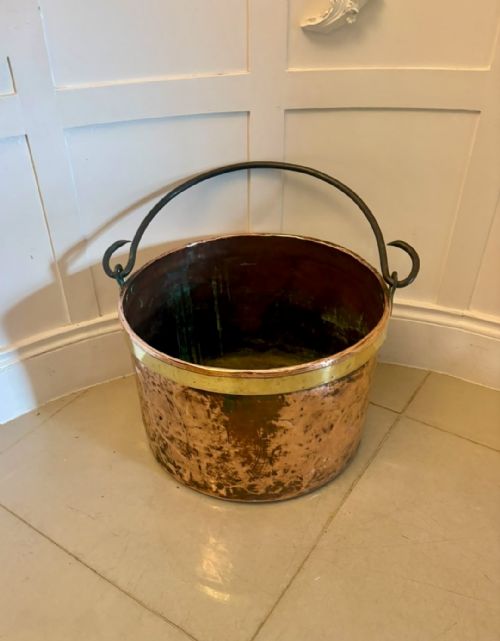
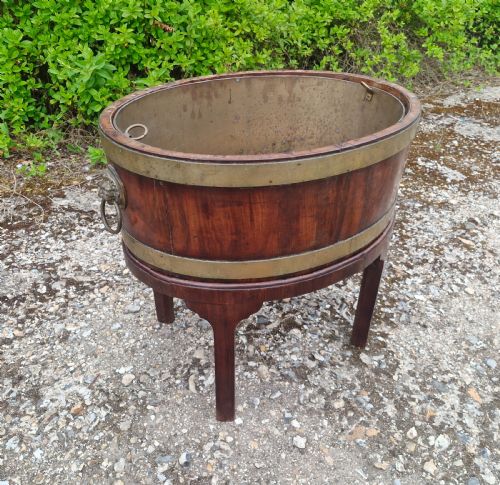
A brass handled tub takes the form of a coopered wooden barrel or a heavy metal vessel fitted with secure metal grips for carrying. These items serve multiple practical duties around the home, appearing as log bins, coal buckets, wine coolers, and planters.
The pieces on this page span the Georgian, Victorian, and Arts and Crafts eras, with many dating from the nineteenth century. Buyers frequently encounter copper bodies joined with brass fittings, alongside mahogany and hardwood examples strengthened by metal bands.
Country house styles feature strongly, ranging from Dutch coopered butter barrels to Scandinavian water barrels and Georgian style round planters. Each object shows the robust construction methods used to handle heavy loads of fuel, water, or earth.
How they were made
Coopers shaped staves of mahogany, hardwood, and other timbers to form tight wooden cylinders, securing them with heavy brass bands and bindings. Metal vessels relied on hand-hammered copper sheets joined at the seams and reinforced with rolled rims.
Makers attached solid brass handles through sturdy brackets, riveting or screwing them directly into the body to withstand the weight of contents like coal, logs, or wine bottles. Surfaces were left smooth or given a planished finish by hand.
Brass Handled Tub Retail Price Guide 2026
Typical asking prices for brass handled tub among the pieces listed under this phrase on Sellingantiques today, from the lower quarter to the upper quarter. They describe what is for sale here now, not the wider market.
Listings feature vessels from the Georgian, Victorian, and Arts and Crafts periods, constructed in copper, brass, mahogany, wrought iron, hardwood, zinc, and tin.
What varies in quality
The standard of a brass handled tub depends on the integrity of its construction and the weight of its materials. Heavy-gauge copper and dense hardwoods retain their structural strength far better over time than lighter alternatives.
Refined detailing distinguishes finer items, such as crisp dovetail joints, well-fitted wooden staves, and substantial cast brass handles rather than thin stamped metal. The balance of proportions between the wooden or metal body and its brass mounts dictates the visual harmony of the piece.
The Brass Handled Tub Glossary
- Coopered
- Constructed from wooden staves fitted together side by side and bound with metal hoops. This traditional technique formed liquid-tight barrels and buckets.
- Planter
- A decorative vessel used to hold potted plants or directly house earth and foliage. These often double as jardiniere containers.
- Jardiniere
- An ornamental pot or stand designed to hold flowers or plants indoors. They frequently appear in hammered copper or ceramic.
- Log bin
- A deep container designed to hold firewood near a hearth. They are usually built from heavy timber or copper with sturdy carrying handles.
- Cellarette
- A lockable container or chest used to store bottles of wine and spirits safely. Many examples take the form of coopered mahogany tubs with brass bands.
Brass Handled Tub: Frequently Asked Questions
What were these tubs originally used for?
These vessels served practical daily functions in domestic spaces, holding coal by the hearth, logs for fires, or water for household tasks.
Others functioned in dining areas as wine coolers and cellarettes, or stood in reception rooms as large planters and jardinieres.
How do I clean a copper and brass tub?
Copper and brass develop a natural oxidation over time that many collectors prefer to leave undisturbed. Gentle washing with warm soapy water removes accumulated dust without stripping the character from the metal.
Harsh chemical polishes should be avoided because they remove the aged surface tone that proves the age of the piece.
Can I use an antique tub for planting?
Using these vessels for live planting requires caution, as damp soil can cause wood to rot and metal linings to rust or corrode.
Placing a modern inner liner inside the tub protects the historic material while allowing you to house plants safely.
How do I tell a Georgian tub from a Victorian one?
Georgian examples often feature select timbers like mahogany with clean, classical lines and fine brass binding. They reflect the restrained aesthetic of the eighteenth and early nineteenth centuries.
Victorian and later pieces frequently employ hammered copper, heavier proportions, and more decorative or utilitarian finishes suited to industrial-era homes.