




Brass Handled Cellarette
A brass handled cellarette is a timber wine cooler designed to hold bottles near the dining table, combining fine cabinetmaking with robust metalwork.
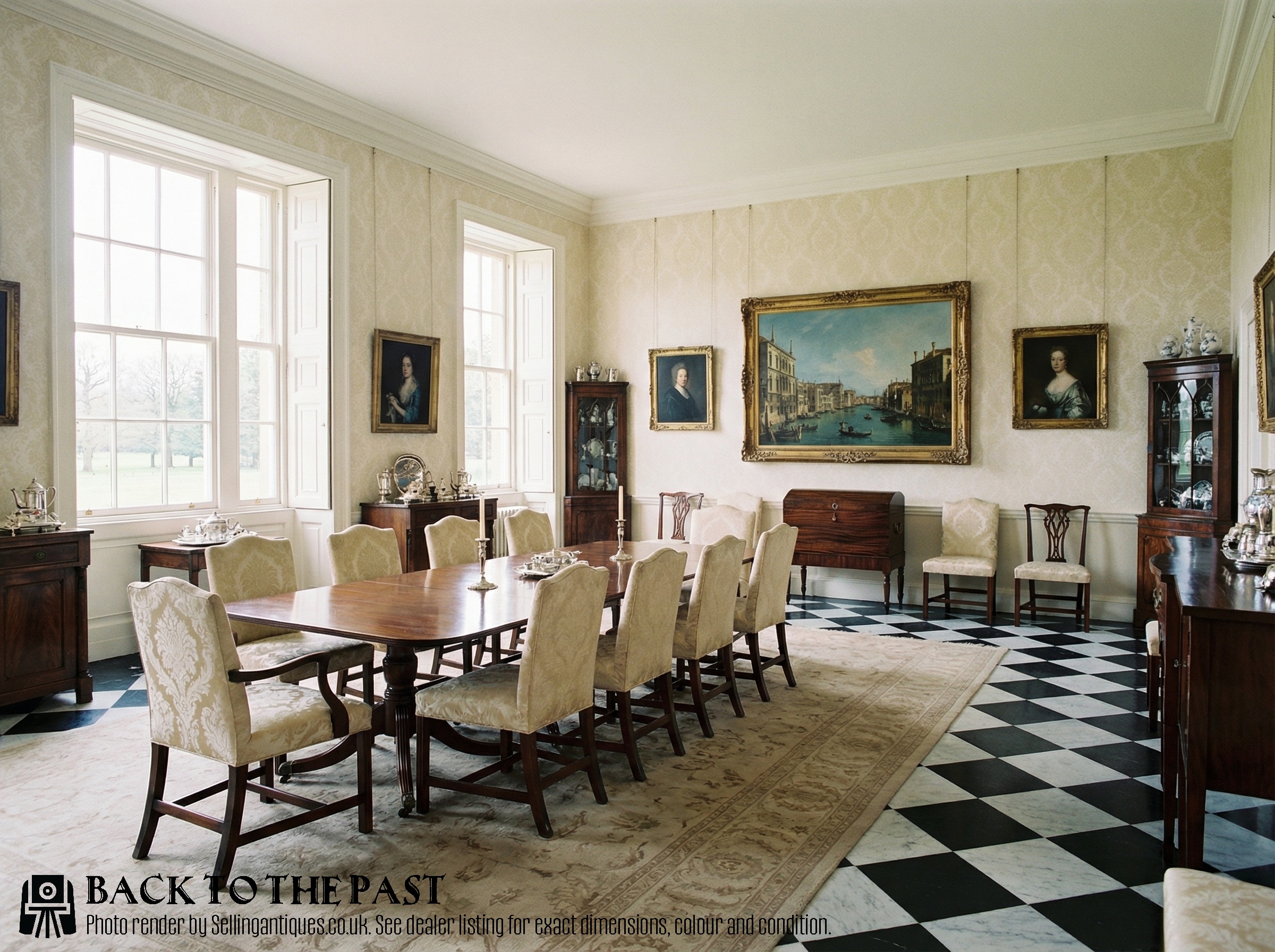
Brass Handled Cellarette
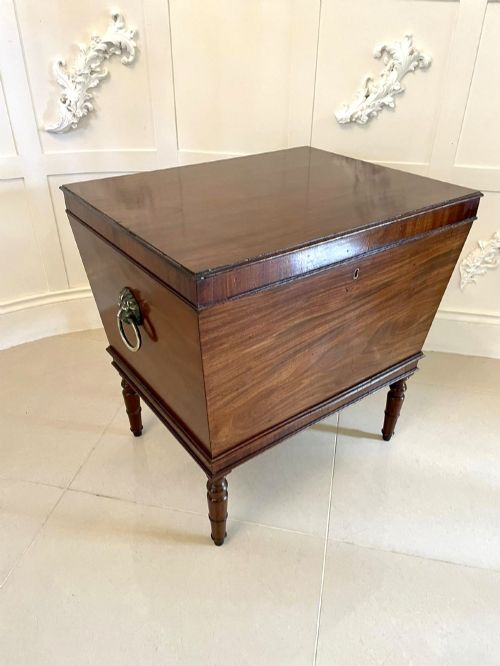
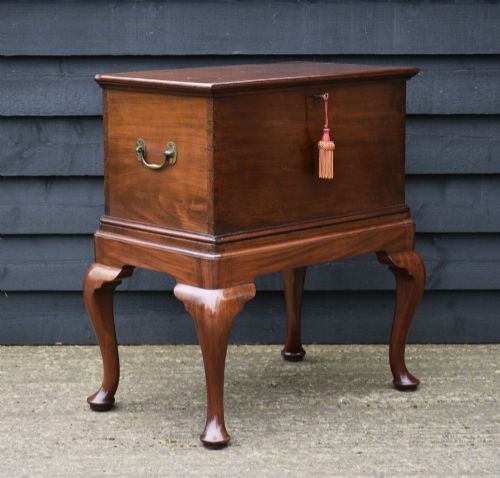
A brass handled cellarette serves as a traditional wine cooler designed to keep bottles chilled or safely stored in the dining room. These pieces appear most frequently in mahogany, constructed as boxes, chests, or sarcophagus shapes dating from the Georgian and Regency periods.
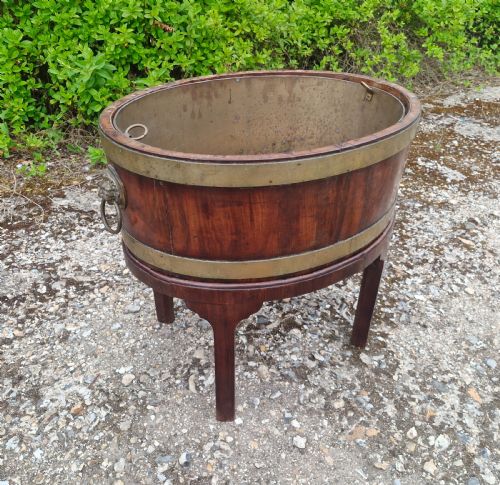
The form often overlaps with wine coolers, planters, and jardiniere stands, reflecting how historical dining furniture found later uses as plant holders. Buyers encounter both pedestal-mounted boxes and floor-standing vessels featuring secure metal carrying handles on either side.
How they were made
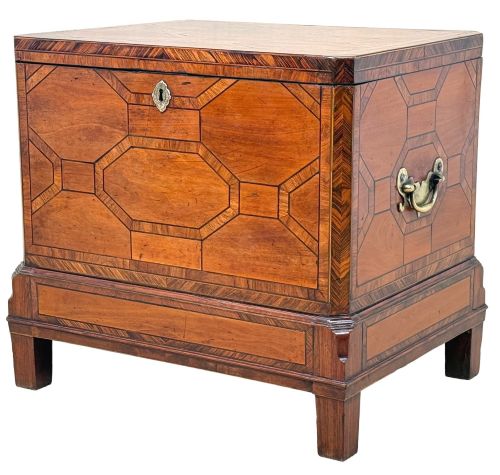
Cabinetmakers utilised dense timbers such as mahogany, satinwood, kingwood, and rosewood, frequently incorporating boxwood stringing and marquetry inlay. Metalwork played a structural role, with brass bands securing the staves of wooden vessels and sturdy drop handles screwed to the sides for lifting.
Interiors often required protective metal liners in lead or zinc to hold ice and melting water safely against the wood. Joinery techniques included tight dovetailing for box bodies and turned wooden stands or internal bottle divisions.
Period origins span from George II and George III epochs through to Regency designs and early twentieth-century revivals.
What varies in quality
Quality rests upon the selection of timber veneers and the crispness of inlaid details such as boxwood stringing or floral marquetry. Heavier, well-cast brass handles and thick metal bands indicate a higher grade of original construction than thin pressed plates.
Proportion and form dictate the distinction between standard production and exceptional design, particularly in pieces displaying complex octagonal, oval, or sarcophagus curves.
Whytock and Reid
The Brass Handled Cellarette Glossary
- Cellarette
- A lockable container used for storing wine bottles near the dining table. They frequently incorporate internal dividers or metal liners.
- Jardiniere
- An ornamental pot or stand designed to hold plants or flowers. Many historical wine coolers were converted to this purpose in later decades.
- Marquetry
- Decorative veneer work formed by fitting together small pieces of different coloured wood to create pictorial patterns. It appears on satinwood and rosewood surfaces.
- Sarcophagus
- A monumental coffin-like shape with a steep lid, adopted by Regency cabinetmakers for grand wine coolers. The form provides substantial internal volume.
- Stringing
- Thin inlay lines of contrasting timber used to outline panels and drawers. Boxwood is commonly chosen for this pale linear detail.
Brass Handled Cellarette: Frequently Asked Questions
What is a brass handled cellarette?
A brass handled cellarette is a historic timber container built to hold wine bottles in dining rooms during the eighteenth and nineteenth centuries. The side handles allowed servants to move the heavy containers when filled with bottles and ice.
They appear in various timber forms, including octagonal boxes, oval vessels, and sarcophagus shapes. Many examples feature fitted metal liners to contain melting ice.
How were they used historically?
These pieces stood beneath sideboards or beside dining tables to keep wine accessible and cool during long meals. Servants placed ice inside the metal liners alongside the bottles.
In later eras, owners repurposed many of these containers as planters or jardiniere stands for indoor foliage. This shift in function explains why some retain internal metal linings while others show dampness marks.
How do I date a cellarette?
Dating relies on timber choices, construction methods, and stylistic cues from periods like the Georgian or Regency eras. Earlier eighteenth-century pieces often use solid mahogany with restrained brass bands, while Regency versions favour sarcophagus shapes and bolder brass paw feet.
Revival pieces from the early twentieth century mimic these earlier profiles but display different internal timber milling and modern screw fixings. Examining the interior construction helps separate original Georgian examples from later copies.
Can I use one as a planter?
Many of these pieces already function as plant stands or jardiniere vessels due to historical conversions and fitted metal liners. The existing metal linings often protect the underlying timber from moisture when holding potted plants.
Care should be taken to use inner pots with saucers rather than filling the antique liner directly with loose soil and water. This preserves the internal metalwork and wood from accelerated corrosion.