


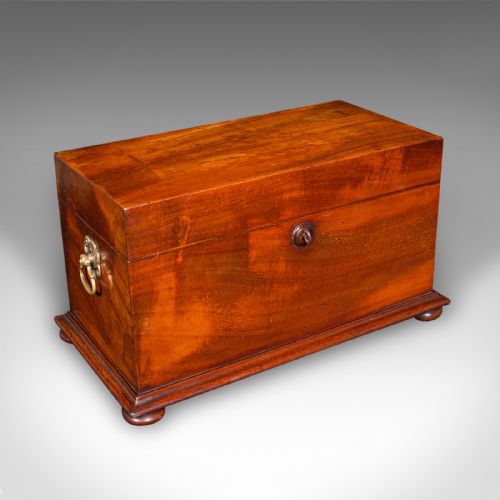


Brass Handle Tea Box
These brass handle tea box pieces are compact domestic chests designed to store dry leaves safely, offering tactile historic charm for collectors.
Brass Handle Tea Box
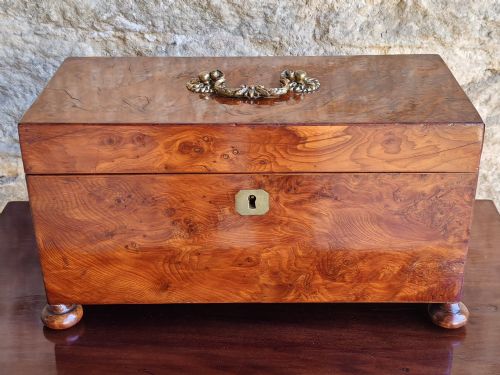
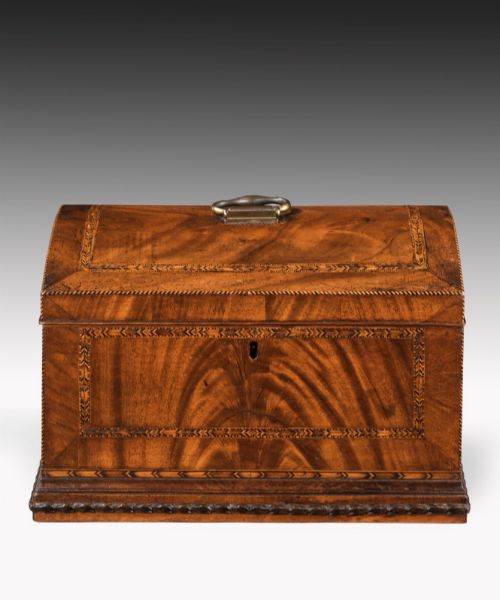
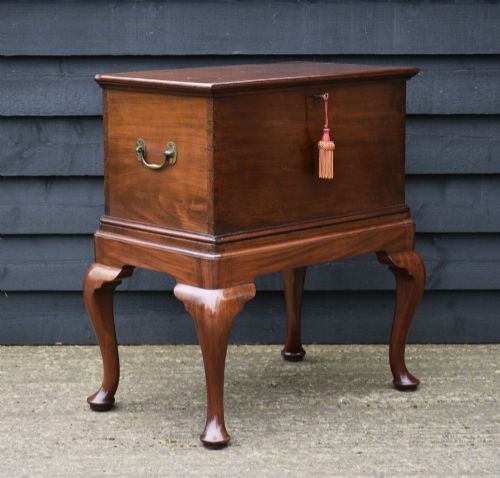
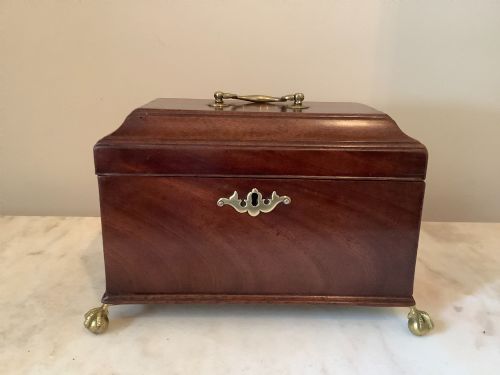
A brass handle tea box is typically encountered as a mahogany, rosewood or burr walnut tea caddy dating from the Georgian, Regency and 19th Century periods. These lidded wooden containers often feature internal compartments for storing loose leaves alongside metal canisters or mixing bowls.
Makers shaped these chests in various forms, including domed lids, sarcophagus profiles and simple rectangular boxes, frequently incorporating brass carrying handles on the sides. Many examples include internal secret drawers and functional locks for securing expensive imported tea leaves.
Materials and construction methods
Cabinetmakers constructed these tea caddies using dense hardwoods such as mahogany, rosewood, yew wood, laburnum and burr walnut, often enhancing surfaces with boxwood, ebony and penwork inlay. Timber selection dictated the weight and grain pattern of each chest, providing a durable outer shell for daily domestic use.
Metalwork played a structural role, with cast brass drop handles fitted to the sides for lifting, alongside steel locks and brass escutcheons. Interior compartments sometimes contained fitted metal canisters or bone elements to complete the storage vessel.
Listings feature woods such as mahogany, rosewood, yew wood, laburnum, ebony, boxwood and burr walnut across Georgian and Regency periods.
Factors influencing execution and design
Quality rests in the precision of the cabinetwork, particularly the neatness of wood veneers, inlaid stringing and the tight fit of secret drawers. Superior examples display carefully chosen timber grains, such as burr walnut or burr thorn wood, matched across the lid and sides.
Hardware selection also marks distinction, where substantial brass lion mask handles or finely cast drop handles demonstrate greater workshop investment than plain utilitarian fittings. The structural integrity of the internal divisions and the survival of original canisters elevate a piece.
The Brass Handle Tea Box Glossary
- Tea caddy
- A small box or chest designed specifically for storing tea leaves. The word derives from catty, a Chinese unit of weight.
- Sarcophagus
- A box shape featuring a sloping or domed lid reminiscent of a stone coffin. This architectural form became particularly popular during the Regency period.
- Escutcheon
- A flat plate of brass surrounding a keyhole. It protects the surrounding wood from wear and adds a decorative accent.
- Penwork
- A surface decoration technique using ink drawn directly onto wood to create intricate motifs. This delicate ornamentation appears on select Regency pieces.
- Secret drawer
- A concealed compartment hidden behind removable panels or false bottoms. Makers utilised these hidden spaces to secure small valuables.
Brass Handle Tea Box: Frequently Asked Questions
What are brass handle tea boxes?
These pieces are historic wooden containers built during the 18th and 19th centuries to store dry tea leaves under lock and key. They combine dense hardwoods with metal mounts for domestic use.
Craftsmen shaped them into domed boxes, sarcophagus forms and rectangular chests equipped with internal compartments and side handles.
How were tea caddies used historically?
Tea was a valuable commodity in Georgian and Regency households, requiring secure storage away from servants and damp conditions. The master of the house typically kept the key to control access.
Inside the box, dual compartments held different tea varieties, while a central mixing bowl allowed hosts to blend leaves before brewing.
How do I date a tea box?
Dating relies on observing timber choices, hardware styles and overall architectural form. Georgian examples frequently showcase plain or inlaid mahogany, whereas Regency pieces often adopt sarcophagus shapes with bold brass handles.
Secondary woods, lock types and decorative techniques like penwork or burr veneers provide further clues to the decade of manufacture.
How should I care for antique wood?
Keep wooden tea chests away from direct sunlight and fluctuating radiator heat to prevent timber splitting and veneer lifting. Maintaining a stable indoor humidity protects the historic polish.
Apply a light application of appropriate wax occasionally to nourish the hardwood surface without building up excessive residue.