
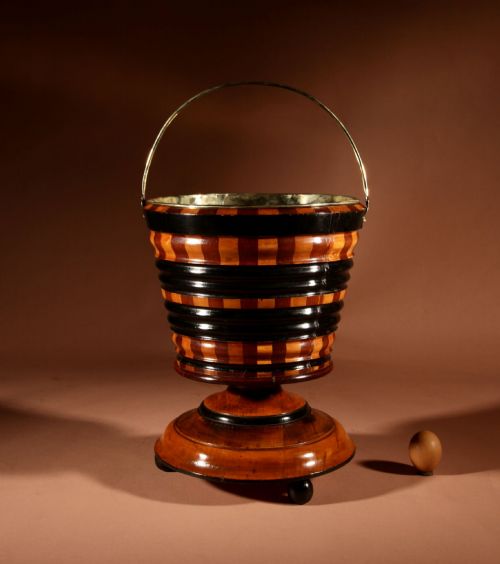


Brass Handle Peat Bucket
A brass handle peat bucket brings hearth-side craft into the room, holding fuel with the weight of hardwood and the gleam of bright metal.
Brass Handle Peat Bucket
A brass handle peat bucket is a sturdy domestic vessel designed for the fireside storage of peat, embers or coal. The form derives from Dutch traditions and Georgian craftsmanship, serving practical fuel-holding duties beside the hearth.
Most examples found here span the eighteenth and nineteenth centuries, taking the form of coopered wooden buckets or barrels with substantial brass fittings. They often appear with descriptions as planters, jardinieres or tea stoves due to their versatile proportions.
How they were made
Construction relies on traditional cooperage, binding vertical staves of mahogany, walnut, oak, hardwood or ebonised wood with tight metal bands. The timber is shaped and fitted closely to hold dry fuel or plants securely.
Makers finished each piece with heavy brass handles, frequently cast as ring handles or lions-mask mounts, secured firmly to the wooden body to bear the weight of heavy contents.
Listings feature pieces spanning the Georgian era through the nineteenth century, utilising mahogany, walnut, oak, and ebonised wood.
What varies in quality
Quality rests in the choice of timber and the precision of the cooper's stave work, where dense grains of mahogany or walnut demonstrate superior construction. The weight and casting quality of the brass bands and handles further separate standard pieces from finer examples.
Proportion and decorative restraint dictate the visual appeal, ranging from plain functional vessels to richly figured woods with distinct patination accumulated over centuries of fireside use.
The Brass Handle Peat Bucket Glossary
- Coopered
- Made by a cooper using curved wooden staves bound together with metal hoops. This technique provides the structural strength required for holding dense materials.
- Jardiniere
- An ornamental pot or receptacle for holding plants or flowers. These vessels often double in function as fireside buckets.
- Teestoof
- A Dutch foot stove or container associated with heating devices. This form influences the smaller decorative buckets seen from Dutch traditions.
- Patina
- The surface sheen and deep coloration developed on wood and brass through age and handling. It indicates authentic historical use.
Brass Handle Peat Bucket: Frequently Asked Questions
What were brass handle peat buckets used for?
These vessels served beside the hearth to hold peat, coal or embers for fueling domestic fires in earlier centuries.
Today, their robust construction makes them suitable for use as planters, umbrella stands or decorative fireside storage.
How do I date a peat bucket?
Dating relies on timber species, construction methods and the style of the brass mounts and handles. Georgian examples often show finer mahogany framing, while nineteenth-century pieces display varied coopered hardwoods.
Examining the wear patterns on the base and interior provides further clues to the age of the piece.
Are these buckets waterproof?
Most historical coopered buckets were designed for dry fuel rather than holding standing water directly. Using a modern liner is recommended if employing the vessel as a planter or jardiniere.
This protects the historic timber staves from moisture damage and warping.
What woods are commonly found?
Makers utilised dense timbers such as mahogany, walnut, oak and ebonised wood to withstand heavy fireside use. These hardwoods were chosen for their stability and rich grain.
Matching brass bands reinforced the wooden staves against shrinkage and expansion from hearth heat.