
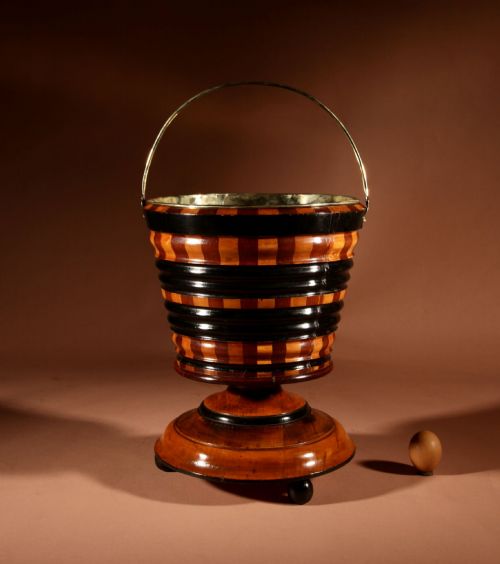

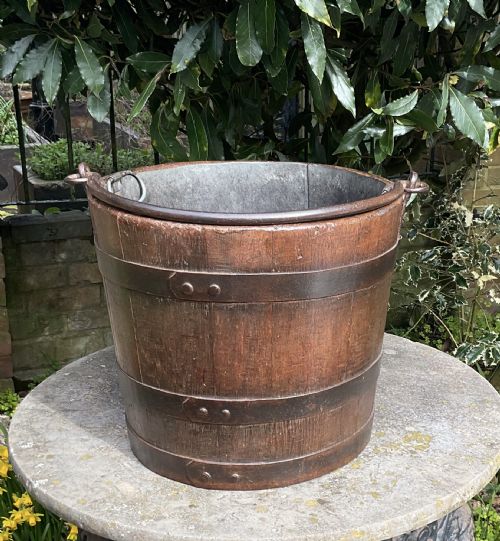


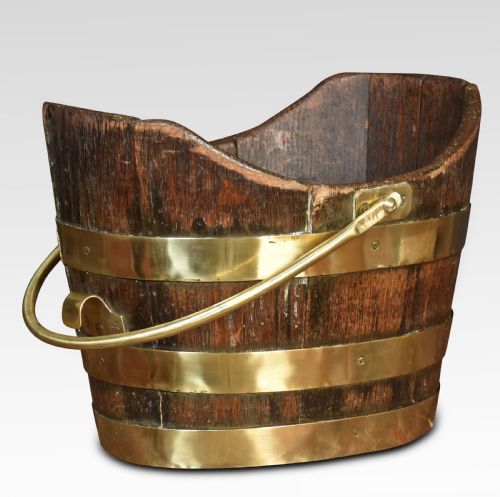


Coopered Coal Bucket
These coopered coal bucket examples are sturdy domestic vessels built to hold solid fuel by the hearth.
Coopered Coal Bucket
A coopered coal bucket is a heavy utilitarian container built using traditional stave-and-hoop construction methods. When you search for a coopered coal bucket, you encounter pieces designed to hold peat, wood or coal beside a fireplace.
The versions most commonly met on this page span several distinct periods including Georgian, Victorian and Edwardian eras. These domestic vessels often double in appearance and function as log bins, peat buckets or tea stove buckets.
Makers shaped these containers from various timbers, frequently incorporating metal bands for structural strength. Regional variations range from English traditional designs to Dutch traditional styles and Scottish peat buckets.
How they were made
Craftsmen built these vessels using wooden staves fitted tightly together around a central base. This historical technique mirrors barrel-making methods, requiring precise joints to hold dry contents securely.
Makers bound the wooden staves using metal hoops made from brass, copper or iron. These metal bands provided structural reinforcement while offering a decorative contrast against oak, mahogany, walnut or ebonised wood.
Some of these stout wooden buckets spent their early lives warming Dutch feet before transitioning into coal bins.
What varies in quality
Quality rests heavily upon the selection of timber and the precision of the stave joints. Tighter joinery and superior grain matching indicate a higher standard of construction by the maker.
The choice of metal for the bands and mounts influences the overall character and finish. Heavier brass mountings and original internal liners distinguish the more substantial pieces from simpler utility items.
The Coopered Coal Bucket Glossary
- Coopered
- Built from curved wooden staves joined edge-to-edge and bound with metal hoops. This method gives the vessel its characteristic rounded profile.
- Stave
- A narrow strip of wood with bevelled edges that forms the vertical walls of the bucket. Multiple staves fit together to create the curved body.
- Teestoof
- A Dutch foot warmer or small stove container often adapted or styled like a small bucket. These vessels formed part of traditional domestic heating arrangements.
- Peat bucket
- A specialised container traditionally used in Scotland and Ireland for holding dried peat fuel. These pieces often feature sturdy drop handles for carrying heavy loads of peat.
Coopered Coal Bucket: Frequently Asked Questions
What were coopered coal buckets used for?
These vessels served as practical storage containers placed near the fireplace to hold solid fuel such as coal, logs or peat. They kept the fuel contained and tidy while remaining portable enough to refill from outdoor stores.
Over time, many of these durable containers transitioned into decorative fireside accessories or jardinières as household heating methods changed.
How do I tell different periods apart?
Georgian and late Georgian examples often display refined timbers like mahogany with polished brass fittings and elegant proportions. Victorian and Edwardian pieces frequently utilise robust oak or walnut with heavier iron or brass banding.
Construction details and regional styles also provide clues, with Dutch and Scottish pieces showing distinct traditional shapes and handle attachments.
Are liners original to these buckets?
Many surviving coal buckets retain metal or zinc liners designed to protect the wooden staves from coal dust, moisture and ash. These internal components helped extend the working life of the vessel.
While some liners are contemporary replacements, original fitted metal inserts add considerable authenticity to the piece.
How do I live with a coopered bucket?
These versatile pieces fit easily beside traditional or modern fireplaces as functional log holders or magazine bins. Their robust wooden construction requires minimal upkeep beyond occasional dusting and conditioning of the timber.
They also function effectively as umbrella stands or large planters when fitted with a protective inner tray.