


Brass Liner Wooden Bucket
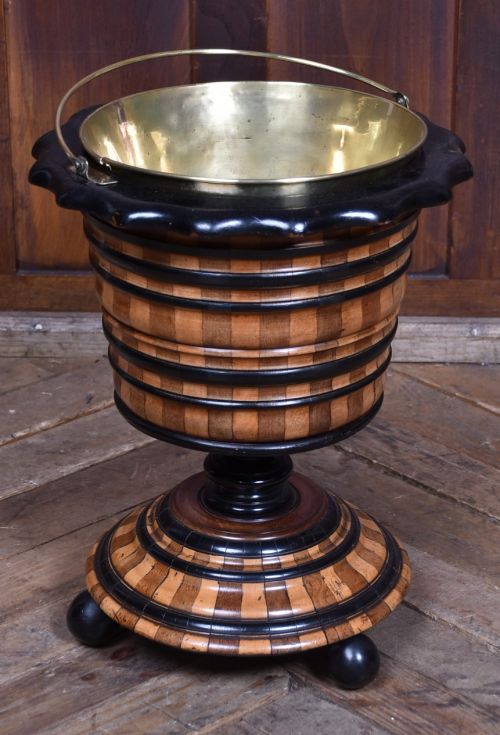
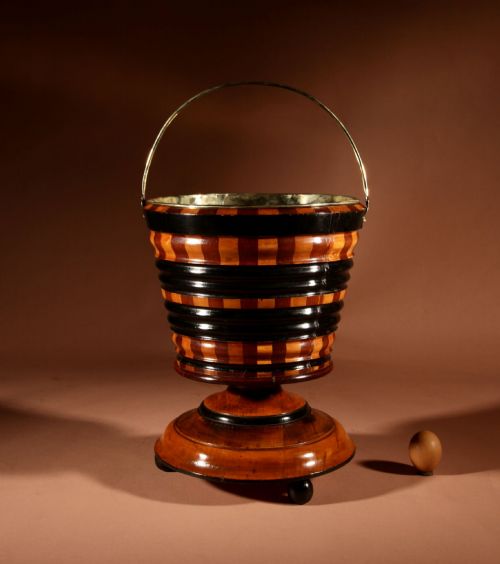
These brass liner wooden bucket examples are robust hearthside storage vessels and planters crafted to hold fuel or greenery.
Brass Liner Wooden Bucket
When you search for a brass liner wooden bucket, you encounter a specialised form of hearthside storage and decorative vessel spanning the Georgian, Victorian, and Edwardian eras. These pieces function as coal bins, peat buckets, tea stoves, jardinières, and wine coolers.
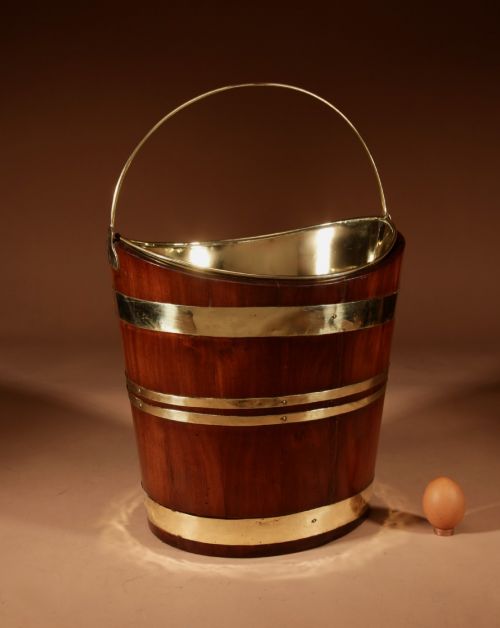
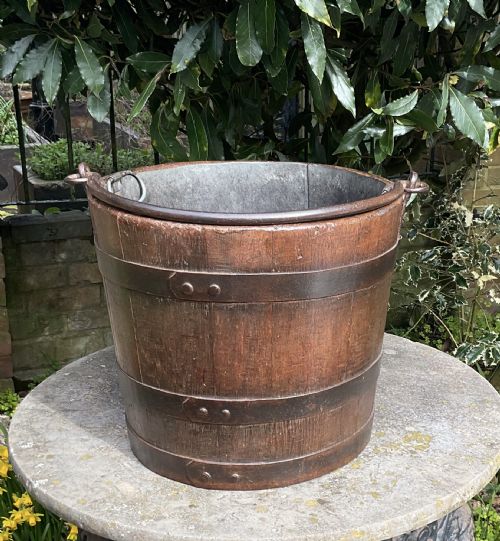
The most common examples on this page are coopered wooden buckets fashioned from mahogany, walnut, or oak, often fitted with distinctive brass bands, swing handles, and removable metal liners. Their origins trace across English traditional workshops and nineteenth century Dutch designs.
Forms vary from boat-shaped schuitje peat buckets to cylindrical fireside stores and open wine coolers. Each serves a dual purpose as both a practical container for fuel and a refined decorative feature for the hearth or room.
Construction materials and techniques
The primary construction relies on traditional cooperage techniques, joining individual staves of mahogany, oak, walnut, mixed hardwoods, or ebonised wood to form water-tight or fuel-tight cylindrical and boat-shaped bodies. Metal bands in brass and iron are fitted tightly around the wood to secure the staves.
Internal metal liners, typically formed in brass or other metals, protect the wooden structure from moisture, peat, coal, or damp earth when utilised as a planter or fireside store. Additional detailing includes brass spindle work, swing handles, and occasionally matching shovels.
The listings here feature pieces spanning from the 18th century through to the early 20th century, constructed in mahogany, oak, and walnut.
Distinctions in quality and execution
Quality separates through the selection of timber grain, such as figured mahogany or rich walnut, and the precision of the coopered joints. Superior pieces exhibit tight, seamless stave construction alongside robust brass banding and original metal liners.
Decorative embellishments also define the tier of a piece, distinguishing simple utilitarian fire buckets from finely shaped boat forms with intricate brass bindings and spindle galleries.
The Brass Liner Wooden Bucket Glossary
- Coopered
- Constructed from curved wooden staves bound together with metal hoops, similar to barrel-making techniques. This method provides structural strength for holding heavy loads of coal or damp peat.
- Jardiniere
- An ornamental pot or stand designed to hold growing plants or flowers. In these listings, they frequently share forms with fuel buckets.
- Purdonium
- A domestic coal box or bin, typically featuring a sloping front and a metal lining. They often include a matching coal shovel.
- Schuitje
- A boat-shaped vessel style originating in Dutch design traditions. These curved forms are frequently encountered in peat buckets and tea stoves.
Brass Liner Wooden Bucket: Frequently Asked Questions
What were these buckets originally used for?
These vessels served various domestic functions near the hearth, including storing coal, holding peat for fuel, or functioning as tea stoves and wine coolers.
Over time, many of these same forms transitioned into decorative planters or jardinières for displaying greenery within the main rooms of the house.
How do I identify the period of a piece?
Dating relies on examining the timber species, construction methods, and stylistic cues present in the brass fittings and woodworking details.
Georgian and Regency examples often display restrained classical lines and rich mahogany, while Victorian and Edwardian pieces frequently incorporate heavier walnut, ebonised wood, or more elaborate decorative shaping.
Can these buckets still be used for plants?
The inclusion of a metal liner makes many of these vessels suitable for holding potted plants or floral displays.
Care should be taken to protect the interior metal and surrounding wood from excessive moisture to preserve the historic materials.
Are the brass liners original?
Many listings retain their original metal or brass liners, which were designed to protect the wooden staves from the contents.
These removable inserts are integral to the piece, serving both practical containment and historical completeness.