



Brass Handle Oak Server
A brass handle oak server is a sturdy timber storage piece fitted with metal pulls, built to serve family life for generations.
Brass Handle Oak Server
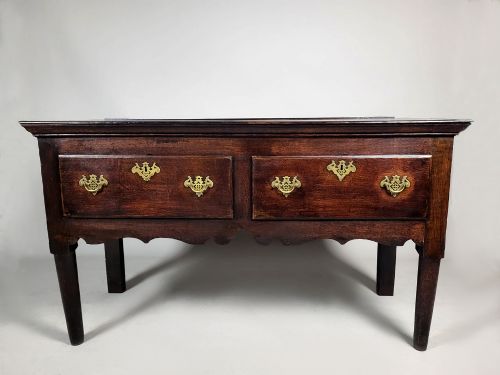
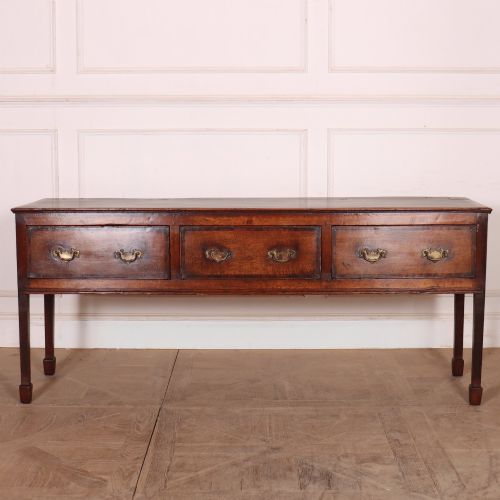
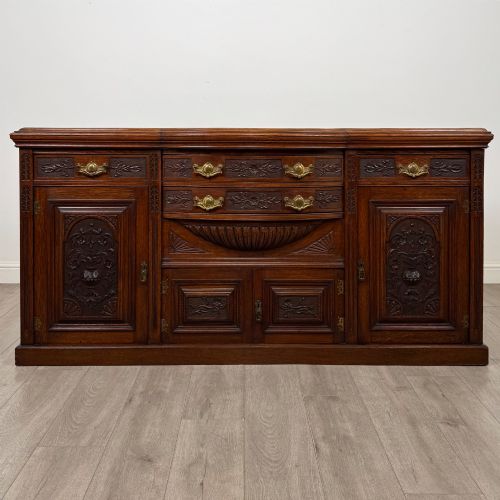
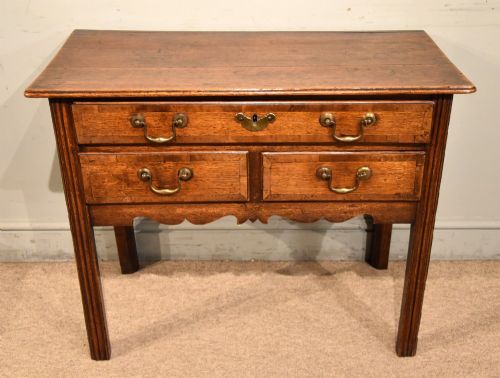
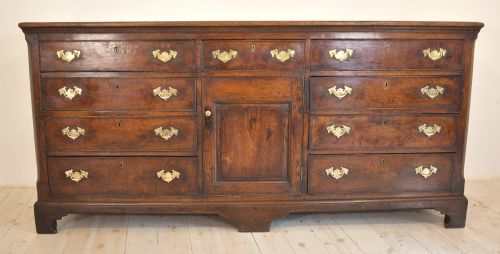
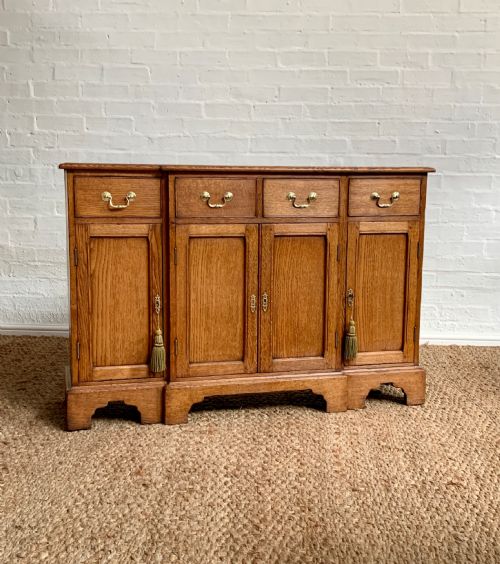
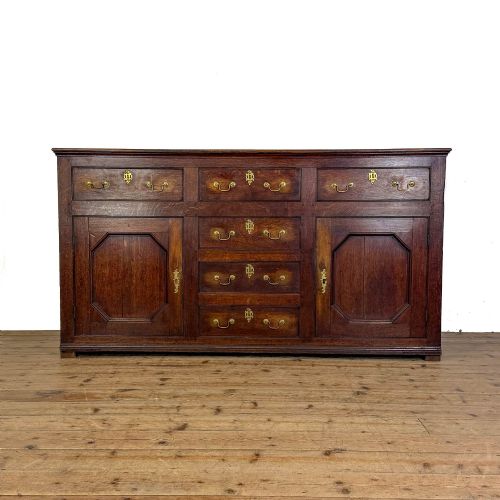
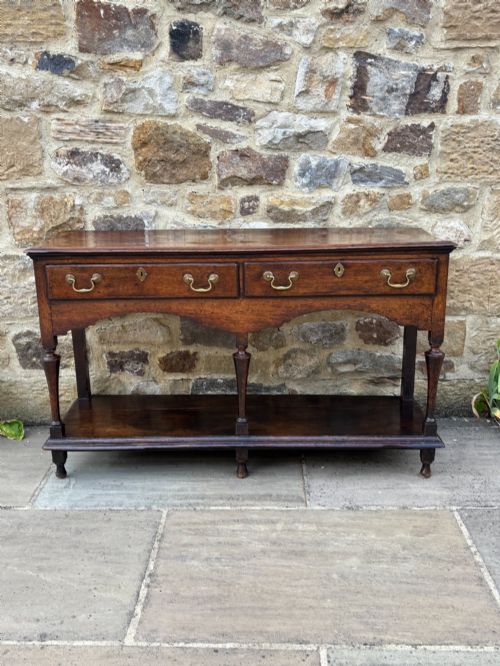
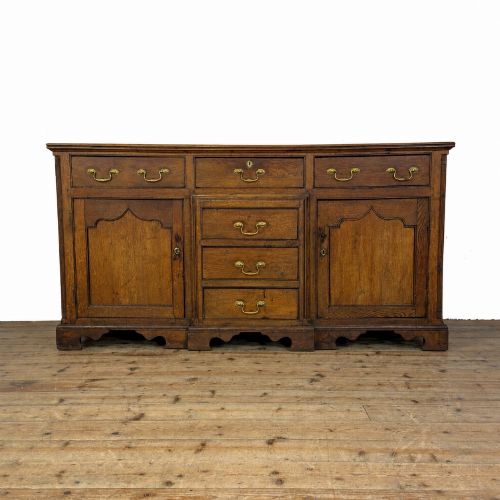
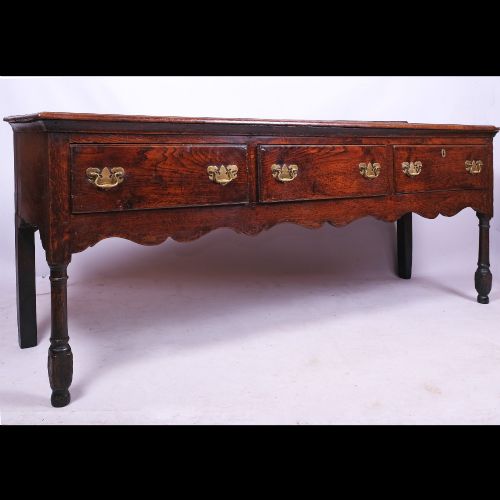
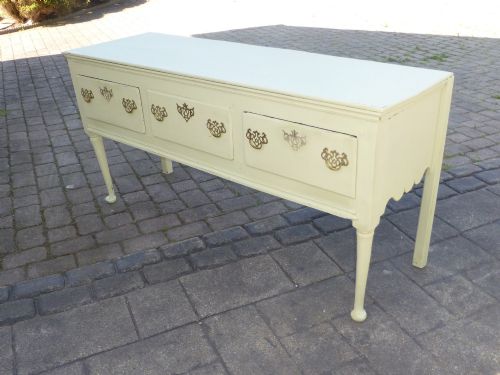
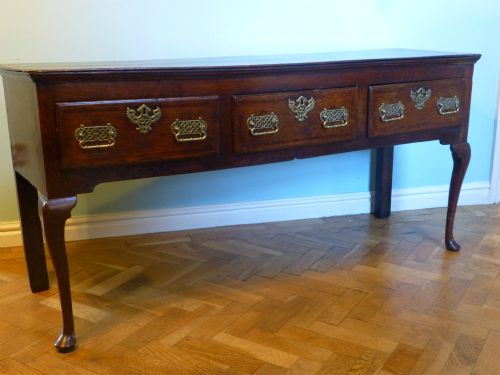
A brass handle oak server appears on this page primarily as a traditional dresser base, sideboard, lowboy, or side table. These functional forms belong predominantly to the eighteenth century, including the Georgian and Queen Anne periods, alongside nineteenth-century and seventeenth-century style examples.
Makers shaped these utilitarian items from English oak, frequently pairing the solid timber with gleaming brass handles and occasional inlay timber, paint, or walnut accents. Such furniture originates in regional workshops, including Lancashire traditions, where storage and serving surfaces mattered most.
Buyers encounter everything from compact lowboys to substantial potboard dressers, each reflecting the straightforward utility of historic domestic spaces. The selection ranges from unpretentious country designs to carved Victorian interpretations.
How they were made
Carpenters built these servers using sturdy oak timbers joined by hand, creating robust frames designed for daily domestic service. Surfaces often display the distinct grain of the wood, sometimes enhanced by applied paint or subtle inlay work.
Metalworking trade methods provided the characteristic brass handles and mountings that secure drawer fronts and doors. These fittings complement the timber body, fastened securely to withstand constant handling.
Many an eighteenth-century cook kept spare rolling pins tucked safely on the potboard.
What varies in quality
Construction methods determine the structural integrity of each server, separating utilitarian pieces from finer cabinet work. Joinery tightness and the preservation of original timber surfaces set individual examples apart.
The survival of original brass hardware heavily influences the character of a piece. Examples retaining their period-correct handles demonstrate greater historical continuity than those fitted with later replacements.
The Brass Handle Oak Server Glossary
- Dresser base
- A low wooden sideboard fitted with drawers, historically used for food preparation and storage in the dining room or kitchen. These items often feature potboards or multiple drawers along the front.
- Lowboy
- A small table with drawers, typically standing on four legs, used as a side table or dressing table. Georgian examples in oak frequently serve multiple household functions.
- Potboard
- An open lower shelf beneath a dresser base designed to hold pots, pans, and serving dishes. This traditional feature provides stable open storage close to the floor.
- Lancashire dresser
- A regional furniture type from northwest England characterised by deep drawers and robust proportions. These servers reflect local woodworking preferences of the eighteenth century.
- Cabriole leg
- A furniture leg that curves out and then in, commonly found on eighteenth-century seating and tables. This elegant form lifts the heavy oak body visually.
Brass Handle Oak Server: Frequently Asked Questions
What is a brass handle oak server used for?
These servers provide practical surface space and enclosed drawer storage in dining rooms, hallways, or kitchens. Historically, they held tableware, linens, and provisions for daily household meals.
Today, they function well as sideboards for serving food, media consoles, or statement storage furniture in traditional and modern interiors.
How do I date an oak server?
Dating relies on examining construction techniques, timber characteristics, and stylistic details such as leg shape and drawer configuration. Eighteenth-century pieces often show hand-cut joinery and period-specific brass hardware.
Comparing the piece to documented Georgian, Victorian, or seventeenth-century styles helps narrow down the probable era of manufacture.
Are brass handles original to these pieces?
Original brass handles show consistent wear, patination, and mounting marks that match the age of the surrounding oak timber. Replacement hardware is common on antique furniture due to centuries of use and repair.
Inspecting the interior of the drawer reveals whether previous handle placements match the current brass configuration.
How should I care for antique oak?
Antique oak benefits from stable indoor humidity and protection from direct sunlight, which can dry out and fade the timber. Regular dusting with a soft, dry cloth preserves the finish without chemical buildup.
Application of traditional wax occasionally nourishes the wood and maintains the natural lustre of the surface over time.