






Brass Handle Door Stop
A brass handle door stop keeps heavy doors securely open while bringing period metalwork into a room.
Brass Handle Door Stop
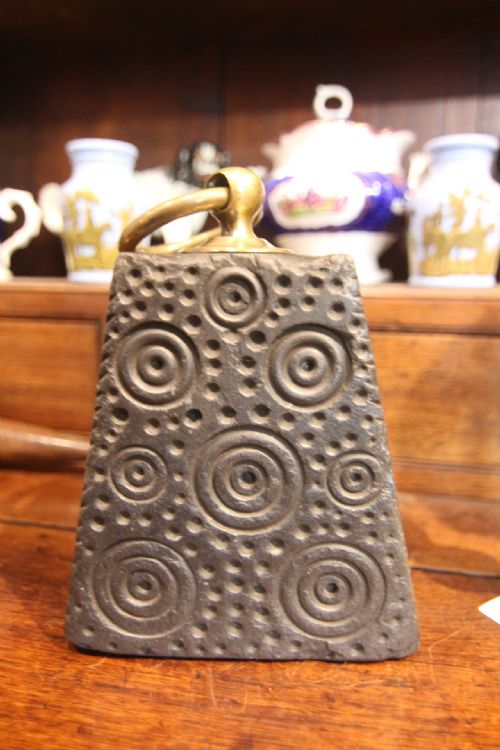
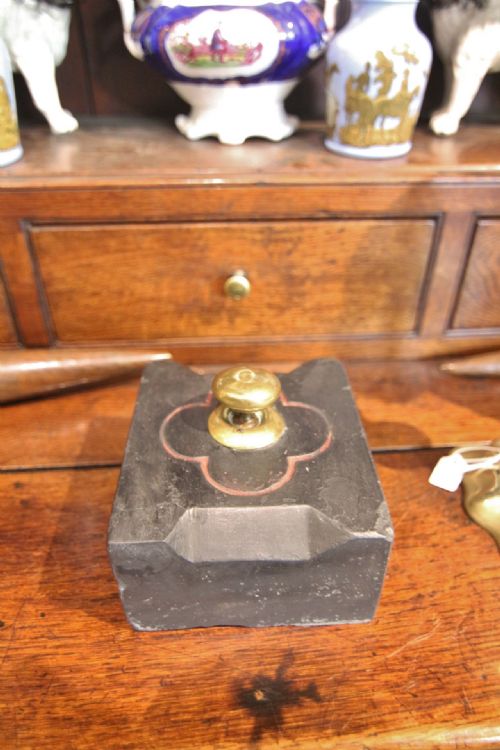
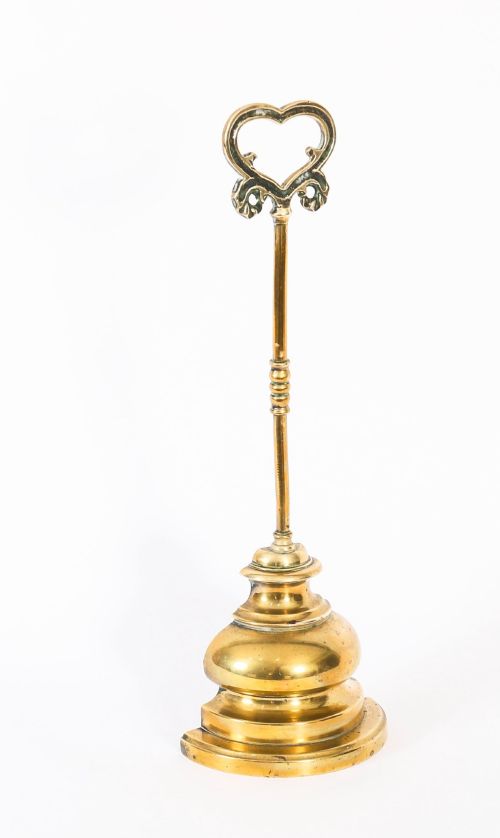
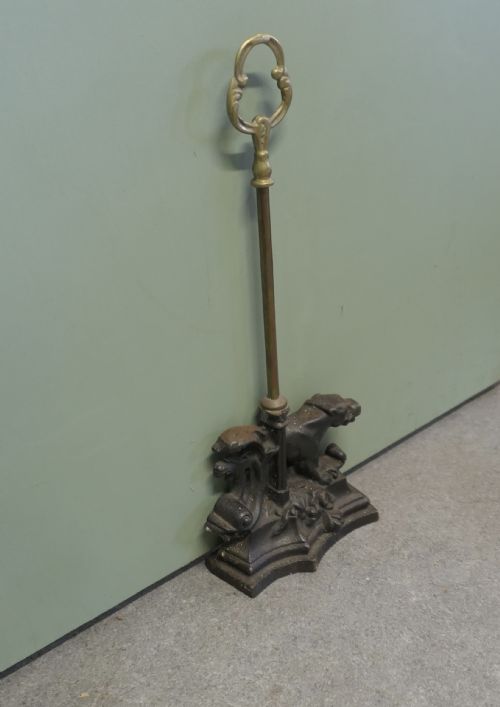
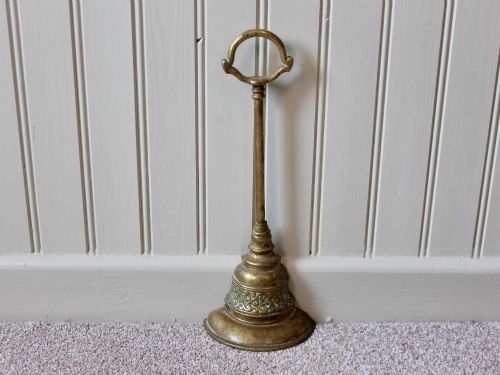
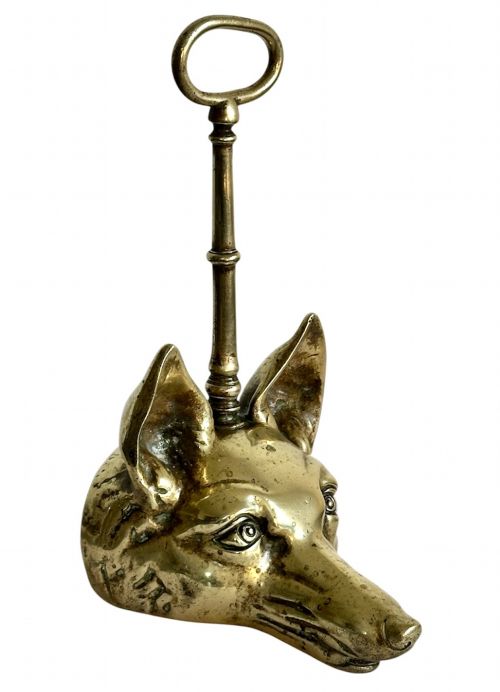
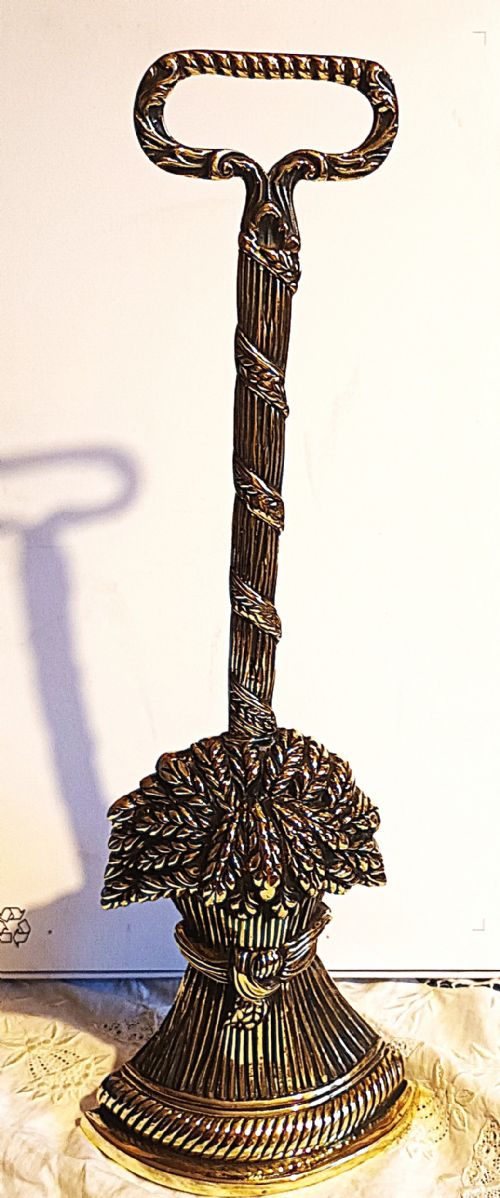
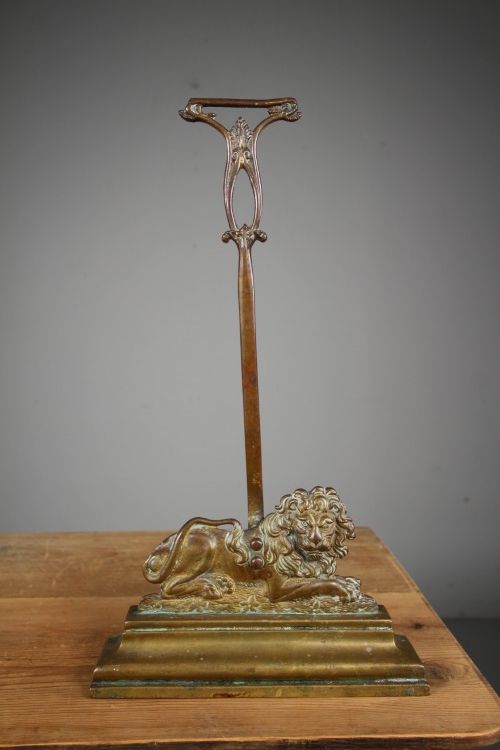
A brass handle door stop is a functional porter designed to hold heavy interior doors open against draughts. When searching for a brass handle door stop, collectors typically encounter 19th Century and Victorian examples shaped as lions, cherubs, and animal heads.
Most pieces seen here originate from the 19th Century, including Late Regency and Victorian periods, alongside earlier Georgian designs from around 1800. These heavy metal stops often incorporate an integrated loop or handle at the top for easy movement between rooms.
Moulded cast brass and cast iron form the primary structures of these objects, sometimes weighted with lead internals. Formats range from simple utilitarian stops to decorative figurative porters representing foxes or mythological figures.
Materials and construction methods
Foundry workers utilised sand-casting techniques to pour molten brass or iron into detailed moulds, creating sturdy figurative and scroll-top bodies. The resulting metal shells required substantial internal weighting, often achieved by pouring lead into the hollow base.
Makers applied loops and handles directly into the casting or secured them mechanically to the main body to allow lifting. Surface finishing involved basic polishing or patination of the cast brass and cast iron to highlight the sculptural details.
Brass Handle Door Stop Retail Price Guide 2026
Typical asking prices for brass handle door stop among the pieces listed under this phrase on Sellingantiques today, from the lower quarter to the upper quarter. They describe what is for sale here now, not the wider market.
Victorian households regularly enlisted heavy brass foxes and cherubs to keep the parlour draughts at bay.
Distinguishing quality in period stops
The crispness of the original cast dictates the visual success of the piece, separating finely detailed lion and cherub faces from softened production runs. Heavy metal distribution ensures the door stop functions reliably in daily use without tipping under pressure.
Surface integrity and original material combinations, such as uncompromised brass shells paired with secure handles, elevate the standing of an individual porter. Wear patterns and patination accumulated over centuries reflect genuine age rather than simulated ageing.
The Brass Handle Door Stop Glossary
- Door porter
- A heavy portable weight used specifically for keeping interior doors open. These items sit on the floor rather than fixing to the skirting board or door itself.
- Cast brass
- Molten alloy poured into a mould to form solid or hollow decorative objects. This material provides durability and a bright metallic finish.
- Late Regency
- A transitional design period spanning the early decades of the 19th Century. Pieces from this era often blend classical restraint with bolder ornamentation.
Brass Handle Door Stop: Frequently Asked Questions
How do I use a heavy door porter?
Place the heavy metal base directly on the floor against the edge of an interior door to prevent it from swinging shut in a draught. The integrated handle allows you to lift and reposition the weight easily with one hand.
Because these objects are substantial, they hold open heavy wooden doors without sliding across carpeted or bare wooden floors.
What is the difference between brass and cast iron stops?
Brass stops feature a golden metallic alloy that develops a warm dark patination over time and resists rust. Cast iron stops offer a darker, heavier utilitarian alternative that was frequently painted in period interiors.
Both metals were cast into decorative shapes like lions and cherubs, but brass examples generally retained a brighter decorative presence in formal rooms.
How can I tell a Victorian stop from a Georgian one?
Georgian and Late Regency pieces dating around 1800 tend to display classical restraint in their scrollwork and handles. Victorian examples from later in the 19th Century often feature more exuberant figurative work, such as cherubs or animal heads.
Examining the casting style and overall heft helps place the object within its correct 19th Century manufacturing window.
Are these door stops heavy enough for thick doors?
Nineteenth-century door porters were cast with substantial metal walls and often filled with lead to hold heavy interior doors. Their considerable weight provides the necessary friction to keep large wooden doors stationary.
Their primary purpose historically was to manage draughts in tall-ceilinged rooms by anchoring heavy panelled doors securely in place.