


Brass Gooseneck Reading Light
A brass gooseneck reading light brings flexible illumination and period character to a desk or reading corner.
Brass Gooseneck Reading Light
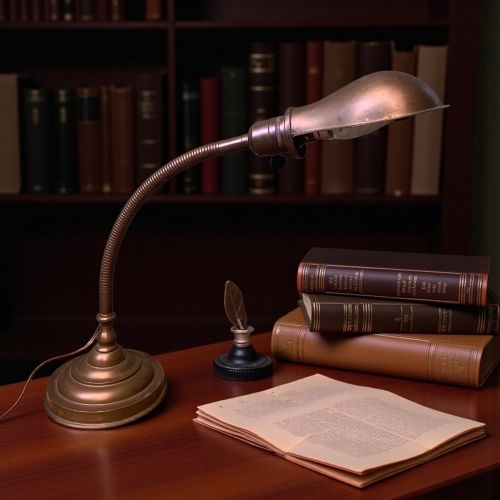
A brass gooseneck reading light is designed to direct focused illumination exactly where it is needed for work or reading. These pieces appear primarily as desk lamps, table lamps, and floor lamps spanning the nineteenth century through the nineteen-thirties.
The selection on this page centres heavily on Edwardian and early twentieth-century examples, alongside nineteenth-century French designs and later Art Deco interpretations. Buyers encounter adjustable angle models, swing-arm formats, and flexible stems paired with various shade configurations.
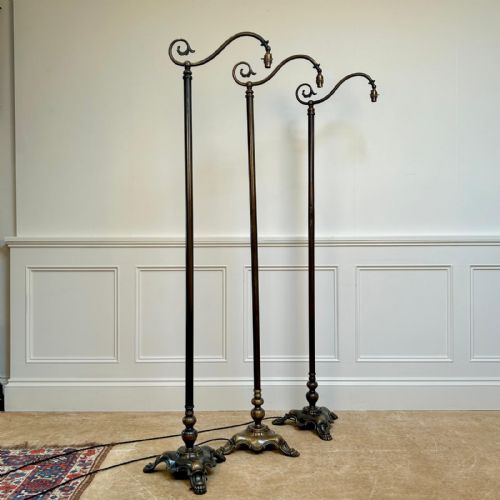
Forms range from traditional student lamps to heavy desk lamps in brass and bronze. Many pieces incorporate functional swivels and articulated necks designed for practical daily use in studies and libraries.
Materials and construction
Metal fabrication forms the foundation of these pieces, utilising brass, patinated brass, bronze, and cast iron. Structural components are frequently cast or turned to achieve the characteristic articulated arms and weighted bases.
Lighting elements are completed with glass components, including etched glass, cranberry glass, and porcelain shades. Fabric elements and original shades occasionally survive to complement the metalwork.
The listings span the nineteenth century, the Edwardian era, and the nineteen-twenties and thirties, utilising brass, bronze, cranberry glass, and porcelain.
Assessing quality and execution
Quality in a brass gooseneck reading light rests upon the mechanical precision of the joints, the weight of the base, and the integrity of the metal casting. Substantial gauge brass and robust swivel mechanisms separate superior pieces from lighter alternatives.
The retention of original components, such as specialised cranberry glass or etched shades, influences the integrity of the piece. Fine chasing on bronze mounts and clean lines on Art Deco shell-shaped bases distinguish better examples.
The Brass Gooseneck Reading Light Glossary
- Gooseneck
- A flexible or articulated metal tube that allows the lamp head to be bent and repositioned at various angles. This design provides targeted illumination for specific tasks.
- Cranberry glass
- A rich pinkish-red glass produced by adding gold chloride to the molten glass batch. It appears frequently on Edwardian student reading lamps.
- Patinated brass
- Brass that has undergone a chemical or natural treatment to darken the surface and create a muted finish. This treatment alters the bright metallic appearance of raw brass.
- Student lamp
- A traditional nineteenth or early twentieth-century lamp design featuring an adjustable arm and shade intended for desk or table study. These pieces often incorporate heavy weighted bases for stability.
Brass Gooseneck Reading Light: Frequently Asked Questions
How do I clean an antique brass lamp?
Dust the surface regularly with a soft, dry cloth to prevent the buildup of grime. Avoid harsh chemical polishes that strip away historical patination.
For stubborn marks, use a mild soapy solution on a damp cloth, drying the metal immediately afterwards.
Are these lamps safe to use today?
Many surviving pieces are sold having been rewired for modern electrical standards. It remains prudent to have any antique lighting checked by a qualified electrician prior to regular use.
Ensure that appropriate modern bulbs are utilised to manage heat output near historical shades.
What is the difference between a student lamp and a desk lamp?
Student lamps traditionally feature a specific configuration designed to hold oil or early electric mechanisms with an adjustable shade arm. General desk lamps encompass a broader range of adjustable and fixed formats.
Both types serve similar utilitarian functions in studies and libraries.
How do I identify an Edwardian reading light?
Edwardian pieces typically date from the opening decade of the twentieth century and often combine polished brass with cranberry glass or porcelain elements. The construction prioritises functional adjustment through swivels and swan neck stems.
Stylistic cues align with the domestic architecture and interior design of the period.