



Brass Glass Wall Appliques
These brass glass wall appliques bring brilliant illumination and classical elegance to any interior scheme.
Brass Glass Wall Appliques
When you search for brass glass wall appliques, you encounter decorative lighting fixtures designed to mount directly onto vertical surfaces. These pieces illuminate hallways, reception rooms and intimate corners while adding structural ornamentation to the wall space.
The selections span various historical periods including the nineteenth century, the Edwardian era and the nineteen-twenties. You will frequently find pairs and sets originating from French and Swedish workshops.
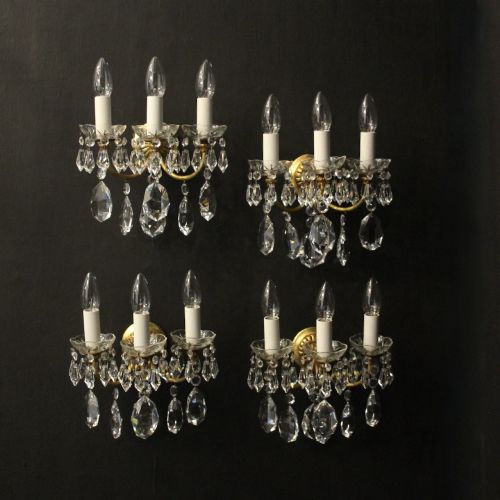
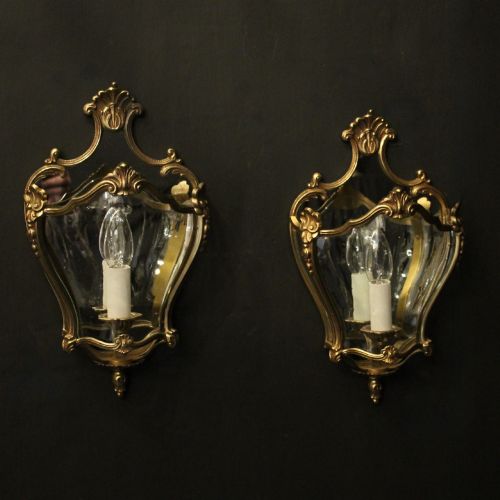
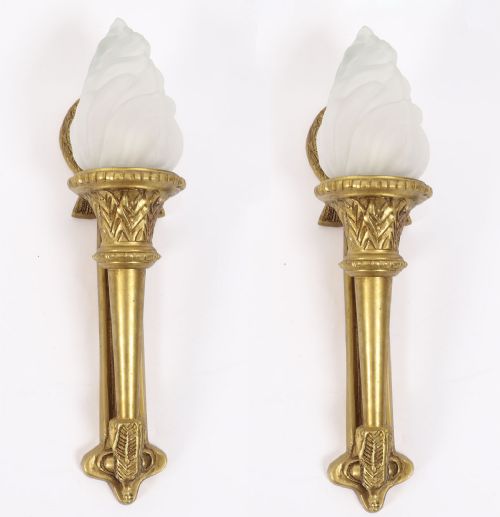
Common configurations include triple-arm fittings, half lanterns and torch-style sconces. These objects combine metal backplates and frames with glass drops, shades and crystals.
How they were made
Maker's workshops utilised cast and worked brass, bronze, gilt brass and ormolu for the structural arms, backplates and lantern frames. These metal components provided a sturdy skeleton capable of supporting heavy glass elements.
The transparent and reflective components incorporate cut crystal, frosted glass and beaded ornamentation. Artisans shaped and polished these glass sections to catch and refract the illumination from candles or early electric bulbs.
Several pieces include surviving nineteenth-century glass shades named after specific makers, preserving original workshop pairings.
What varies in quality
The refinement of the metal casting and the depth of the gilding set the finer examples apart from standard production. Superior mountings display crisp detailing in the foliate and classical motifs.
The clarity, cut and weight of the crystal or glass components dictate the overall brilliance of the fixture. Substantial hand-cut drops and original period shades indicate a higher grade of manufacture.
F. & C. Osler·Dugué
The Brass Glass Wall Appliques Glossary
- Ormolu
- A gilded bronze technique utilising finely ground high-purity gold applied to a copper-zinc alloy base. This treatment yields a rich, durable metallic finish found on neoclassical and revival pieces.
- Lustre
- A glass pendant or drop suspended from a lighting fixture to refract light. These elements hang in multiples to enhance the sparkle of the wall light.
- Sconce
- A wall-mounted lighting bracket designed to hold candles or electric lamps. The form secures directly to vertical surfaces via a decorative backplate.
- Torch
- A wall light shaped to resemble a classical flaming torch. These fixtures often incorporate gilt bronze or brass flames above the main illumination point.
Brass Glass Wall Appliques: Frequently Asked Questions
Where should I mount wall appliques?
These fixtures suit hallways, flanking fireplaces, or framing mirrors in principal reception rooms. Their projection from the wall requires careful placement in narrow circulation spaces.
Positioning them at eye level ensures balanced illumination and highlights the reflective glass and metal details without causing glare.
Are these lights wired for modern electricity?
Many examples arrive rewired or adapted for contemporary electrical standards while retaining their antique components. Professional installation ensures safe integration into domestic circuits.
Checking the internal wiring configuration with a qualified electrician guarantees compliance with current safety regulations upon mounting.
How do I clean brass and crystal appliques?
Dusting the crystal drops and metal frames with a soft cloth prevents accumulation without risking the finish. Avoid abrasive chemical cleaners on the gilt or ormolu surfaces.
Removing detachable glass components allows for gentle washing in lukewarm water, restoring their original sparkle before reattachment.
How do I identify a nineteenth century piece?
Nineteenth century examples typically display heavier bronze or brass castings with hand-finished chasing. The patination on the metal develops a deeper warmth over decades of handling.
Construction methods on older pieces often reveal threaded pins and hand-cut screws rather than modern machine-stamped fixings.