

Brass Glass Drop Chandelier
A brass glass drop chandelier brings brilliant sparkle and warm metallic reflection to a room, turning everyday illumination into an architectural focal point.
Brass Glass Drop Chandelier
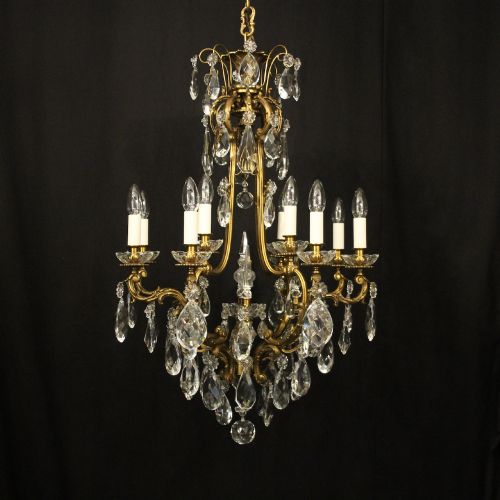
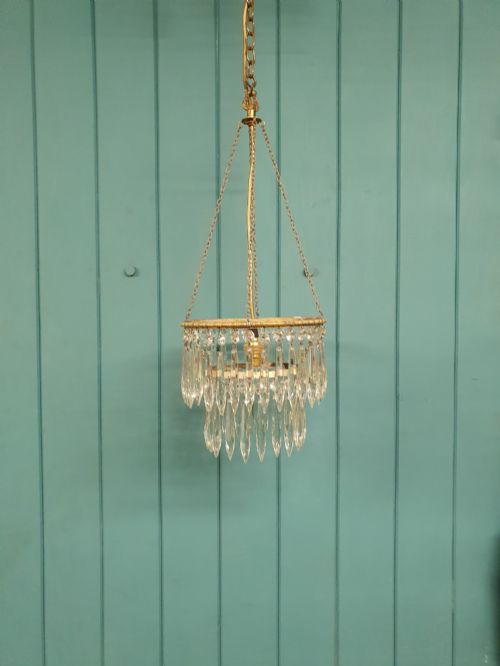
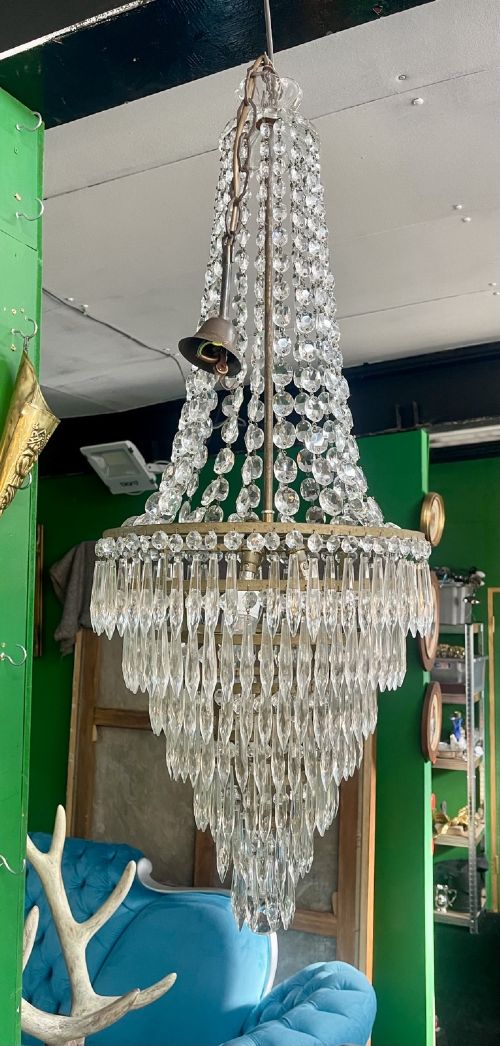
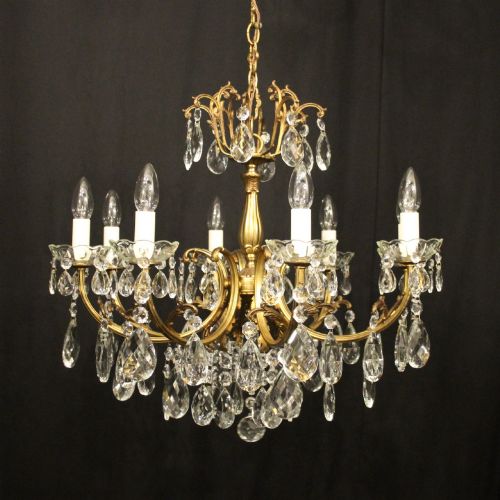
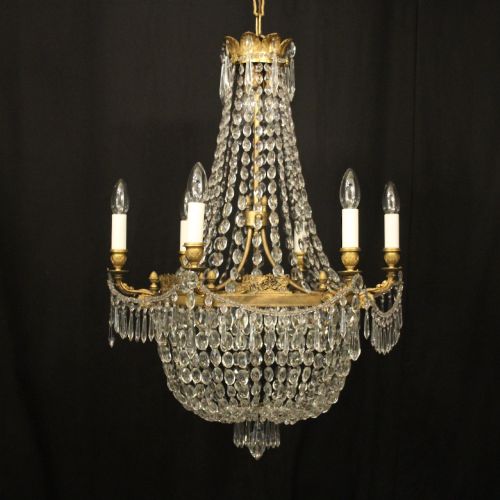
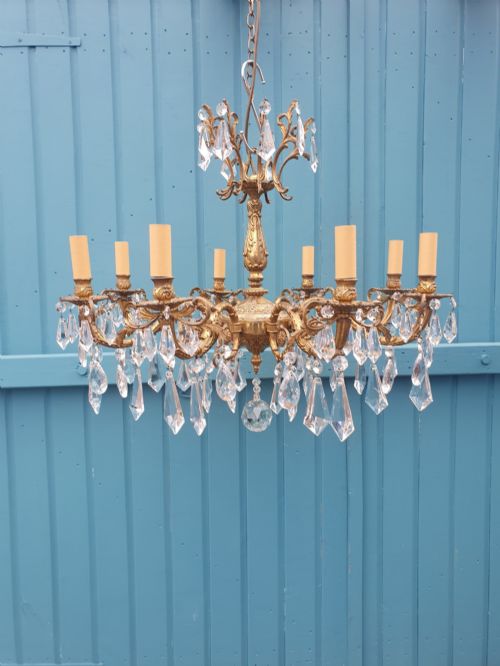
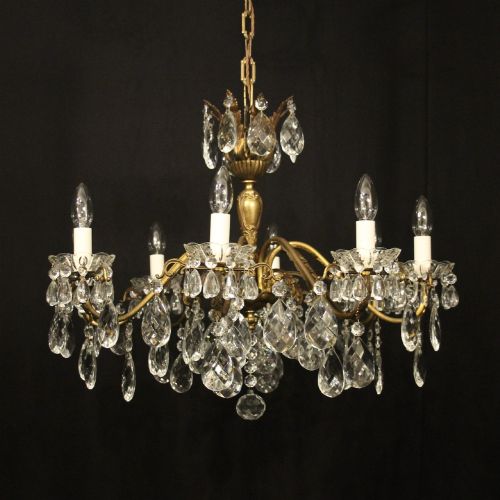
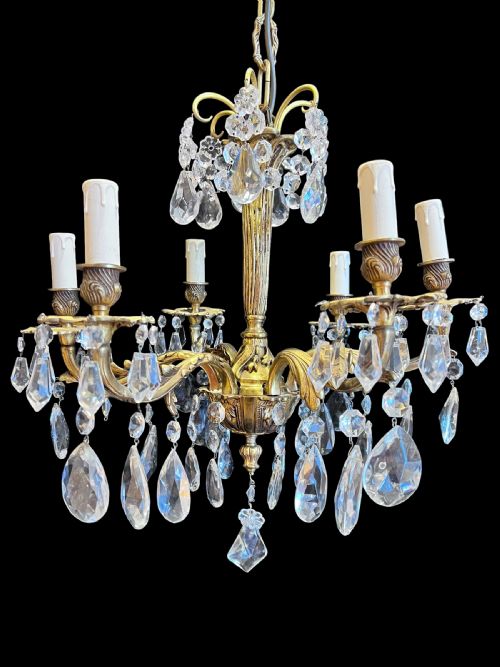
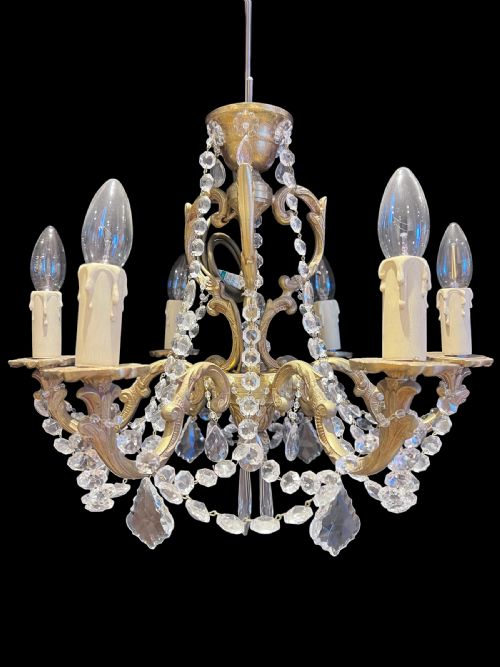
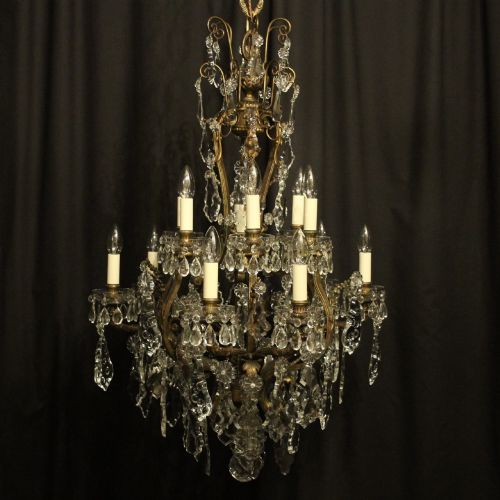
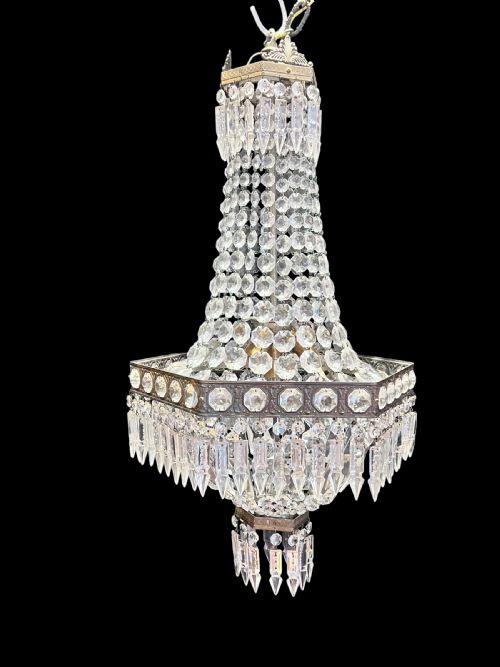
A brass glass drop chandelier combines a structural metal frame with suspended glass or crystal elements designed to refract light across a space. Buyers seeking these fixtures encounter a range of forms, from compact Edwardian bag and spike designs to expansive multi-tiered French Empire and tent-and-waterfall configurations.
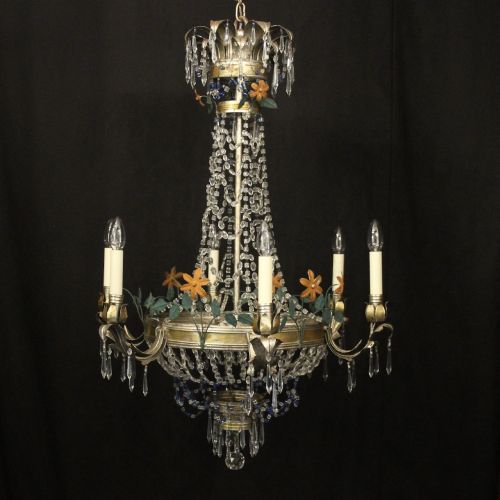
The materials and styles span from the nineteenth century into the 1930s, heavily weighted toward French and Italian aesthetics. Common expressions include gilded bronze frameworks, multi-arm chandeliers, and elaborate drop configurations incorporating coloured, amethyst, pink, or turquoise crystals.
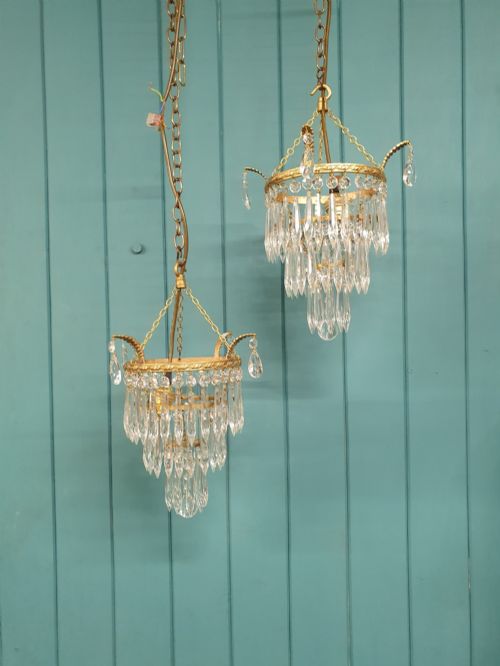
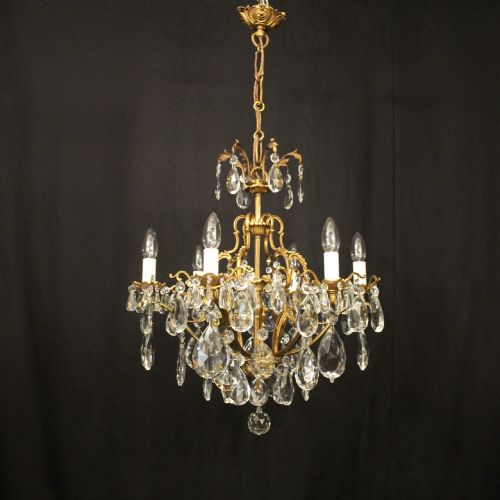
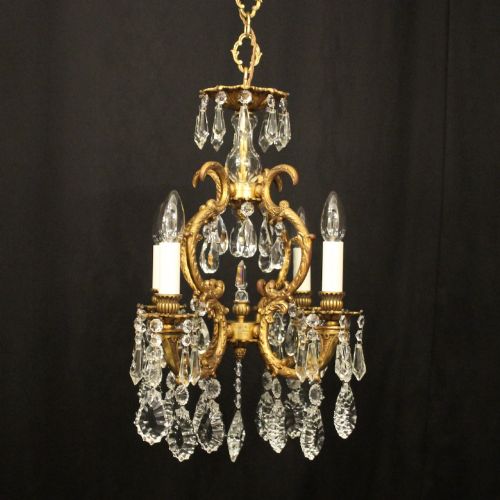
Smaller variations such as single-light pendants, bag chandeliers, and miniature spike fixtures appear frequently alongside larger multi-branch chandeliers. These pieces operate effectively in both intimate rooms and grand hallways, maintaining historical character through patinated brass and hand-cut glass prisms.
Materials and construction
Frames are constructed from cast brass, gilded brass, or gilded bronze, providing a rigid structural armature to support multiple candle arms or internal electric bulb fittings. Metal components often feature decorative casting or leaf ornamentation, establishing the underlying silhouette before glass elements are added.
Glass and crystal drops are attached by hand using wire loops or brass pins, linking individual prisms into chains, waterfalls, or cascading tents. Cut glass, cut crystal, and frosted glass elements are shaped to maximise light refraction, while specialist additions introduce coloured crystals and tolewear accents.
The inventory spans the late nineteenth century through the 1930s, incorporating Edwardian, Art Deco, and French regional styles.
Factors of quality
Quality rests in the precision of the metal casting and the clarity of the glass drops. Heavier brass frames with crisp relief work and well-finished gilt surfaces sit above simpler, lighter stamped metal constructions.
The optical purity of the crystal and the complexity of the glass cutting dictate the brilliance of the illumination. Hand-cut prisms with sharp facets and complete matching drops distinguish superior examples from fixtures assembled with mixed or replacement glass components.
The Brass Glass Drop Chandelier Glossary
- Tent and waterfall
- A specific lighting configuration where an upper canopy of glass strings forms a tent shape above a cascading lower section of drops. This arrangement maximises the surface area for light refraction.
- Bag chandelier
- A compact fixture featuring a flattened bag or basket shape formed from numerous hanging glass beads and drops. These designs originated in the eighteenth century and remained popular through the Edwardian period.
- Gilded bronze
- A metal alloy treated with a gold finish, often termed ormolu, utilised in high-status French frames. It provides a rich, durable surface that resists tarnishing better than untreated brass.
- Cut crystal
- Glass containing lead oxide, cut and polished to create sharp facets that disperse light into spectral colours. It represents a higher grade of material than standard pressed glass.
- Spike chandelier
- A vertical hanging fixture terminating in a central spear or spike element, surrounded by radiating arms and glass prisms. These examples are frequently smaller in scale and date from the early twentieth century.
Brass Glass Drop Chandelier: Frequently Asked Questions
How do I clean a brass glass drop chandelier?
Cleaning requires removing the glass drops individually and washing them in warm soapy water before drying them with a lint-free cloth. The brass frame should be wiped gently with a soft dry cloth to preserve the natural patina without stripping the finish.
Harsh chemical cleaners must be avoided on both the metal and the crystal, as they can damage gilt surfaces and etch the glass. Regular dusting helps maintain the brilliance of the drops between deep cleanings.
Are these chandeliers wired for modern electricity?
Many period fixtures arrive wired for contemporary use, though older European chandeliers often require rewiring to meet local electrical standards. A qualified electrician can adapt internal fittings safely without altering the exterior aesthetic of the brass and glass elements.
Converting candle-style sockets to accept low-wattage LED bulbs helps protect fragile antique glass from excessive heat. It is advisable to check the weight capacity of the ceiling joists before hanging heavy multi-light bronze fixtures.
What is the difference between Edwardian and French Empire styles?
Edwardian chandeliers tend to be smaller, featuring compact bag, basket, or spike forms with delicate glass prisms designed for modest ceiling heights. French Empire style fixtures are typically larger and more monumental, defined by symmetrical tent-and-waterfall arrangements and heavy gilded bronze frameworks.
Empire designs lean toward classical architectural symmetry, whereas Edwardian pieces often display lighter, airier proportions suited to domestic interiors of the early twentieth century.
How do I identify coloured crystals in these fixtures?
Coloured crystals appear as deliberate design accents in specific French and Italian pieces, introducing hues such as amethyst, pink, turquoise, or deep amber. These are integrated into the drop strands or central bodies to create contrast against clear glass prisms and brass frames.
Authenticity is determined by examining the material consistency, ensuring the coloured elements match the age, wear patterns, and manufacturing techniques of the surrounding clear drops.