


Brass Glass Carriage Clock Style
Brass glass carriage clock style pieces combine heavy metal frames with clear bevelled panes, offering portable timekeeping with a visible mechanical movement.
Brass Glass Carriage Clock Style
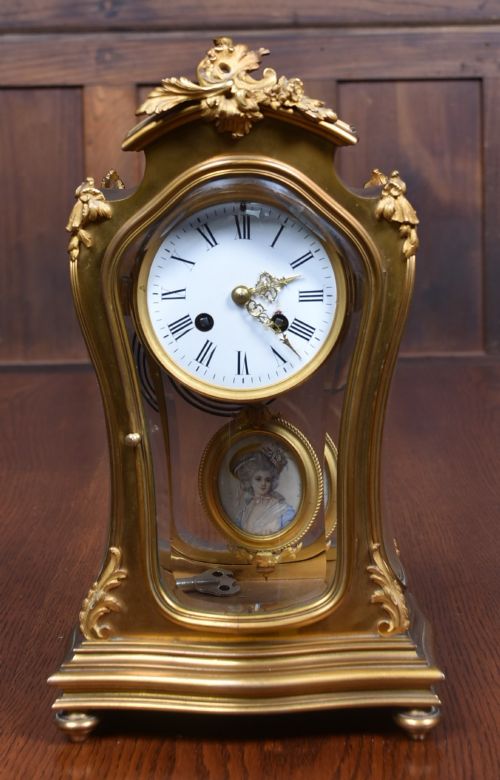
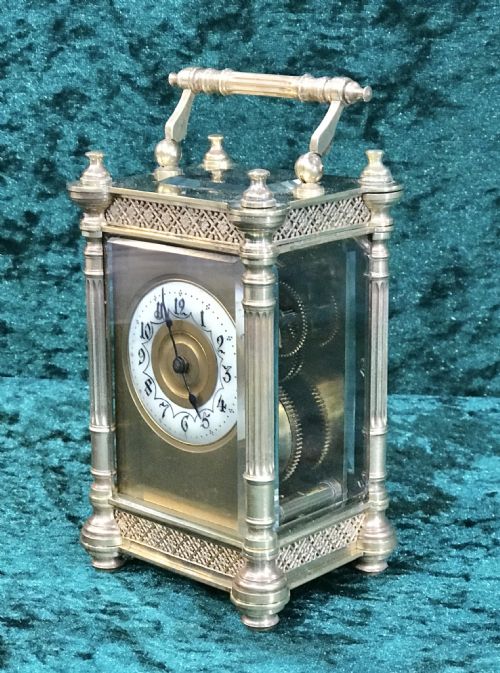
When you search for brass glass carriage clock style, you look at mantel and carriage clocks framed in brass, gilt brass, or gilt bronze with glass sides. These objects originate from various periods including the nineteenth century, the Victorian era, and the Edwardian era.
The most common versions on this page are French four-glass mantel clocks and traditional English carriage clocks. Examples span from miniature models to larger formats, encompassing styles such as French Rococo Revival, French Neoclassical, and Victorian filigree decoration.
How they were made
Panes of clear glass are fitted into the metal frames to reveal the internal gear train and escapement from multiple angles. Decorative elements like filigree work or classical revival motifs adorn the exterior brass surfaces.
Listings on this page span Victorian, Edwardian, and mid-twentieth-century periods, utilising brass, glass, and enamel.
What varies in quality
The distinction between tiers rests upon the precision of the cast brass framing and the quality of the glass bevelling. Maker signatures on the dial or movement elevate the standing of a piece within the range.
Finishing touches such as delicate filigree metalwork or signed miniature panels separate standard production models from finer examples produced by established makers.
Tiffany·J C Vickery London·Dent·Garrard and Co
The Brass Glass Carriage Clock Style Glossary
- Carriage clock
- A small, portable spring-driven clock designed for travellers in the nineteenth century. These items typically feature a glass-panelled brass case and a folding handle on top.
- Four-glass clock
- A mantel clock housed in a brass frame with glass panels on the front, back, and both sides. This design allows light to pass through and exposes the mechanical movement.
- Gilt brass
- Base metal treated with a thin layer of gold or gold-coloured wash to give a bright metallic appearance. This material appears commonly across Victorian and Edwardian clock cases.
- Enamel dial
- A clock face made by fusing powdered glass onto a metal substrate at high temperatures. This technique creates a smooth, glossy surface for painted numerals.
Brass Glass Carriage Clock Style: Frequently Asked Questions
What is a carriage clock?
A carriage clock is a small portable timekeeper housed in a brass frame with glass panels, originally built for travel.
These pieces use spring-driven movements and feature a handle on top for carrying.
How do four-glass clocks differ?
Four-glass clocks are mantel timepieces that replace wooden or solid metal sides with transparent glass panes on all four vertical surfaces.
This construction showcases the entire internal mechanism and escapement from multiple viewpoints.
Where were these clocks made?
The pieces recorded here originate primarily from French workshops and English makers during the nineteenth and twentieth centuries.
Design influences range from French Neoclassical and Rococo Revival styles to traditional English manufacturing.
What materials are used?
Cases utilise brass, gilt brass, and gilt bronze combined with clear glass panels and enamelled dial faces.
Some examples incorporate decorative metalwork such as Victorian filigree or signed miniature panels.