



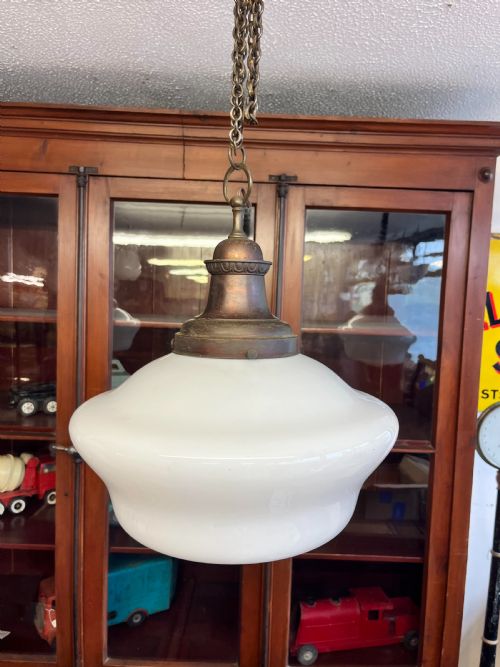


Brass Gallery Glass Shade
A brass gallery glass shade sits as the defining mount for period ceiling lighting, uniting functional glass forms with metalwork frames from the nineteenth century to the mid-twentieth century.
Brass Gallery Glass Shade
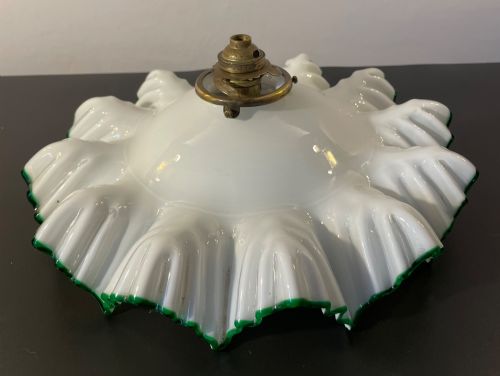
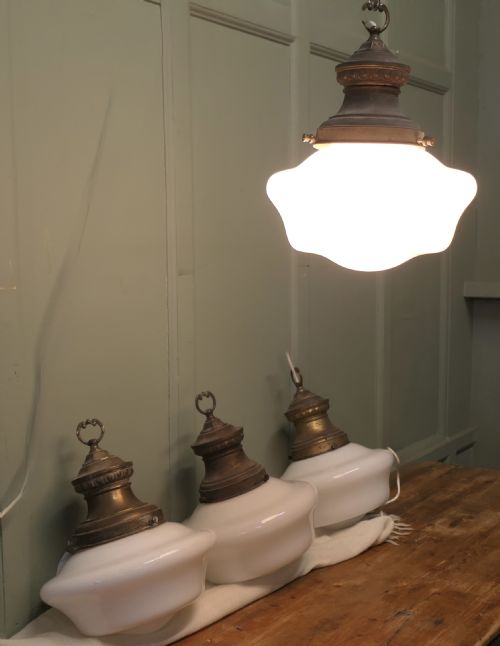
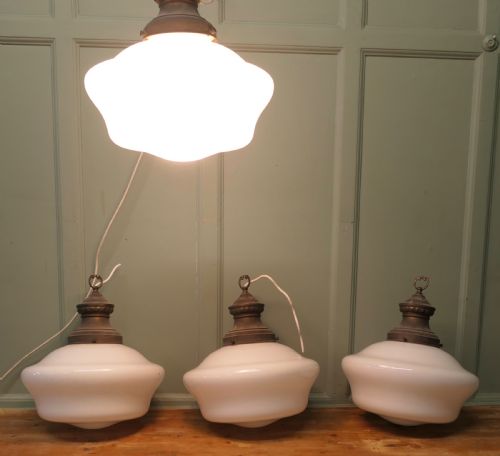
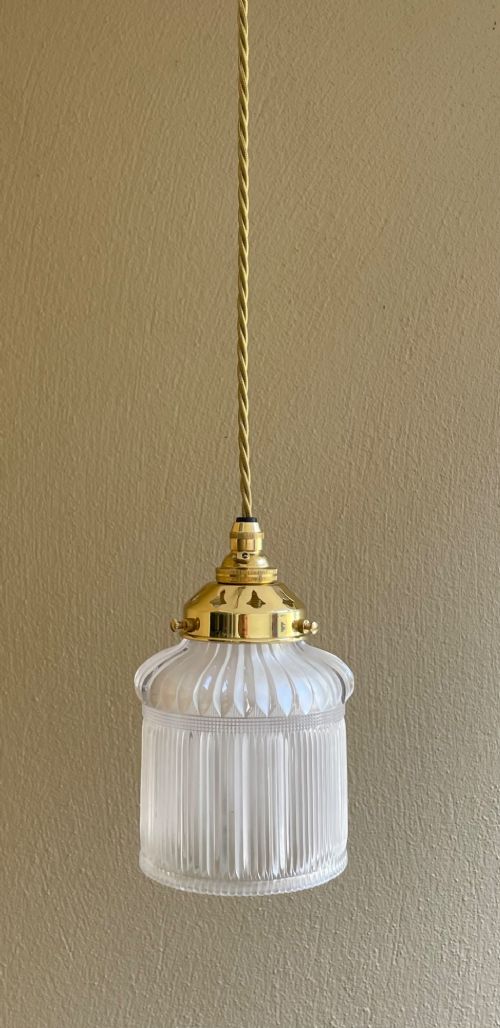
A brass gallery glass shade brings together a metal collar and a blown or moulded glass body designed for ceiling suspension. When buyers search for a brass gallery glass shade, they look for pendant lights and ceiling lamps that combine aged metalwork with functional glass diffusers.
The pieces on this page span the Edwardian era through the nineteen-forties, taking forms such as conical pendants, pear-shaped vessels, and prismatic shades. Domestic hallways, chapels, and industrial interiors all utilised these fixtures to distribute light effectively.
Edwardian and early twentieth-century examples dominate the selection, often pairing brass galleries with opaline, cut, or mirrored glass. Each piece reflects the functional requirements and stylistic preferences of its specific decade, ranging from ornate domestic lanterns to utilitarian industrial shades.
Materials and construction methods
Makers formed the structural galleries from cast or spun brass, securing the glass bodies with adjustable screws or fitted rims. Copper elements also appear alongside the brass mounts to hold heavier glass shades.
Glass production involved techniques such as mold-blowing opaline glass, cutting crystal surfaces, and pressing prismatic patterns into the material. Manufacturers like Holophane utilised specific optical designs in the glass to control and direct illumination.
Some early twentieth-century shades managed to survive decades of chapel services and hallway traffic completely intact.
Assessing quality in metal and glass
Quality rests in the weight of the brass gallery and the clarity and thickness of the glass shade. Heavy, crisply cast metalwork combined with evenly blown opaline or deeply cut glass distinguishes superior pieces.
The integration between the brass collar and the glass rim indicates the care taken during initial manufacture. Sound galleries hold the glass firmly without excessive pressure, maintaining stable alignment over decades of use.
The Brass Gallery Glass Shade Glossary
- Brass gallery
- The metal ring or mount that grips the top of a glass lampshade and connects to the suspension rod or chain. Galleries often feature decorative piercing or thumb screws to secure the glass.
- Opaline glass
- A milky, translucent white glass that diffuses light softly without glaring. It was widely used in pendant lights and lamp shades throughout the nineteenth and early twentieth centuries.
- Prismatic glass
- Glass moulded with specific geometric ribs or prisms on the surface to refract and distribute light evenly. Holophane production famously utilised this technique for industrial and commercial lighting.
- Pendant light
- A hanging light fixture suspended from the ceiling by a cord, chain, or metal rod. These fixtures serve as primary overhead illumination in domestic and commercial spaces.
- Moonstone glass
- A type of iridescent or mottled translucent glass resembling the appearance of moonstone. It provides a gentle, diffused glow when illuminated from within.
Brass Gallery Glass Shade: Frequently Asked Questions
How do I hang a pendant light?
Suspension requires securing the fixture to a ceiling joist or wiring box capable of supporting the combined weight of the brass gallery and glass shade. Professional installation ensures the electrical connections meet safety standards.
The height of the pendant depends on the room function, with dining tables and hallways requiring different clearance levels from the floor below.
Are these shades original to the brass galleries?
Many surviving fixtures retain their original matched brass galleries and glass shades from the period of manufacture. Standardised fitter sizes meant galleries and shades could also be combined historically.
Examining the wear patterns on both the metal rim and the glass neck helps confirm whether the components have a long-standing association.
How do I clean opaline glass shades?
Washing opaline glass requires warm water and mild soap, avoiding harsh abrasives that could scratch the delicate surface. Removing the shade from the brass gallery prevents damage to the metalwork during cleaning.
Thorough drying before reassembly protects both the electrical components and the inner surface of the shade from moisture spots.
What period are these lights from?
The lighting fixtures span from the nineteenth century through the nineteen-forties, covering Edwardian, Art Deco, and early industrial styles. Design characteristics such as gallery ornamentation and glass moulding indicate the specific era of production.
Edwardian pieces often feature softer decorative lines, while nineteen-thirties examples lean towards utilitarian industrial forms or geometric Art Deco shapes.