

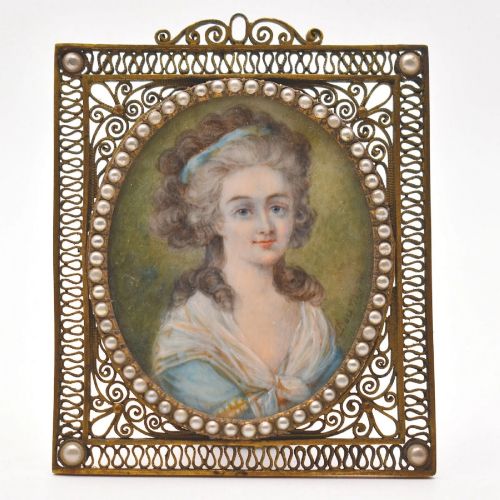


Brass Framed Miniature
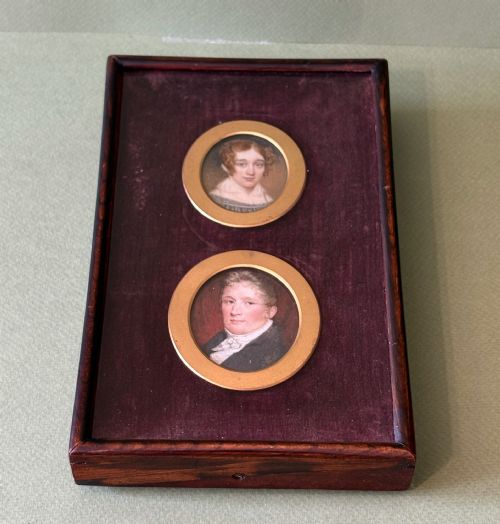
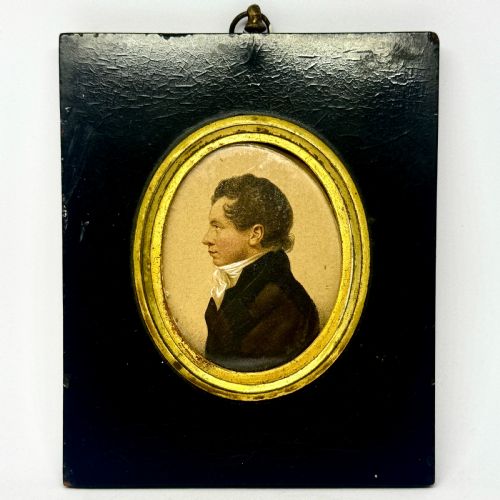
These brass framed miniature works encompass delicate portraiture, silhouettes, and plaques housed in metal mounts from the eighteenth, nineteenth, and early twentieth centuries.
Brass Framed Miniature
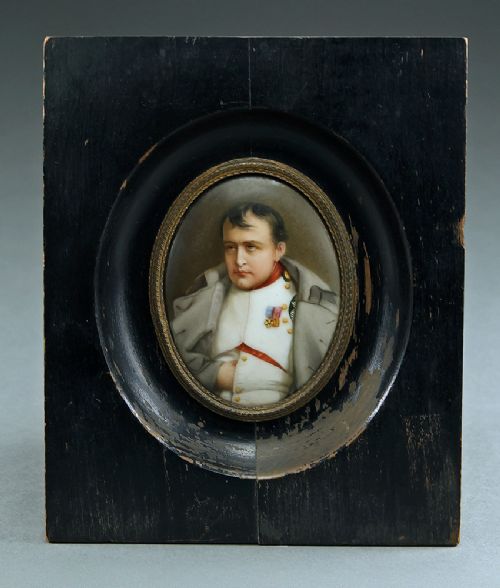
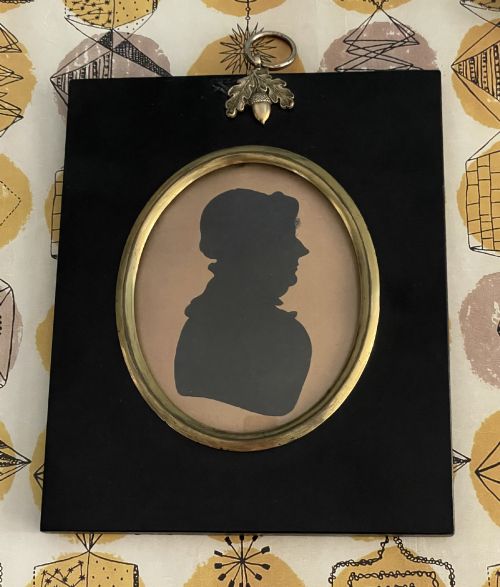
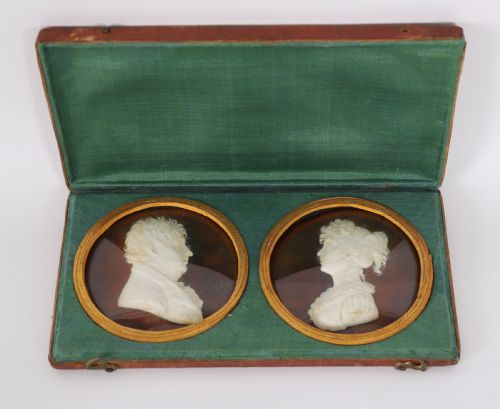
A brass framed miniature is a compact work of art, typically comprising a portrait painting, silhouette, wax relief, or enamel plaque enclosed in a metal surround. These objects range from Georgian and Regency period studies to Victorian and Art Deco examples.
The format includes standalone wall art, travelling mounts, and table stands utilising glass and ebonised wood alongside brass and gilt metal frames. Most pieces date from the eighteenth and nineteenth centuries, featuring subjects rendered in watercolour, enamel, and paper.
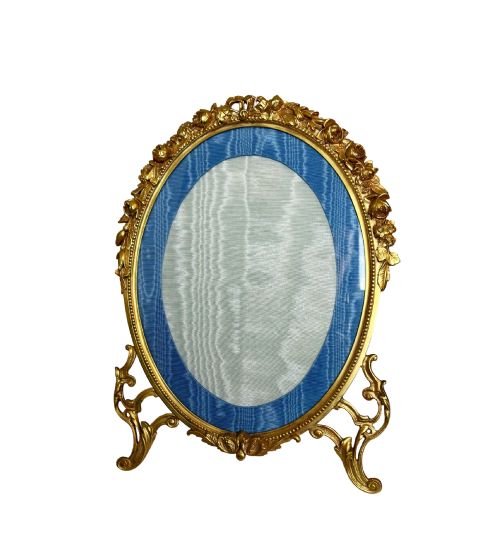
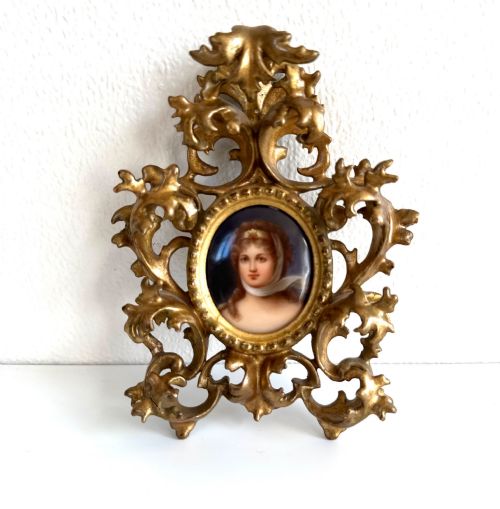
Collectors encounter oval picture frames, rectangular enamel plaques, and small travelling mounts designed to protect delicate watercolours and paper silhouettes. The selection spans French Rococo and Neoclassical styles alongside domestic British portraiture.
Materials and Technique
Makers constructed these housings from brass, gilt bronze, and gilt metal, often combining the metalwork with glass panes to protect the delicate imagery within. Frames frequently complement internal materials such as ebonised wood, ivory, ivorine, and plaster.
Artists executed the imagery using watercolour, gouache, enamel, and plumbago, alongside cut paper silhouettes and wax relief modeling. South Staffordshire plaques and pressed white glass paste cameos represent specialised techniques found within the medium.
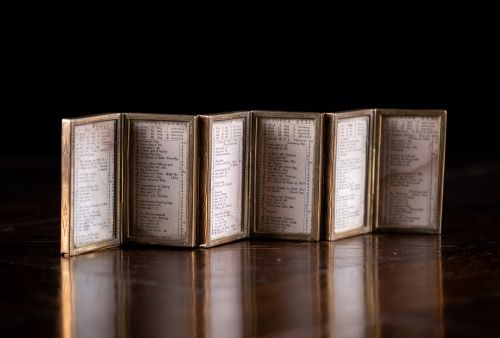
Mounts range from simple brass surrounds to elaborate hinged travelling cases and easel stands, occasionally incorporating seed pearls or ebonised wood borders to frame the central work.
Listings feature periods spanning the eighteenth century through the Art Deco era, utilising brass, glass, enamel, and watercolour.
Factors of Quality
Quality rests on the precision of the portraiture and the crispness of the framing, distinguishing skilled hand-painted watercolours and detailed wax reliefs from simpler production. Signed works and documented silhouettes demonstrate superior artistic execution.
The material integrity of the brass frame and the clarity of the protective glass contribute significantly to an item's standard. Well-preserved housings retain their original gilding and secure closures without distorting the miniature within.
George Atkinson·James Gillespie·Thomas London·J. Deacon·Susie Lassam·Archibald Skirving·John Miers·Emma Kendrick
The Brass Framed Miniature Glossary
- Silhouette
- A portrait profile filled in with a solid dark colour, usually cut from paper or painted on plaster, card, or glass.
- Plumbago
- A finely detailed drawing executed in graphite, taking its name from the Latin word for lead ore.
- Gilt Bronze
- An alloy of copper and zinc treated with a gold coating, frequently utilised in decorative nineteenth-century frames.
- Wax Relief
- A three-dimensional portrait modelled in tinted or coloured wax, often mounted against a contrasting dark background.
- Enamel Plaque
- A small copper plate fused with powdered glass melted in a kiln, typically featuring hand-painted scenes or portraits.
Brass Framed Miniature: Frequently Asked Questions
How do I hang a brass framed miniature?
Many pieces feature integrated hanging loops or rings designed for wall placement, while others sit on desks using built-in metal stands or rest inside protective travelling mounts.
Ensure the hanging wire or hook securely supports the weight of the metal frame and glass without placing stress on the hinges or mount.
Were these miniatures meant for travel?
Certain examples, such as folding almanac mounts and compact leather-backed cases, were constructed for portability by Georgian and Victorian owners.
Other formats, including heavy bronze frames and wall plaques, remained static decorative items intended for permanent interior display.
How should I clean the brass frames?
Metal surrounds benefit from gentle dusting with a dry microfibre cloth to remove surface particles without disturbing fragile internal seals or aged glass.
Avoid liquid polishes and abrasive cleaners, as chemical residues can seep beneath the glass and permanently damage paper, paint, or ivory.