
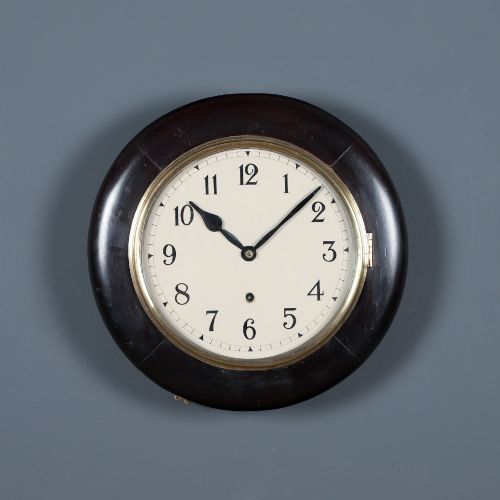
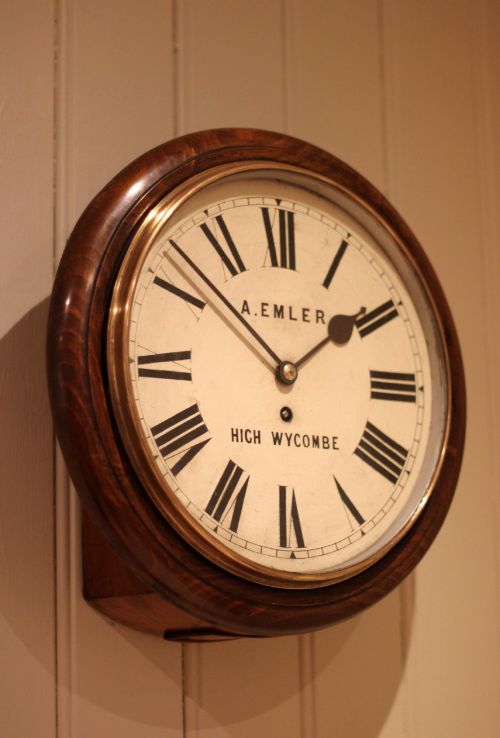


Brass Framed Dial Clock
A brass framed dial clock is a practical timepiece with distinct visual presence, prized for crisp enamel faces and robust construction.
Brass Framed Dial Clock
When you search for a brass framed dial clock, you are looking at timepieces that combine robust metal surrounds with clear, legible faces designed for wall or desk placement. The listings here include wall clocks, mantel clocks, and desk clocks spanning the nineteenth century through the early twentieth century.
The versions you are most likely to meet on this page feature oak, beech, and ebonised wood bodies complemented by brass framing and convex glass covers. Styles range from Victorian and Regency through to Arts and Crafts and Art Deco designs.
These clocks originate from various makers and workshops, incorporating materials such as mother of pearl, metal wire inlay, and enamel numerals. Their forms vary from simple octagonal wall fixtures to elaborate desk pieces and picture frame wall clocks.
How they were made
Maker construction relies heavily on durable timber bodies such as oak and beech, often ebonised or inlaid with mother of pearl and metal wire for decorative contrast. Brass framing secures the glass dial covers, protecting the enamel faces and delicate movements housed within.
Movements span eight day striking mechanisms and fusee systems, paired with convex glass and distinct brass numerals. Workshops utilised traditional cabinet-making and metalworking techniques to ensure the heavy frames supported the internal clockwork securely.
Current listings feature pieces spanning the nineteenth century through the 1920s, utilising oak, beech, and ebonised wood alongside brass and glass.
What varies in quality
Quality in these timepieces rests upon the precision of the cabinetwork and the crispness of the metal inlay. Finer examples show meticulous attention to the ebonised wood and mother of pearl detailing, whereas simpler pieces rely on plain oak or beech surrounds.
The sophistication of the movement also separates standard models from exceptional ones. Fusee movements and eight day striking mechanisms represent a higher grade of horological engineering compared to basic time-only configurations.
ELLIOTT of LONDON·Purvis of London
The Brass Framed Dial Clock Glossary
- Fusee
- A conical pulley used in older clocks to maintain even power as the mainspring unwinds. This mechanism helps ensure consistent timekeeping across the duration of the wind.
- Convex glass
- Curved glass covering the dial of the clock. This shape reduces glare and allows the numerals to be read clearly from various angles in a room.
- Ebonised wood
- Timber treated to resemble ebony, typically through staining or finishing. It provides a deep black surface that highlights contrasting brass framing.
- Enamel
- A glassy substance fused to metal dials to create a durable, smooth surface for painted numerals. It offers a bright background that resists fading over time.
- Mother of pearl
- Iridescent inner shell material used for decorative inlay work on clock bodies. It catches the light and adds subtle tonal variety to dark wood cases.
Brass Framed Dial Clock: Frequently Asked Questions
What is a fusee dial clock?
A fusee dial clock uses a special conical pulley system to regulate the pull of the mainspring. This traditional mechanism ensures the clock maintains steady accuracy as the spring loses tension.
Such movements are typically found in better quality nineteenth-century pieces designed for public spaces or substantial homes.
How do I hang a wall clock safely?
Wall clocks require secure fastening to a solid wall stud or heavy-duty wall anchor due to their substantial wood and brass weight. Ensuring the case hangs level prevents the pendulum or fusee movement from binding.
Most wall variants feature robust hanging brackets integrated into the back of the wooden frame.
Are these clocks suitable for daily use?
These pieces function well as everyday timekeepers provided they receive proper periodic mechanical service. Eight-day movements require winding approximately once a week to keep accurate time.
Placing them away from direct sunlight and damp areas helps preserve the delicate enamel dials and wooden frames.
How do I date a Victorian dial clock?
Dating relies on observing construction methods, materials, and stylistic markers such as Arts and Crafts influences or Victorian ebonising. The style of the brass numerals and the presence of convex glass also offer clues to the manufacturing era.
Makers' signatures on the dial or movement provide the most definitive chronological anchor.