



Brass Framed Clock
These brass framed clock pieces combine heavy metal surrounds with precise movements, offering both decorative presence and reliable timekeeping for your home.
Brass Framed Clock
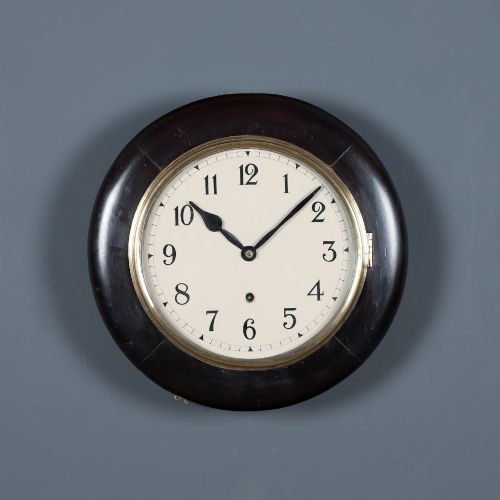
A brass framed clock encompasses wall, desk, mantel, and skeleton designs produced across the Victorian, 19th Century, and early 20th Century periods. These pieces range from architectural wall timepieces to delicate desk ornaments, reflecting diverse domestic and institutional uses.
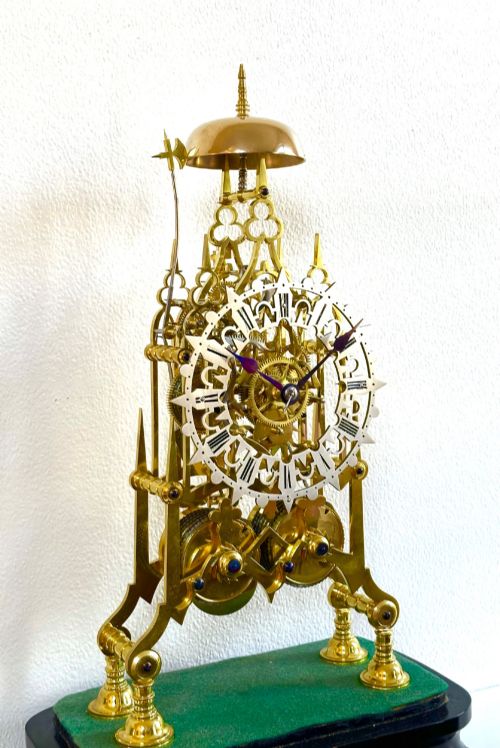
The version you are most likely to encounter here is the Victorian skeleton clock or the traditional wall timepieces featuring brass surrounds and glass dials. These objects showcase the mechanical inner workings alongside polished brass frames.
Originating predominantly from English and French workshops, these items utilise materials such as mahogany, marble, ebonised wood, and silvered metal. Their styles span from Victorian Gothic and Napoleon III to Arts and Crafts and Art Deco.
Materials and construction techniques
Construction relies heavily on cast and polished brass for structural frames, housing intricate gear trains, fusee movements, and escapements. Glass provides protective enclosures or convex covers for dials featuring enamel or silvered metal.
Enclosure housings incorporate cabinet woods like mahogany, burr walnut, and oak, occasionally embellished with mother-of-pearl inlay, ebonised wood, or gilt finishes. These varied materials demand precision joinery and metalworking skills to unite wood, metal, and glass securely.
Brass Framed Clock Retail Price Guide 2026
Typical asking prices for brass framed clock among the pieces listed under this phrase on Sellingantiques today, from the lower quarter to the upper quarter. They describe what is for sale here now, not the wider market.
Factors determining quality
Quality rests upon the complexity of the movement, such as double fusee mechanisms versus standard timepieces, and the crispness of the brass casting and engraving. Superior examples exhibit refined dial work, undamaged enamel numerals, and harmonious proportions between the frame and the housing.
The integrity of secondary materials, from figured mahogany to polished marble and intricate mother-of-pearl inlay, distinguishes finer iterations. Original glass covers and well-preserved gilt finishes further elevate the standing of an individual piece.
Thwaites of London·ELLIOTT of LONDON·Purvis of London
The Brass Framed Clock Glossary
- Fusee
- A conical pulley used in clock movements to maintain even driving force as the mainspring unwinds. This mechanism improves timekeeping accuracy across the duration of the wind.
- Skeleton clock
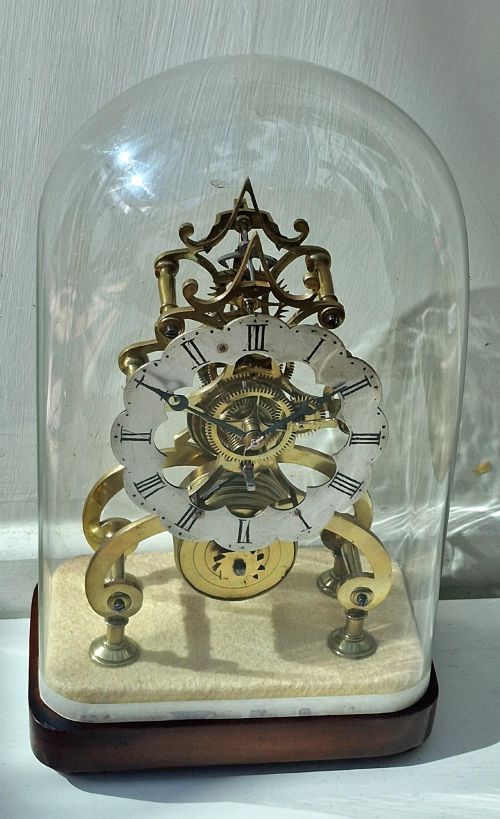
- A timepiece designed with open plates and bridges that expose the entire gear train and movement to view. These designs are usually housed under glass domes.
- Timepiece
- A clock that indicates the time but lacks any striking or chiming mechanism. It focuses purely on the visual display of hours and minutes.
- Carriage clock
- A small, portable spring-driven timepiece originally designed for travel during the nineteenth century. They typically feature a brass frame with glass panels and a folding handle on top.
- Dial
- The face of the clock where hours and minutes are displayed via numerals and hands. Materials range from silvered metal and enamel to painted wood.
Brass Framed Clock: Frequently Asked Questions
How do I wind a fusee movement?
Winding requires a dedicated key inserted into the dial or backplate to tension the mainspring around the conical fusee pulley.
Care must be taken not to overwind the mechanism, ensuring the chain or gut line remains correctly seated throughout the process.
Where were these clocks placed originally?
Wall versions found homes in offices, railway stations, and domestic hallways for clear public visibility. Mantel and desk variants adorned sitting rooms, studies, and antechambers as functional decor.
Carriage models served travellers before settling onto bedroom or parlour surfaces.
How do I distinguish Victorian skeleton clocks?
Victorian skeleton clocks expose their brass gear trains completely between openwork metal frames, frequently protected by glass domes. They often feature elaborate pierced brass plates representing Gothic cathedrals or architectural facades.
Earlier nineteenth-century examples tend to emphasise mechanical complexity and fine finishing over heavy ornamentation.
What is the difference between a timepiece and a striking clock?
A timepiece simply measures and displays the passing hours without producing audible strikes or chimes. This simpler mechanism reduces the internal gear count.
Striking clocks incorporate an additional gear train and hammer system to sound the hours or quarters on a bell or gong.