


Brass Footed Sofa
A brass footed sofa search brings up striking mahogany and rosewood tables designed for drawing rooms.
Brass Footed Sofa
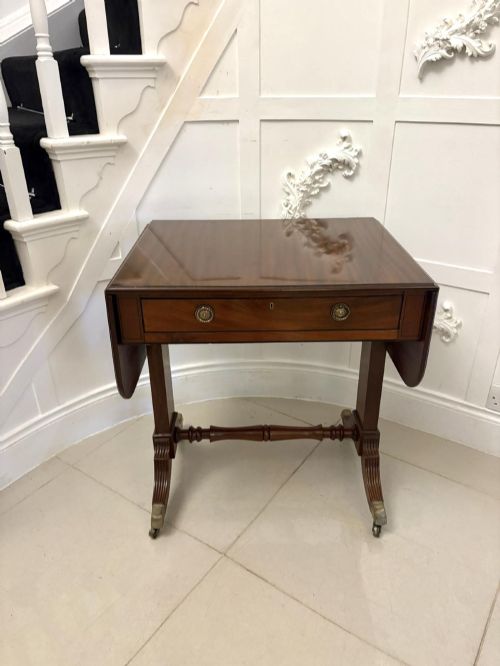
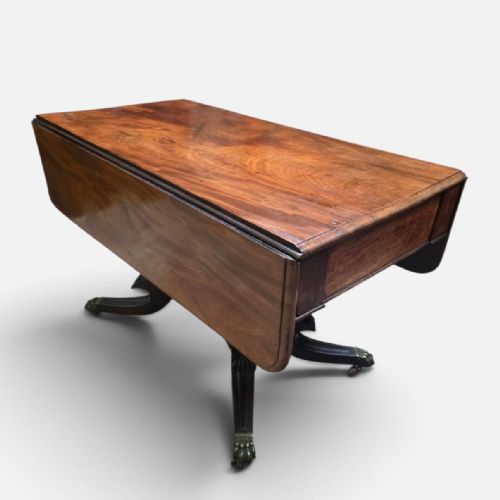
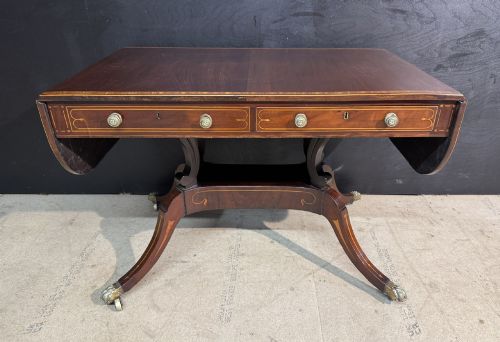
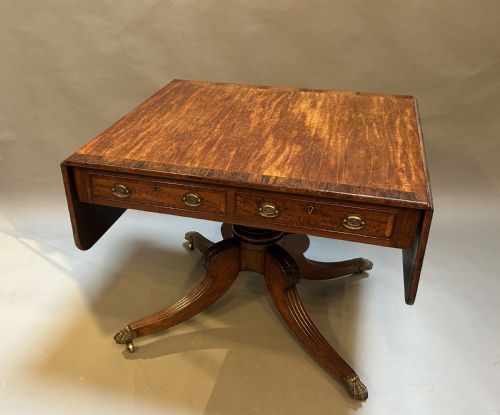
When searching for a brass footed sofa, buyers generally encounter sofa tables, card tables, and occasional tables dating from the Georgian and Regency periods alongside later revivals. These tables typically feature drop leaves, pedestal bases, or end supports intended to sit neatly before a settee or in the centre of a room.
Mahogany and rosewood dominate the selection, often enriched with brass stringing, mounts, or castors that anchor the design. Pieces range from formal writing and lamp tables to drop leaf pembroke tables and settee forms from the nineteenth century.
How they were made
Cabinet makers utilised dense native and exotic timbers like mahogany, rosewood, and palisander, frequently incorporating boxwood and ebony wood inlay to define borders and panels. Gilded brass mounts and brass feet were cast and applied to support structures, protecting vulnerable timber ends and adding reflective contrast to the dark wood.
Drop leaf mechanisms, drawer linings, and pedestal supports required precise joinery to ensure stability during daily use. Surfaces often received polished finishes that highlighted the natural grain patterns of figured mahogany and dark rosewood.
One exceptional table originates directly from the ballroom of the RMS Queen Elizabeth ocean liner.
What varies in quality
The sophistication of the timber selection largely determines the standing of a piece, with finely figured mahogany and richly grained rosewood commanding greater visual depth. Finer examples display meticulous brass inlay and crisp mounts rather than plain or later replacements.
Proportion and structural integrity distinguish exceptional cabinet work from standard production. Well balanced pedestals, original brass castors, and cleanly cut joints separate standard utilitarian items from refined drawing room furnishings.
John McLean
The Brass Footed Sofa Glossary
- Sofa Table
- A long, rectangular table designed to stand in front of a sofa, typically featuring drop leaves on either side and two small drawers.
- Regency
- An English design period spanning the early nineteenth century characterised by classical influences, scrolled supports, and brass embellishments.
- Pembroke Table
- A small occasional table with hinged drop leaves on two opposing sides, popular from the eighteenth century onwards.
- Card Table
- A folding table with a hinged top designed for playing games, often lined with baize or leather when opened.
- Brass Mount
- A decorative fitting made of brass attached to the surface or legs of a piece of furniture for adornment and reinforcement.
Brass Footed Sofa: Frequently Asked Questions
What is a sofa table used for?
A sofa table was originally built to stand immediately behind a settee for holding lamps, books, or writing materials. Their narrow proportions also allowed them to function as side tables or centre tables in principal rooms.
Over time, homeowners adapted these versatile pieces for use in hallways and drawing rooms as decorative surfaces. The drop leaves provided flexibility, expanding the top surface when additional space was needed.
How do I identify a Regency table?
Regency tables typically display classical architectural lines, dark timbers such as rosewood and mahogany, and distinctive brass mountings. Makers often employed lyre end supports, pedestal bases, and delicate brass inlay.
Pinned construction methods, timber ageing, and hand-cut dovetails inside drawers help confirm the nineteenth-century origin of these items. Revival pieces from later periods often show machine-made elements and different secondary woods.
Are these tables suitable for modern rooms?
These tables adapt easily to contemporary interiors due to their compact footprints and multifunctional drop leaves. They fit well behind modern sofas or function as occasional writing desks in sitting rooms.
The warm tones of mahogany and rosewood complement both traditional and modern decor schemes without dominating the surrounding space.
What is brass stringing?
Brass stringing is a decorative technique where very thin strips of brass are inlaid into channels cut directly into the timber surface. It creates geometric borders and highlights the grain of dark woods like rosewood.
This meticulous inlay work appears frequently on finer Regency furniture, often paired with matching brass feet and mounts.