
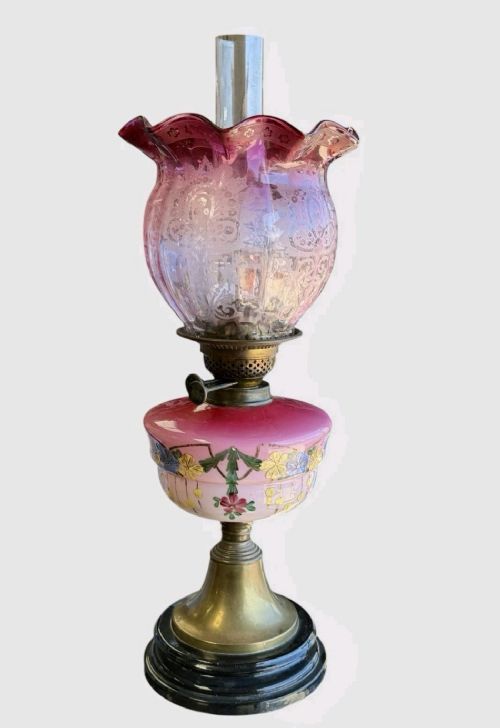
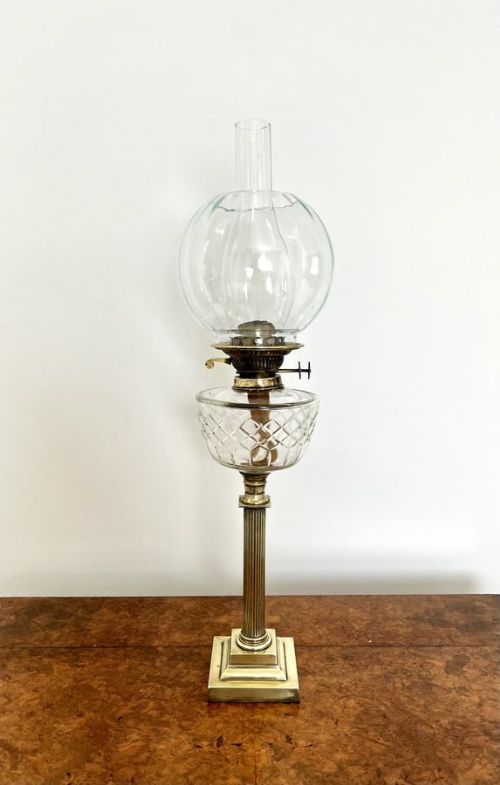
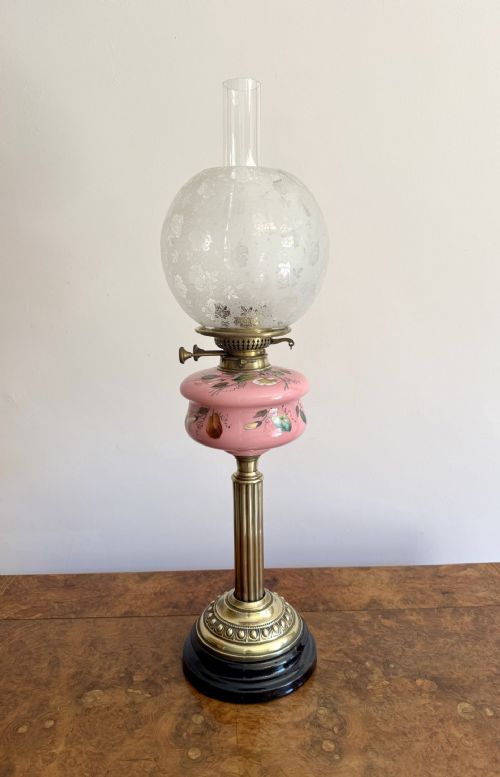


Brass Font Oil Lamp
These brass font oil lamps bring nineteenth-century warmth to a room, pairing metal reservoirs with glass and ceramic bowls.
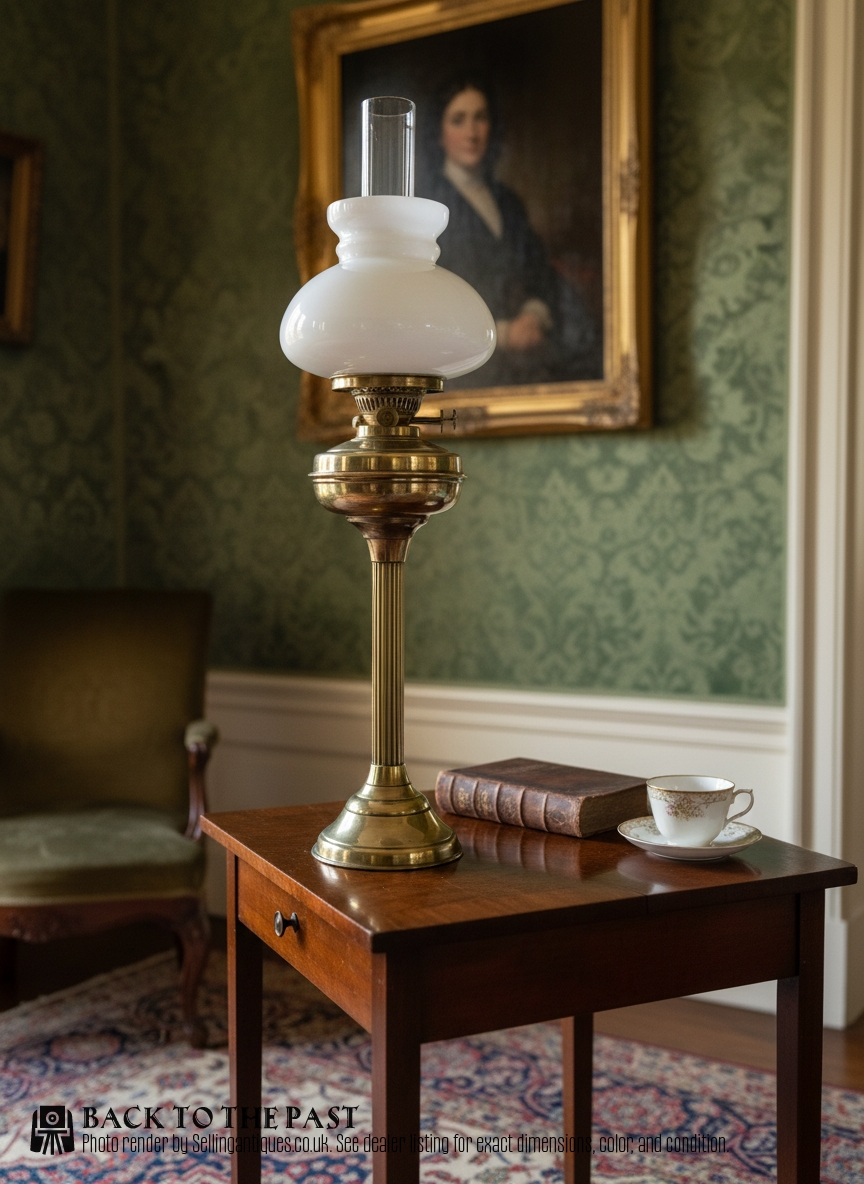
Brass Font Oil Lamp
A brass font oil lamp combines a metal base and reservoir with periods spanning the Victorian and Edwardian eras, often featuring columnar designs. Buyers searching for a brass font oil lamp encounter Victorian, Edwardian, and Anglo-Burmese pieces dating from eighteen-sixty to nineteen-thirty.
The forms on this page range from standard table lamps to telescopic and floor lamps. Many examples incorporate a coloured glass or ceramic vessel alongside the brass components.
The origins trace back to nineteenth-century British production, with specific styles including Corinthian columns and carved padouk teak stands.
Materials and construction
Brass forms the primary structural material for columns and bases, paired with glass, cranberry glass, milk glass, and ceramic for the font vessels. Copper, slate, and padouk teak also appear in the construction of columns and stands.
Manufacturing methods involve cast brass components, turned wooden elements, and hand-painted or cut glass techniques for the bowls and shades.
Some Victorian burners feature tiny thumb wheels marked with maker names, inviting you to imagine generations turning up the wick for evening tea.
Quality and craftsmanship
The distinction between standard and superior pieces rests on the weight of the brass casting, the crispness of column fluting, and the complexity of cut or hand-painted glass fonts.
Adjustable telescopic mechanisms and unusual materials such as padouk teak elevate certain examples above simpler cottage table models.
Young's Special
The Brass Font Oil Lamp Glossary
- Font
- The oil reservoir of the lamp, frequently made of glass, ceramic, or brass to hold the fuel beneath the burner.
- Corinthian column
- A classical architectural column style featuring ornate acanthus leaf capitals, often utilised in Victorian lamp standards.
- Cranberry glass
- A rich red transparent glass created by adding gold chloride to the molten batch, popular in Victorian decorative lighting.
- Telescopic lamp
- A lamp design featuring an adjustable shaft that allows the overall height to be raised or lowered.
Brass Font Oil Lamp: Frequently Asked Questions
How do I date a brass font oil lamp?
Dating relies on stylistic clues such as Victorian Corinthian columns, Edwardian proportions, and material combinations like slate and brass. The presence of specific glass types, including cranberry or hand-painted vessels, helps narrow the period.
Maker inscriptions on the burner or wick winder also provide firm chronological markers for pieces produced between eighteen-sixty and nineteen-thirty.
Were these lamps converted from oil to electricity?
Many surviving examples retain their original duplex burners and brass mechanisms, while others have undergone careful conversion for modern domestic lighting.
Collectors look closely at the burner assembly to determine whether the original configuration remains intact beneath any twentieth-century wiring.
What is an Anglo-Burmese lamp?
Anglo-Burmese pieces combine traditional British brasswork and lamp mechanisms with carved exotic timbers such as padouk and teak.
These unusual items reflect nineteenth-century design exchanges and typically feature adjustable stands suited for specific interior heights.
Can I still burn oil in these lamps?
Most antique lamps function mechanically, though modern safety standards often lead buyers to display them unlit or converted.
If utilised with paraffin or lamp oil, the wick mechanism and font integrity require careful inspection by an experienced handler.