


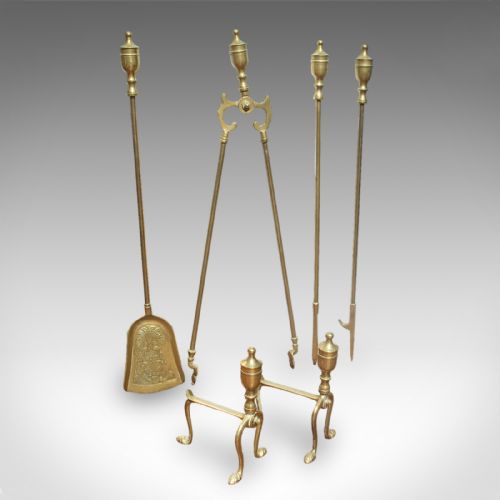


Brass Fireside Companions
Brass fireside companions bring hearthside utility and polished warmth to a room, ranging from Victorian tool sets to Edwardian coal scuttles.
Brass Fireside Companions
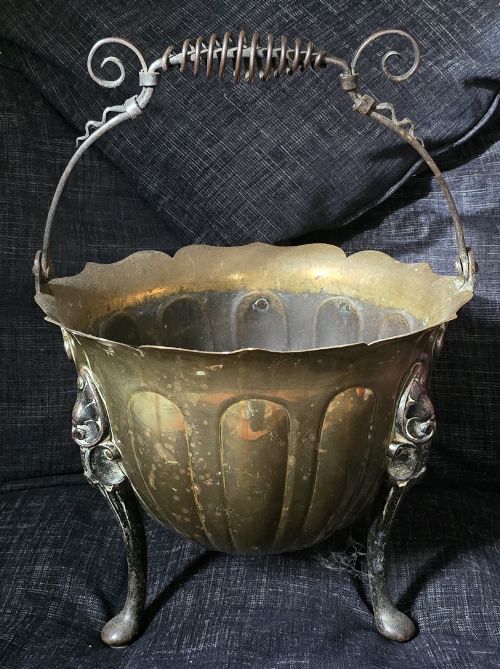
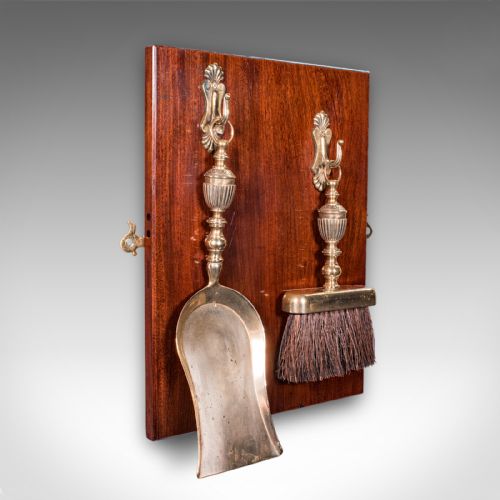
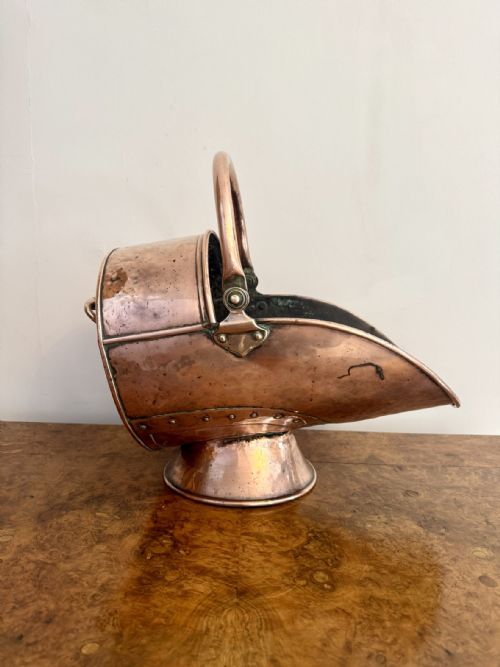
Brass fireside companions encompass functional hearth accessories, including companion sets, individual tools like shovels and pokers, coal scuttles, and purdonium cabinets. These items originate predominantly from the Victorian and Edwardian eras, alongside Regency and later periods.
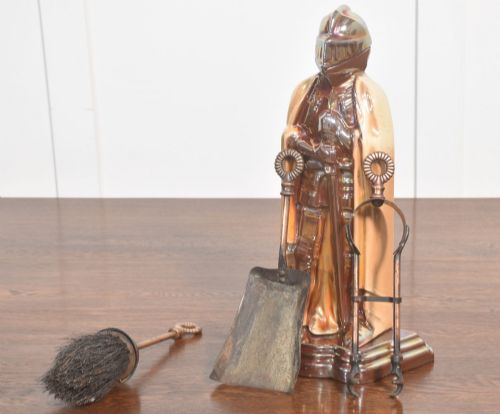
The selection ranges from practical English brass tool sets to figurative companions such as knights, maids, and golfers. Cabinets and scuttles often incorporate mahogany, wood, steel, and copper finishes alongside the primary brass construction.
Buyers encounter diverse stylistic influences spanning Gothic Revival, Rococo Revival, and Aesthetic Movement designs. Sets frequently pair brass handles with iron or steel working shafts.
Materials and construction
Makers utilised brass for visible elements like companion stands, scuttles, and tool handles, often combining it with steel and iron for the working parts of pokers and shovels. Copper finishes and cast iron components appear across multiple periods.
Woodworking craftsmanship is evident in Edwardian mahogany inlaid coal purdonium cabinets and wooden boxes. Metalworking techniques include casting, polishing, and detailed figural moulding seen in knight and crinoline lady sets.
Brass Fireside Companions Retail Price Guide 2026
Typical asking prices for brass fireside companions among the pieces listed under this phrase on Sellingantiques today, from the lower quarter to the upper quarter. They describe what is for sale here now, not the wider market.
Hearth accessories occasionally took whimsical human forms, including maids, knights, golfers, and crinoline ladies standing guard by the fire.
Factors of quality
Quality rests in the weight and integrity of the brass casting, the retention of original shovels or matching tool rests, and the precision of mahogany inlay on coal cabinets. Finer pieces demonstrate robust construction in both the decorative stands and the working tools.
Artistic detail distinguishes standard sets from superior examples, particularly in figurative companion pieces and stylistic flourishes such as claw and ball feet or Rococo ornamentation.
The Birmingham Guild
The Brass Fireside Companions Glossary
- Purdonium
- A specialised coal box or cabinet, often wooden with a fall-front door, designed to store fuel beside the fireplace.
- Andirons
- Metal supports placed horizontally in a hearth to raise logs for better air circulation and burning.
- Companion set
- A coordinated collection of fireplace tools, such as a shovel, poker, and tongs, usually housed on a dedicated stand.
- Coal scuttle
- A bucket or container used for carrying and storing coal, frequently fashioned from brass or copper.
- Aesthetic Movement
- A late nineteenth-century design style emphasising visual beauty and artistic expression over strict historical revival.
Brass Fireside Companions: Frequently Asked Questions
What is included in a brass fireside companion set?
These sets typically contain essential fireplace maintenance tools such as pokers, shovels, and brushes mounted on a shared stand. Additional pieces like tongs or fire dogs occasionally accompany the primary tools.
Items span various configurations, from simple Victorian brass arrangements to figurative Edwardian and twentieth-century designs.
How do I identify a Victorian coal scuttle?
Victorian coal scuttles often feature heavy brass construction, sometimes paired with an original matching shovel and drop handles. Period examples display specific decorative casting styles, including Rococo revival flourishes or claw and ball designs.
Later pieces may incorporate wooden cabinetry like mahogany inlaid purdoniums rather than traditional metal buckets.
Where were these brass companion sets made?
Many recorded pieces originate from English workshops and guilds dating from the Regency period through to the early twentieth century. Regional metalworking centres produced diverse styles ranging from strict utilitarian iron and steel tools to ornate brass showpieces.
Specialist makers and guilds contributed distinctive figural and architectural designs.
How should I clean antique brass hearth tools?
Maintenance depends on the desired patina, as collectors often prefer retaining aged surfaces over bright polishing. Gentle dusting and mild cleaning preserve the historical integrity of nineteenth and early twentieth-century metalwork.
Harsh chemical abrasives can strip original finishes and diminish the character of older pieces.
What materials are used alongside brass?
Companion sets frequently combine brass with iron and steel to ensure the working tools withstand hearth temperatures. Wooden elements such as mahogany appear primarily in coal scuttle cabinets and box purdoniums.
Copper finishes and painted metal details also contribute to the varied visual appearance of these hearth accessories.