
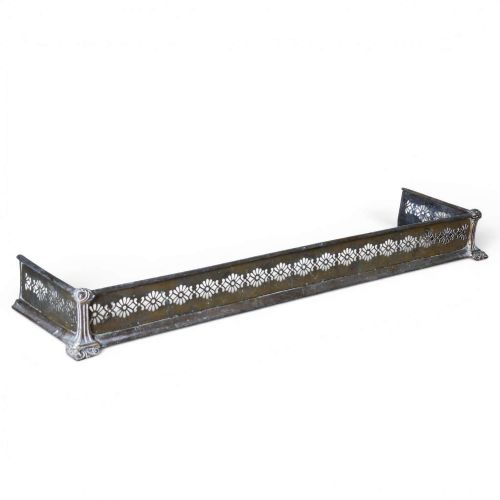
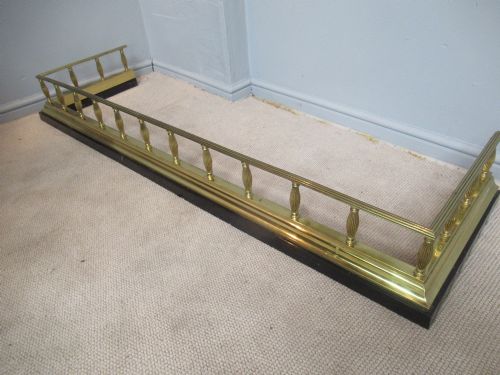
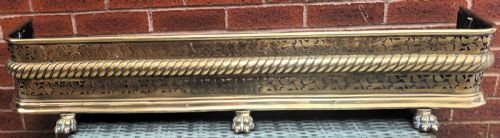
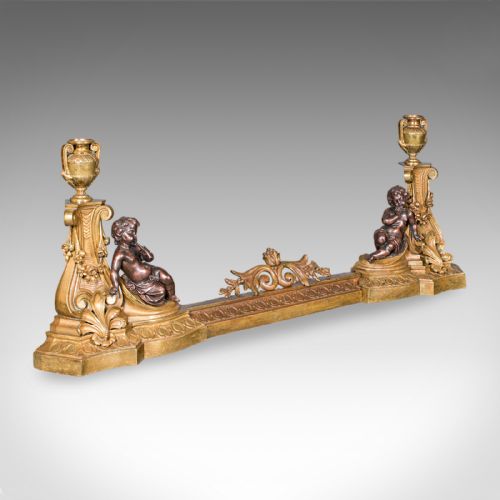

Brass Fireplace Surround Guard
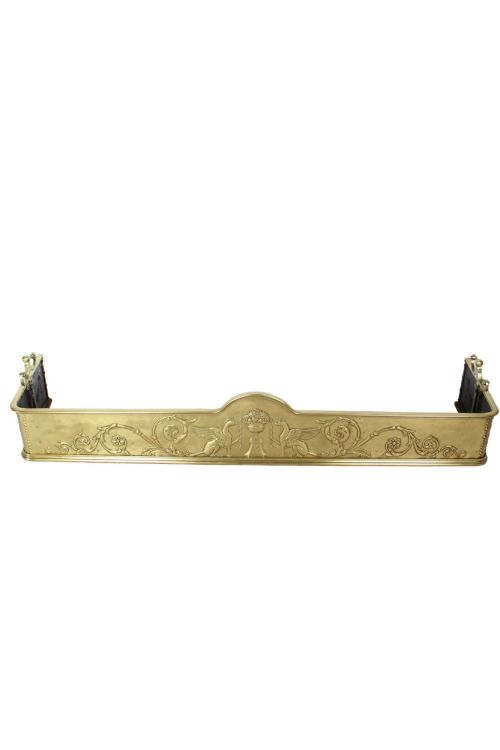
A brass fireplace surround guard protects the room from stray embers while framing the hearth with polished metal work.
Brass Fireplace Surround Guard
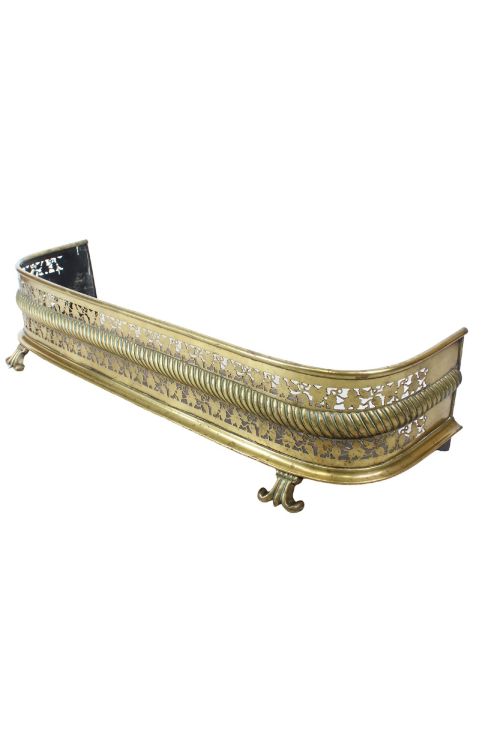
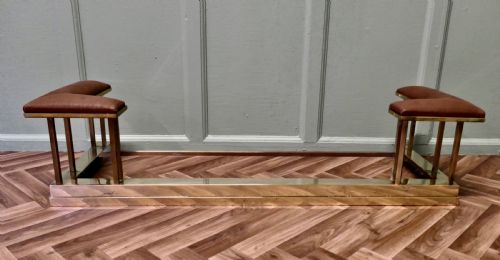
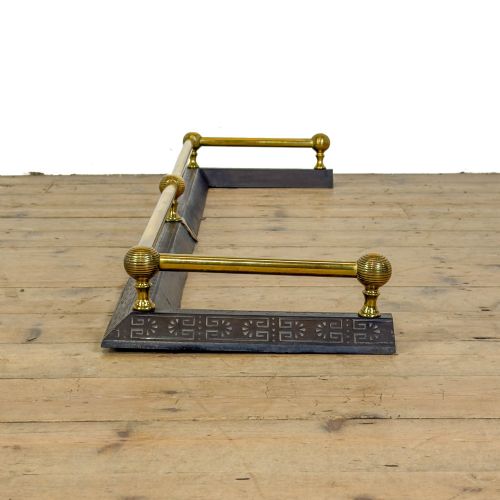
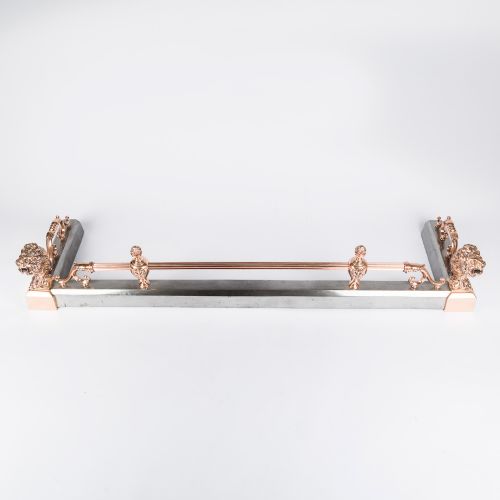
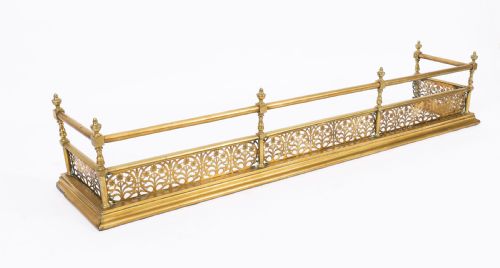
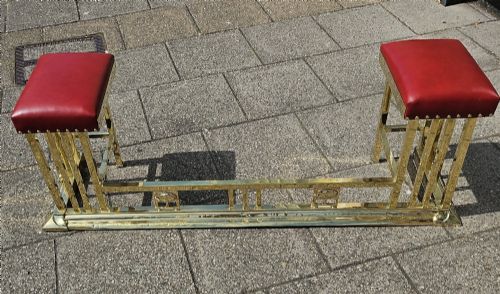
A brass fireplace surround guard, frequently catalogued as a fender, kerb, or fire guard, acts as a physical barrier placed directly on the hearth to contain coal sparks and ash. These pieces range from simple adjustable frames to substantial club fenders featuring upholstered leather seats on either end.
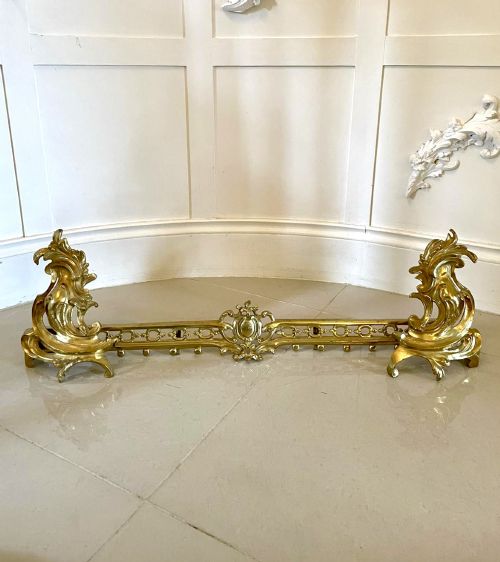
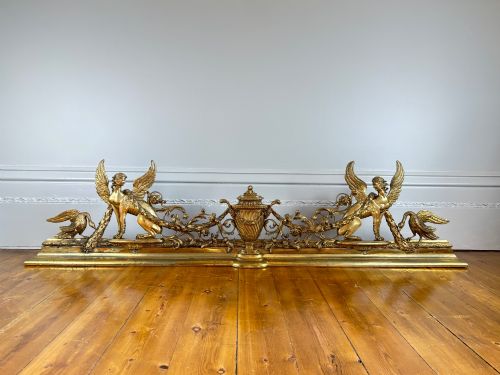
The selection here draws primarily from nineteenth-century and early twentieth-century workshops, spanning the Victorian and Edwardian eras alongside French Rococo, Neoclassical, and Art Deco interpretations. Buyers encounter standard hearth fenders alongside specialised club fenders designed for seating.
Most examples rely on bright brass construction, often paired with iron, steel, or copper elements to add structural weight and varied tonal contrast.
Materials and construction methods
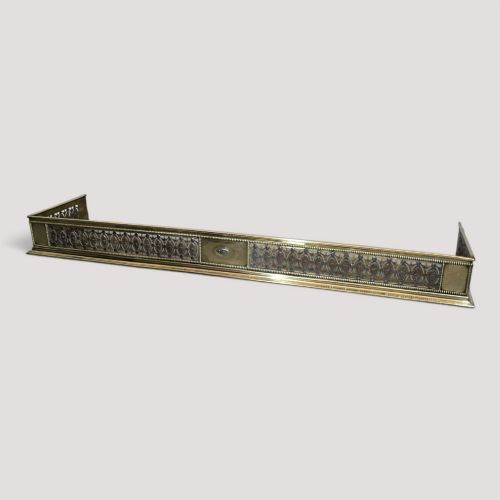
Foundry workers cast, pierced, and hammered brass sheets and components, frequently combining the primary yellow metal with heavier iron or cast steel inner frames for durability near the heat of the fire. Pierced galleries and raised mouldings required skilled hand-finishing and riveting rather than modern machine stamping.
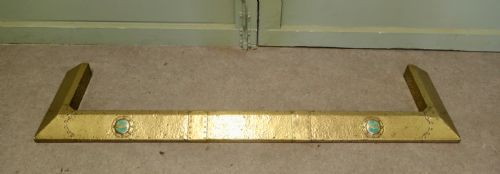
Makers integrated secondary materials such as supple leather for club fender squab seats, green enamel cabochons for decorative accent, and cut steel studs to catch the firelight. Gilded bronze and dore bronze finishes appeared on high-status French and American imports, adding rich surface lustre to the heavy metal armature.
Materials span bright brass, cast iron, copper, steel, and leather upholstery.
Distinguishing quality across the range
Quality rests on the thickness of the brass gauge and the crispness of any pierced or chased detailing, where hand-tooled galleries outshine thin, pressed metal alternatives. Substantial weight signals a robust internal iron or steel frame rather than hollow sheet construction.
The integrity of adjustable mechanisms and the precision of corner joints separate ordinary production items from finer gallery pieces. Surface patination, depth of colour, and intact original leather upholstery on club variants elevate certain examples above standard domestic hardware.
E F Caldwell New York
The Brass Fireplace Surround Guard Glossary
- Club fender
- A low fireside guard fitted with upholstered leather seats running along the top rails, originally designed for gentlemen to sit close to the hearth. These pieces combine functional ember protection with built-in seating.
- Pierced brass
- Sheet metal perforated with repetitive decorative patterns, letting firelight through while lightening the visual weight of the surround. This technique requires careful hand-punching.
- Fire kerb
- Another term for a low metal fender enclosing the hearth perimeter, keeping ash and logs contained. It sits directly on the floorboards or stone hearth.
- Dore bronze
- Ormolu or gilt bronze finished with a mercury amalgam gilding technique that produces a deep, durable golden sheen. The process was favoured by prominent nineteenth-century bronze founders.
- Cut steel
- Small faceted steel studs riveted individually to a metal backing to sparkle in the flickering light of the fire. This meticulous decorative method demands hours of hand-assembly.
Brass Fireplace Surround Guard: Frequently Asked Questions
What is a club fender?
A club fender is a specialised hearth guard featuring padded leather seats built into the frame on either side of the fireplace opening.
Originally popular in country houses and gentlemen's clubs, it allowed people to sit directly beside the fire while keeping sparks contained.
How do I know my fender is Victorian?
Victorian fenders often display characteristic heavy cast brass construction, pierced decorative galleries, or adjustable iron and steel mechanics dating from the nineteenth century.
Stylistic cues range from ornate Neoclassical revival motifs to early Arts and Crafts copper and enamel details.
Are these guards adjustable in width?
Many surviving examples include central sliding mechanisms designed to fit varying hearth dimensions across different rooms.
Buyers should check listings for specific measurements given in closed and extended positions.
How do I care for antique brass?
Polishing antique brass depends entirely on the level of patination you wish to maintain, as many collectors prefer a dark, undisturbed surface over bright shine.
Gentle dusting and occasional light waxing protect the metal without stripping its historical age.