


Brass Fire Bucket
A brass fire bucket brings solid metal weight and polished warmth beside a hearth, storing fuel while holding centuries of utility.
Brass Fire Bucket
A brass fire bucket is a sturdy hearthside receptacle designed originally for carrying water to quell flames or holding coal and logs for the grate. When you search for a brass fire bucket, you encounter heavy metal vessels and mixed-material containers shaped for fireside service.
The versions most common on this page date predominantly from the nineteenth century, including Victorian examples alongside Arts and Crafts and rustic farmhouse interpretations. These pieces frequently combine bright brass with warm copper, oak, or mahogany bodies.
Beyond holding fuel, these sturdy containers function equally well as planters or decorative focal points in a traditional room. Their robust construction ensures they survive decades of daily contact with hearth tools and heavy timber.
Materials and construction methods
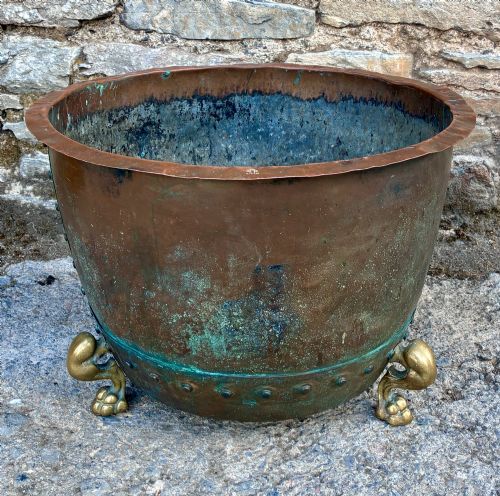
Craftsmen built these vessels using heavy sheet brass and hammered copper, often joined with visible rivets along the seams. Many examples incorporate wooden staves of oak or mahogany bound together with brass hoops, utilising traditional cooperage techniques.
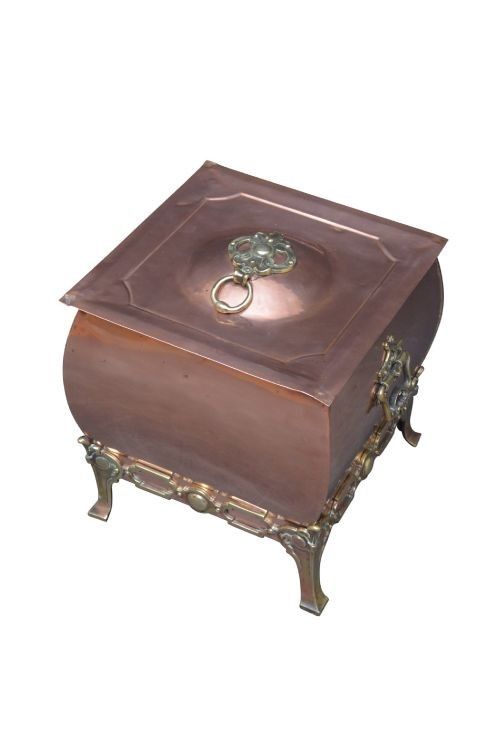
Handles typically feature solid cast brass rings, swing bales, or detailed lions-mask mountings secured firmly to the body. Interiors occasionally retain zinc linings or iron reinforcements designed to withstand moisture and heavy loads of coal.
Lions-mask ring handles peer out from nineteenth-century sides, guarding the kindling with fierce domestic pride.
Assessing quality and craftsmanship
The distinction between ordinary utility items and superior examples lies in the thickness of the metal gauge and the integrity of the joins. Heavier brass and dense timber staves indicate a higher grade of manufacture intended for affluent country houses.
Finishing details elevate certain pieces, such as hand-hammered surfaces characteristic of the Arts and Crafts movement or crisply cast decorative handles. The crispness of armorial crests or heraldic plaques also signals superior workshop production.
Bamfords
The Brass Fire Bucket Glossary
- Coopered
- Constructed from curved wooden staves held tightly together by exterior metal bands. This technique derives directly from barrel-making traditions.
- Bale handle
- A semi-circular movable metal handle attached to opposite sides of the bucket rim. It allows for balanced lifting when the vessel is full.
- Armorial crest
- A heraldic design engraved or applied to the metal surface, often indicating ownership by a prominent family or institution. These markings add considerable historical interest.
- Planter
- A secondary use for these deep metal vessels once their active hearth days conclude. They accommodate large houseplants or floral displays.
- Scuttle
- A coal bucket featuring an angled opening and a hinged handle designed for pouring fuel cleanly onto an open fire.
Brass Fire Bucket: Frequently Asked Questions
What were brass fire buckets originally used for?
These vessels served a dual purpose in historic homes, functioning primarily as emergency water carriers to put out chimney sparks before evolving into fuel storage. Their robust metal construction made them reliable equipment for domestic safety.
Over time, as central heating reduced the risk of domestic fires, households repurposed them specifically for holding coal, logs, and kindling beside the fireplace.
How do I clean a vintage brass bucket?
Gentle washing with warm soapy water removes accumulated soot and dust without stripping the aged surface character. Many collectors prefer retaining a dark, mellow patina rather than polishing the metal to a bright shine.
If polishing is desired, use a mild cream formulated for brass and copper, applying it sparingly with a soft cloth to avoid damaging engraved details.
Can I use an antique bucket outdoors?
While these containers handled damp fuel and hearth ashes indoors, prolonged exposure to harsh weather damages wooden staves and corrodes unprotected metal seams. Keeping them inside protects the original materials from rotting or splitting.
If placed on a patio or porch, ensure the vessel rests under cover away from direct rain and standing moisture.
How do I date a Victorian brass bucket?
Dating relies on observing construction marks, such as hand-cut dovetails, heavy riveted seams, and the style of the mounting hardware. Mid-nineteenth-century examples often display simpler turned rims and heavy cast rings.
Later Victorian and Arts and Crafts pieces from the end of the century introduce hand-hammered textures and stylized floral motifs inspired by the design movements of the period.