
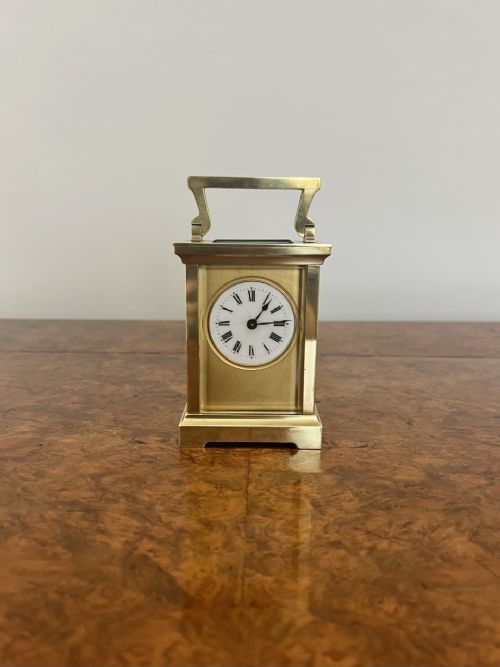


Brass Enamel Carriage Clock
These heavy brass enamel carriage clock pieces offer portable timekeeping rooted in nineteenth-century French and English workshops.
Brass Enamel Carriage Clock
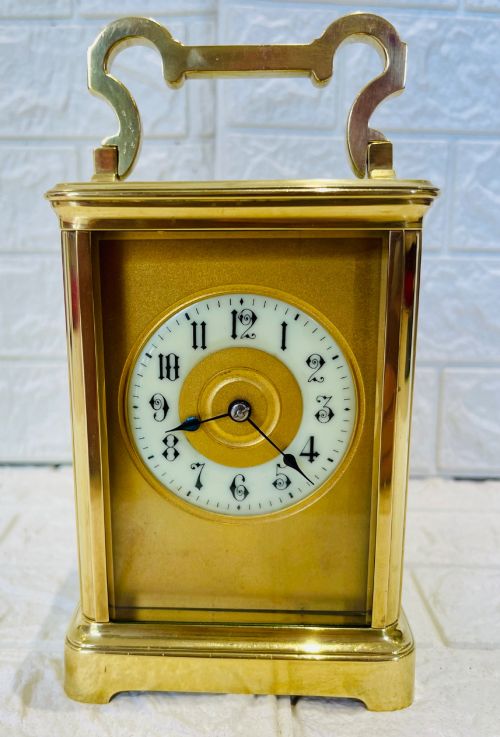
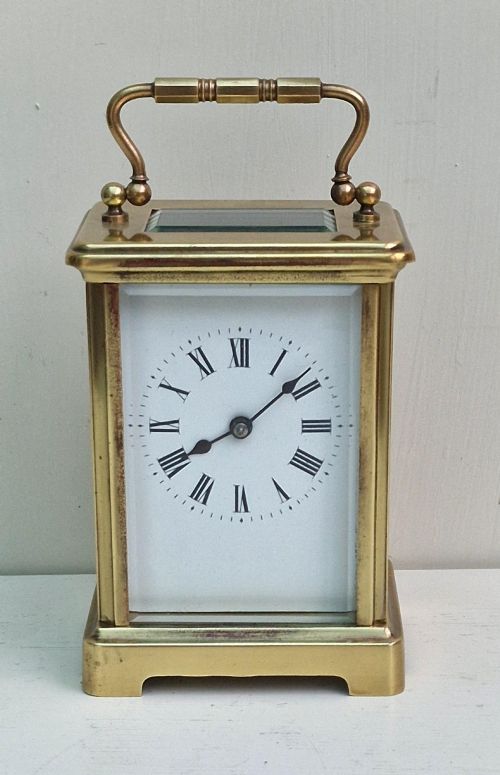
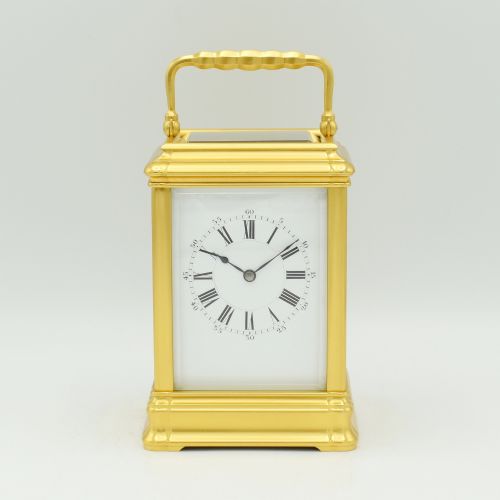
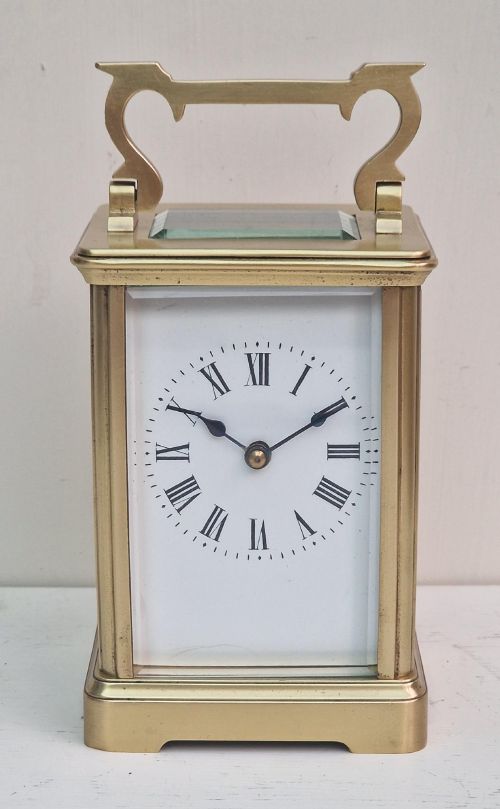
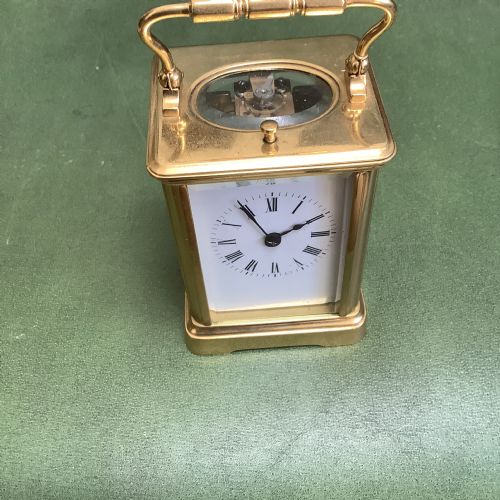
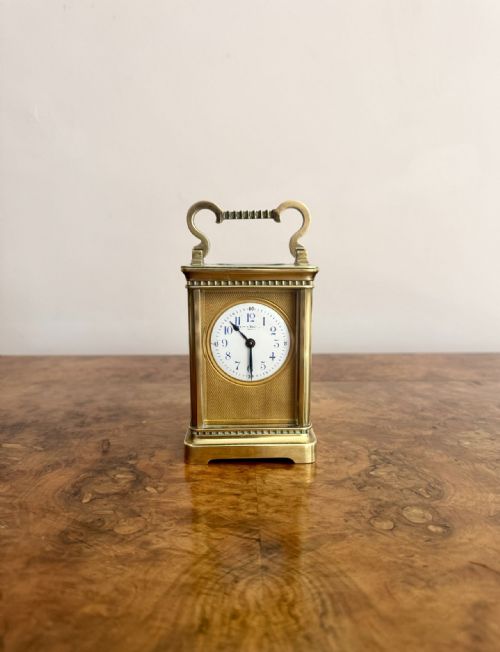
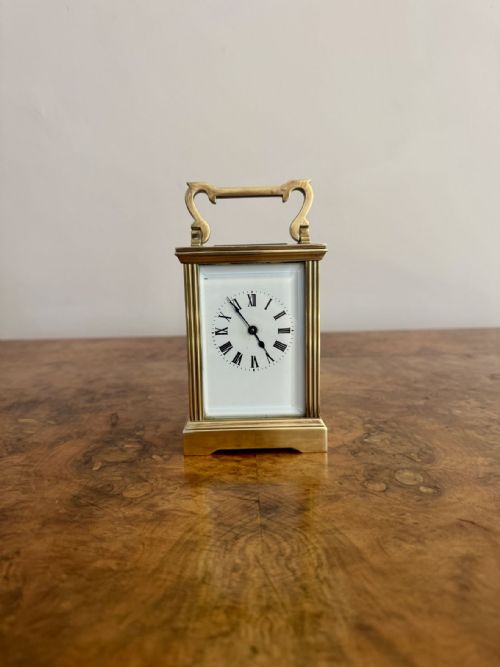
A brass enamel carriage clock is a portable timepiece designed for travel, housed in a glazed metal case with visible mechanisms and enamel dials or decorative panels. The items gathered here span the Victorian era, the Edwardian period, and the late nineteenth century, reflecting French and English origins.
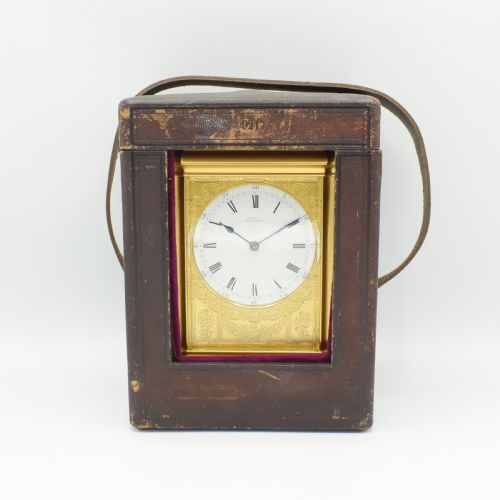
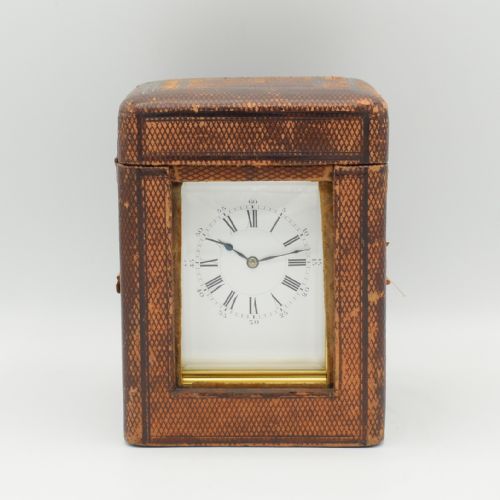
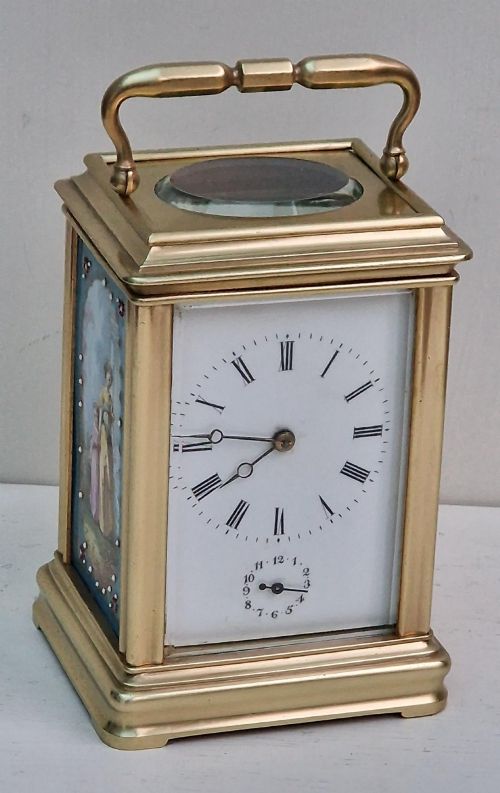
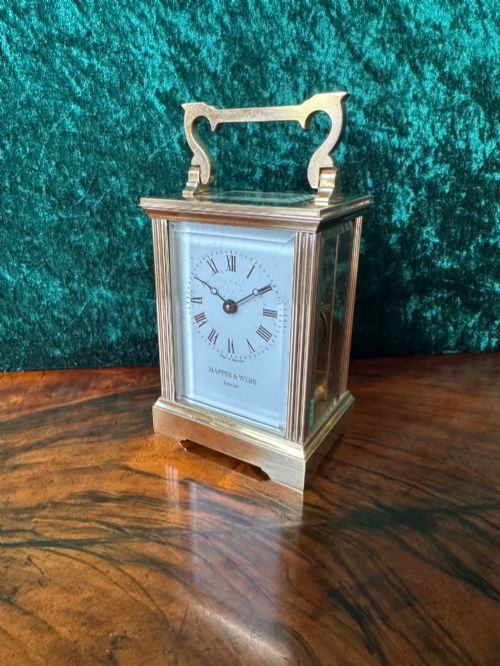
Most examples you encounter on this page take the form of traditional brass cases with bevelled glass panels, frequently incorporating white enamel dials or champleve enamelled decoration. They range from miniature sizes and gorge cases to large striking and repeating movements equipped with original travel cases.
Makers such as Henri Jacot, Drocourt, and Margaine feature alongside English retailers like Mappin and Webb, showing the widespread demand for these mechanical objects. Whether plain or fully engraved, each piece represents the standard domestic and travelling horology of the period.
Materials and construction methods
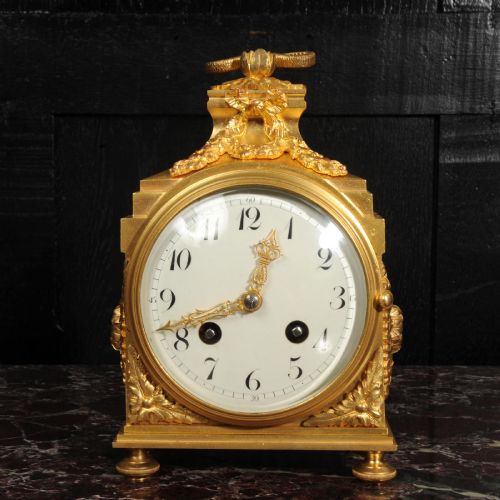
Construction relies heavily on cast and polished brass, gilt brass, or ormolu formed into robust frames that hold bevelled glass panels on all four sides. This allows light to enter and exposes the escapement and gear train within.
Enamel provides the primary decorative and functional surface, appearing on chapter rings, porcelain dial plates, and intricate champleve panel work set into the metal frames. Leather is also utilised for fitted travel cases designed to protect the brass housings during journeys.
One unusual piece was built specifically for export to the Chinese market, featuring a sweep seconds hand.
Assessing craftsmanship and finish
The distinction between standard production and finer execution lies in the depth of hand-engraving on the brass case and the precision of the movement. Heavily engraved gilt bronze frames and complex striking or repeating mechanisms demonstrate superior workshop standards.
The quality of the enamel work similarly divides the range, with delicate multi-coloured champleve patterns and hand-painted porcelain panels marking out the more ambitious pieces from plain white dial variants.
Henri Jacot·Drocourt Paris·Mappin and Webb·Margaine Of France·C. Detouche Paris·T. Martin and Co
The Brass Enamel Carriage Clock Glossary
- Champleve
- An enamelling technique where troughs or cells are hollowed out of a metal surface and filled with vitreous enamel before firing. This creates colourful flush patterns across the brass body.
- Repeater
- A mechanical complication that strikes the hours and quarters upon demand when a button or lever is pressed. It allowed travellers to check the time in darkness.
- Escapement
- The internal mechanism that controls the release of power from the mainspring to the gear train. It maintains the regular impulses that drive the balance wheel.
Brass Enamel Carriage Clock: Frequently Asked Questions
How do I wind a carriage clock?
Most mechanical pieces require a specific winding key inserted into the arbours found on the backplate. Turn the key gently until resistance indicates the mainspring is fully tensioned.
Take care not to overwind the movement, as this can damage the internal springs and disrupt the escapement regulation.
What is a repeating carriage clock?
A repeating movement sounds the last elapsed hour and quarter hours when you press the button on top of the case. This function was originally designed for checking the time at night without lighting a candle.
Examples with this complication often include bell strikes or gong strikes housed within the heavy brass frame.
How do I date a brass carriage clock?
Dating relies on examining the style of the case, the escapement type, and any maker marks or serial numbers stamped on the backplate. Victorian and Edwardian examples often show distinct shifts from platform cylinder escapements to more refined lever platforms.
Engraved signatures and retailer stamps also help narrow down the period of production to the nineteenth or early twentieth century.
Why does my clock have a travel case?
Original leather-covered wooden cases were constructed to protect portable timepieces during transit in carriages or trains. They feature hinged lids and velvet linings tailored to the exact dimensions of the brass housing.
Finding a piece with its matching travel case adds significant contextual completeness to the object.