


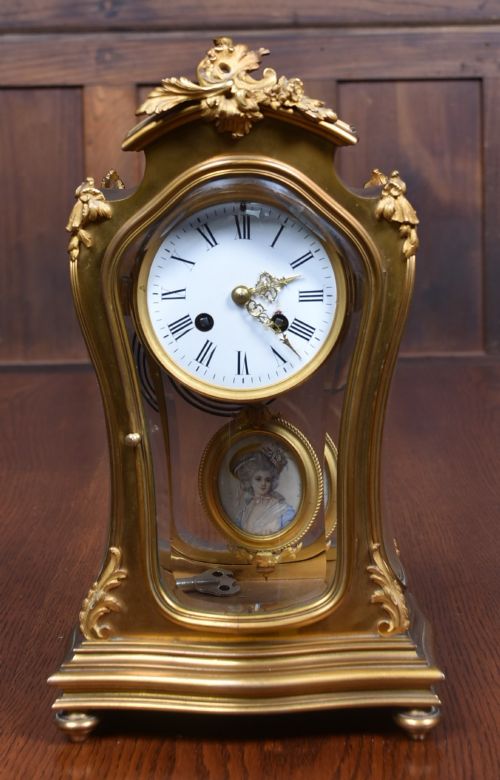


French Enamel Mantel Timepiece
These French enamel mantel timepieces bring together precision brass mechanics and decorative enamel work from the nineteenth and early twentieth centuries.
French Enamel Mantel Timepiece
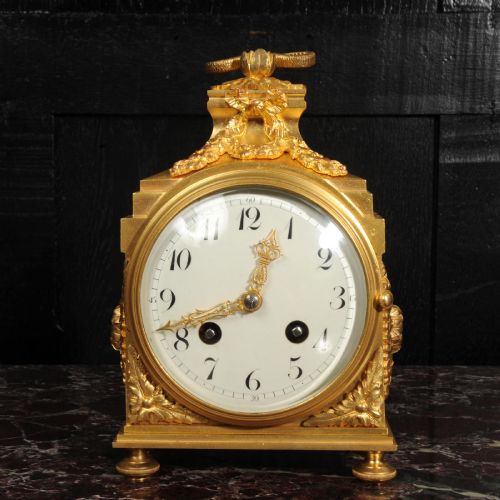
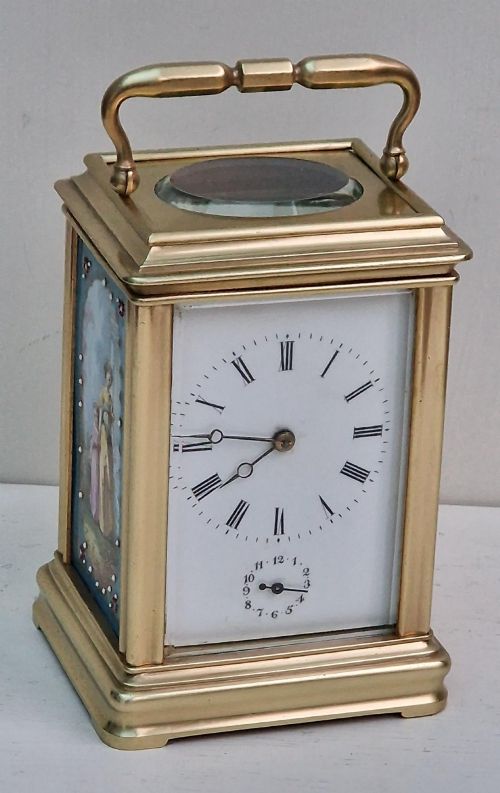
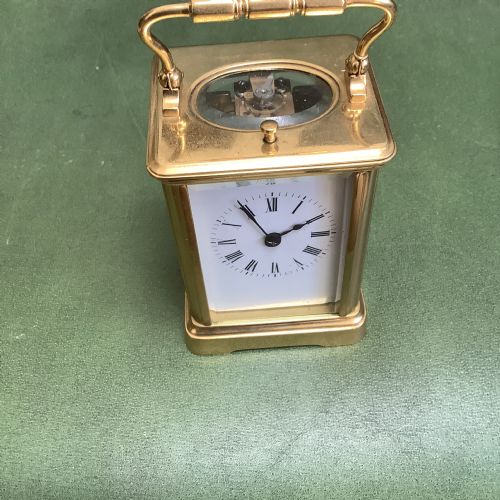
A French enamel mantel timepiece is typically encountered as a carriage clock or a four-glass mantel clock housed in brass, gilt bronze, or ormolu cases. The selections here span the Victorian, Edwardian, and nineteenth-century periods, capturing the decorative tastes of French workshops.
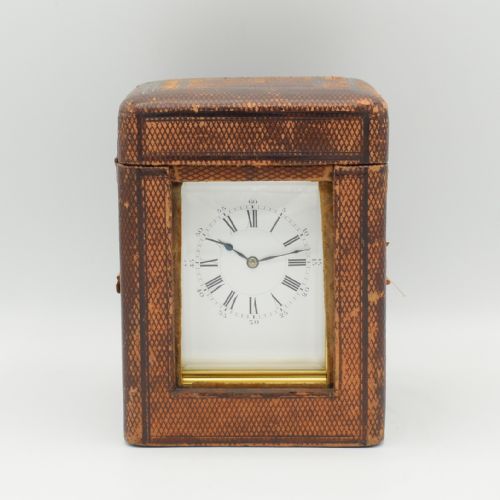
Makers such as Henri Jacot, Drocourt, Paul Garnier, and Tiffany produced these portable and domestic clocks, incorporating hand-painted enamel panels, dials, and intricate repeating movements. The forms range from miniature carriage clocks with travel cases to large striking models and ornate champleve examples.
Buyers seeking this phrase encounter objects defined by glass panels, porcelain details, and brass gorge or doucine cases. The diversity includes Swiss movements, enamel paintings, and specialised dial work made for international markets.
Materials and construction
Brass, gilt bronze, and ormolu form the structural chassis of these timepieces, providing durable housings for intricate gear trains and escapements. Cases are cast and polished, often featuring elaborate engraving or champleve enamel work.
Glass panels allow visibility of the internal mechanics, while enamel serves as the primary medium for dials and painted decorative scenes. Leather travel cases accompany many portable carriage clocks, protecting the metal housings during transit.
Assessing quality in movement and case
Quality separates simple production timepieces from complex works through the sophistication of the movement, such as grand sonnerie strikes, repeating mechanisms, and fully engraved gilt brass cases. The presence of signed miniature paintings and intact enamel panels elevates the standard of a piece.
The precision of the escapement and the crispness of the cast ormolu and brass details distinguish finer examples. Maker attribution to established French and London houses adds distinct provenance to the construction.
Henri Jacot·Drocourt Paris·Paul Garnier·T Martin and Co·Tiffany
The French Enamel Mantel Timepiece Glossary
- Carriage clock
- A portable spring-driven timepiece designed for travel, typically featuring a brass case with glass panels and a swing handle.
- Ormolu
- Gilded bronze produced by applying a finely ground high-carat gold-mercury amalgam to a bronze object, creating a durable golden surface.
- Gorge case
- A stepped brass carriage clock case style characteristic of late nineteenth-century French manufacture.
- Champleve
- An enamelling technique where troughs or cells are carved into the surface of a metal object and filled with vitreous enamel before firing.
- Grand sonnerie
- A striking clock movement that chimes both the hours and the quarters automatically on every quarter hour.
French Enamel Mantel Timepiece: Frequently Asked Questions
What is a carriage clock?
A carriage clock is a portable spring-driven timepiece developed in the nineteenth century for officers and travellers. They usually feature a brass or gilt case with glass panels so the movement can be seen from the sides.
Most examples include a folding handle on top and come with a leather travel case to protect the mechanism during movement.
How do repeating clocks work?
Repeating clocks use an additional mechanism that allows the owner to press a button or pull a cord to repeat the last struck hour or quarter hour on demand. This was particularly useful before electric lighting made it easy to check the time in the dark.
Such movements require complex gear trains and strike systems housed within the standard brass case.
What is four glass clock?
A four-glass clock is a mantel timepiece enclosed by glass panels on the front, back, and both sides, revealing the entire mechanical movement and pendulum. These clocks were popular during the late nineteenth and early twentieth centuries.
They often sit on bronze or brass plinths and showcase refined enamel dials.
How are these clocks dated?
Dating relies on stylistic markers, case designs, serial numbers, and signatures inscribed on the backplates or dials. Victorian and Edwardian pieces often reflect the specific revival styles popular in France during those decades.
Maker marks and registration numbers help narrow the period of manufacture to specific decades like the 1880s or 1890s.