


Victorian Enamel Travel Clock
A victorian enamel travel clock combines precise mechanical movement with decorative enamel work, built to keep time reliably on long journeys.
Victorian Enamel Travel Clock
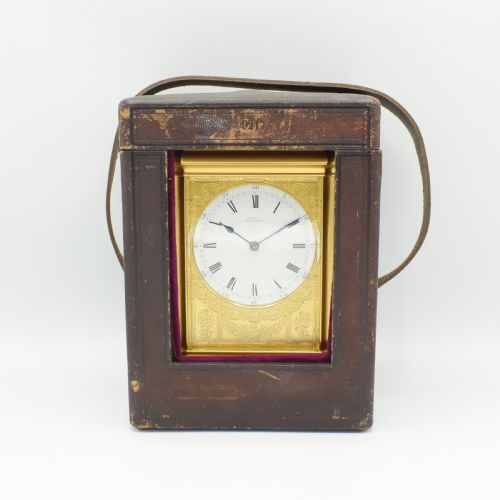
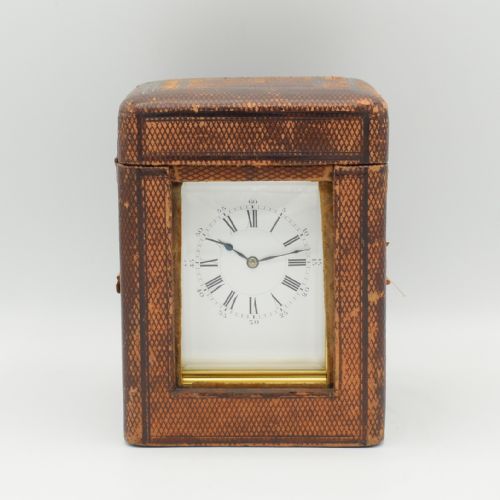
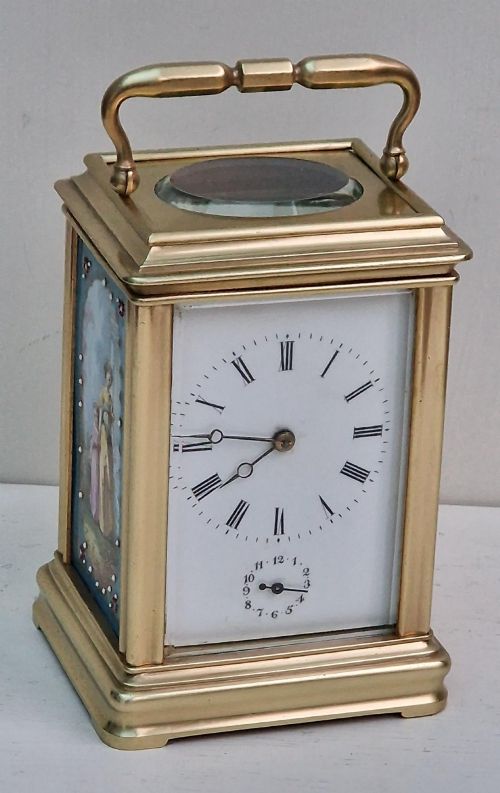
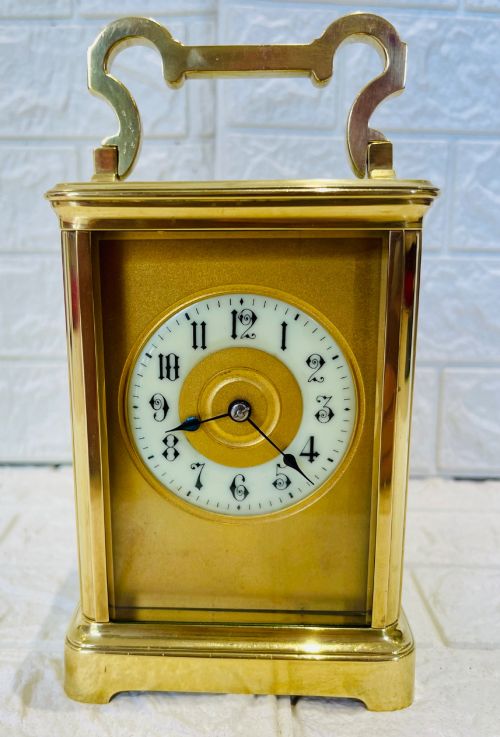
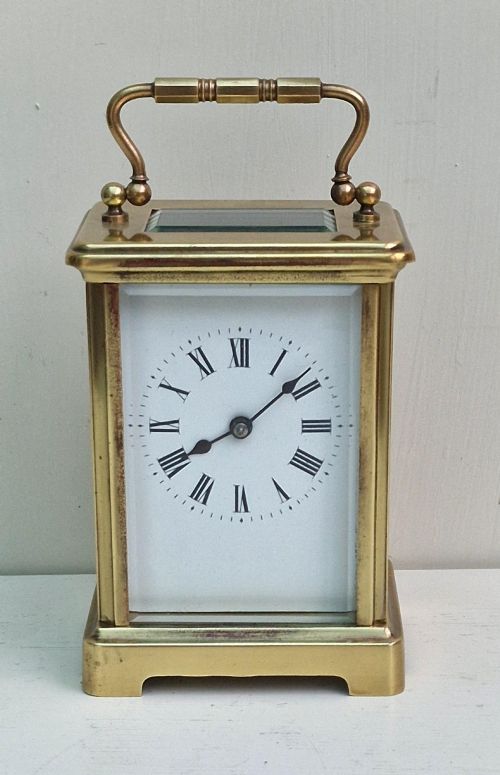
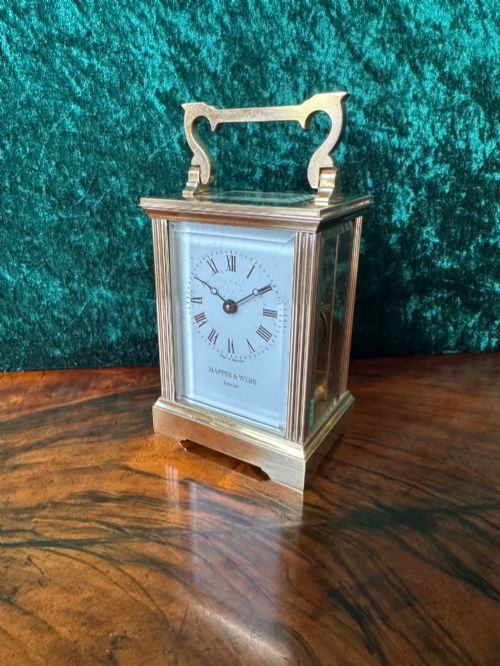
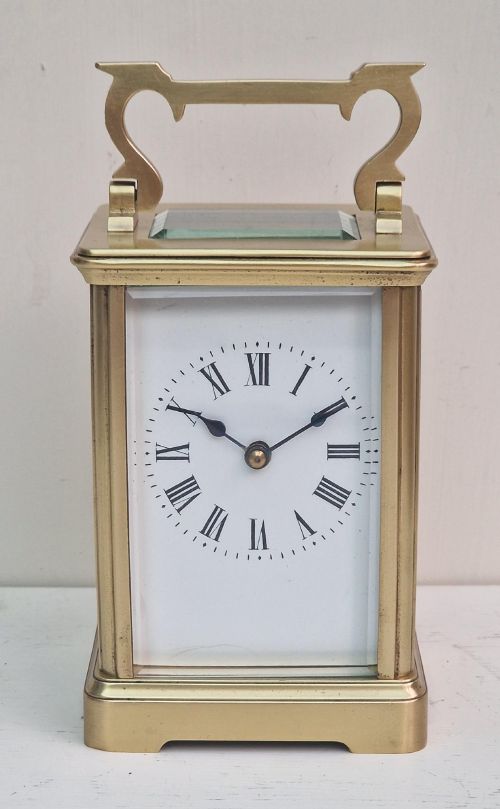
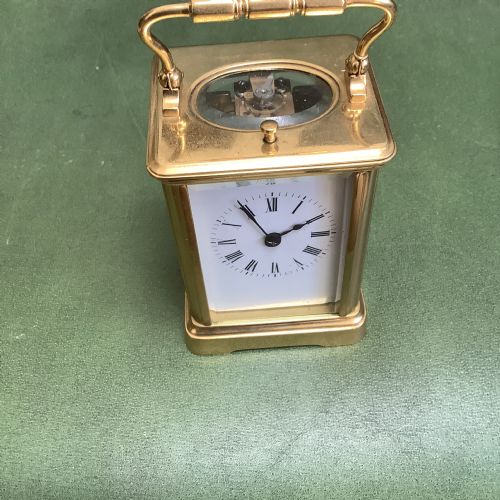
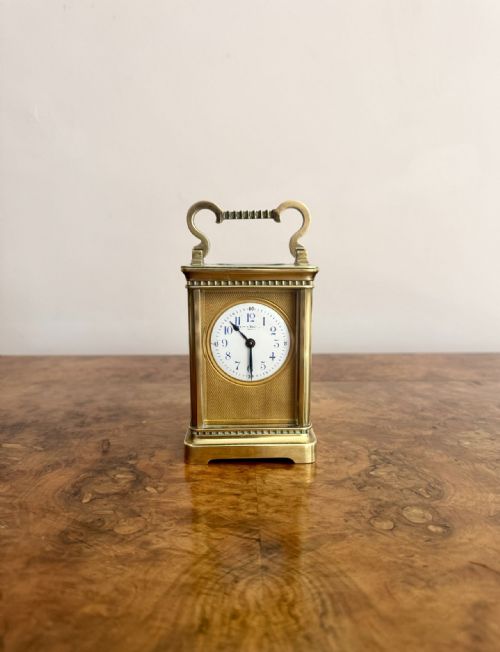
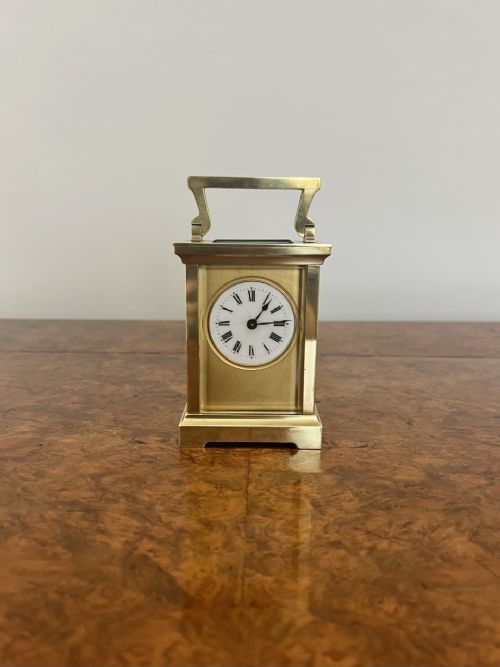
A victorian enamel travel clock primarily takes the form of a brass-framed carriage clock, often enclosed in a leather travel case to protect the movement during transit. These pieces span the nineteenth century, with strong representation from the eighteen-eighties and eighteen-nineties, reflecting a period of refined craftsmanship in portable timekeeping.
Most examples originate from French workshops or carry British retail signatures, combining robust mechanical movements with delicate dial work. Miniature versions and larger striking models appear frequently, showing the range of sizes produced for travellers and home display alike.
Materials and Techniques
Makers integrated leather for protective outer cases, whilst silver and porcelain occasionally appeared in specific luxury commissions. The mechanical components demanded precise hand-fitting of gears, escapements and striking mechanisms to endure the motion of travel.
Gradations in Quality
Quality rests primarily on the sophistication of the movement and the intricacy of the exterior brass engraving. Simple timepieces sit below repeating movements and grand sonnerie complications that strike the hours and quarters automatically.
The finesse of the enamel panels and the inclusion of original signed maker marks or matching leather cases elevate certain examples. Heavy, fully engraved gilt brass cases represent the upper tier of production.
Henri Jacot·Drocourt Paris·Mappin and Web·T. Martin & Co·C. Detouche Paris·Margaine Of France·Latshea & Sons Edinburgh
The Victorian Enamel Travel Clock Glossary
- Carriage clock
- A portable spring-driven timepiece designed for travellers during the nineteenth century. These clocks typically feature a rectangular brass case with glass sides and a handle on top.
- Repeater
- A mechanical complication that strikes the hours and past quarters on command when a button or lever is pressed. This feature allowed owners to check the time in the dark.
- Gorge case
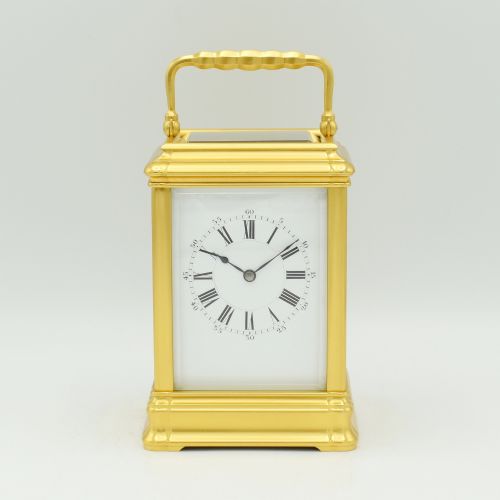
- A distinct rectangular brass carriage clock case style characterised by stepped mouldings on the top and base. It represents a classic French housing for high-grade movements.
- Grand sonnerie
- An advanced striking train that automatically chimes the hours and the current quarter on every quarter-hour. It stands as a complex achievement in miniature clockmaking.
- Escapement
- The internal mechanism that controls the release of power from the mainspring to the gear train. Platform escapements became standard in these portable pieces for stability.
Victorian Enamel Travel Clock: Frequently Asked Questions
How do I wind a carriage clock?
Use the matching key on the winding arbors located through the back plate or base of the movement. Turn carefully until resistance indicates the mainspring is fully tensioned.
Avoid overwinding, as this places undue stress on the brass gears and mainspring inside the antique mechanism.
What is the difference between a striking clock and a repeater?
A striking clock sounds the hours automatically as time passes, using an internal bell or gong. A repeater includes an extra mechanism that allows the owner to trigger the last hour and quarter-hour on demand.
Both types were essential for travellers wishing to know the time without striking matches at night.
How should I care for the leather travel case?
Keep the leather conditioned with appropriate museum-grade wax or balms to prevent drying and cracking over time. Store the case in a stable environment away from direct heat sources and excessive moisture.
The case is designed to absorb transit shocks, so ensure the clock fits securely within its fitted interior.
Can these clocks be repaired if they stop working?
Specialist horologists experienced in nineteenth-century French and British movements can clean, service and restore worn brass bushings and springs. Regular maintenance ensures the delicate gear trains continue to function accurately.
Professional intervention preserves the original components and historical integrity of the piece.