



Brass Empire Chandelier
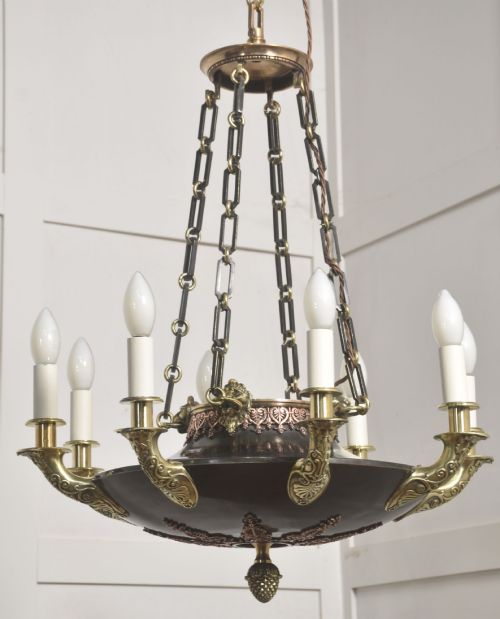
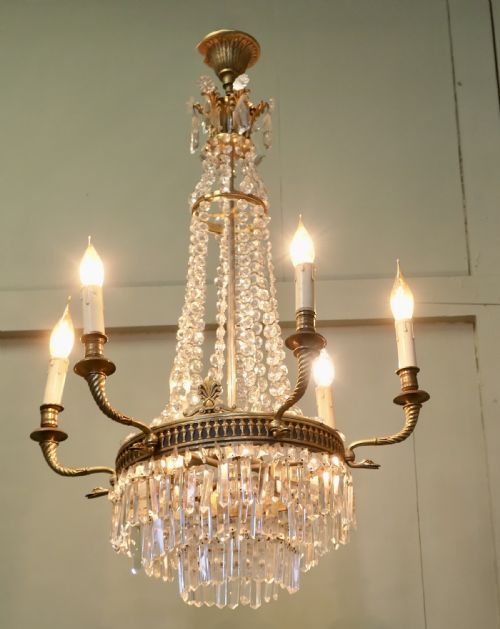
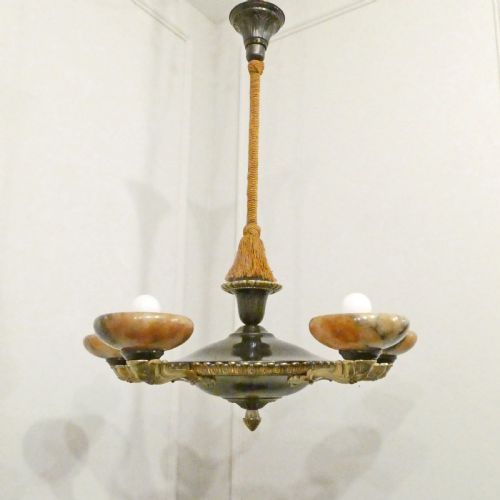
These brass empire chandelier pieces bring neoclassical weight and brilliant glasswork to a room, offering a commanding presence rooted in classical proportion.
Brass Empire Chandelier
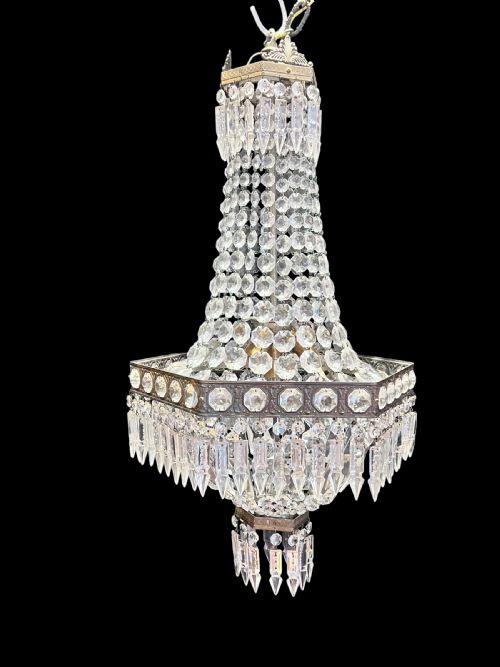
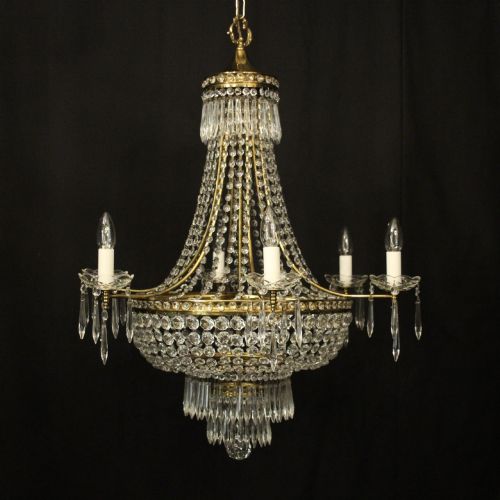
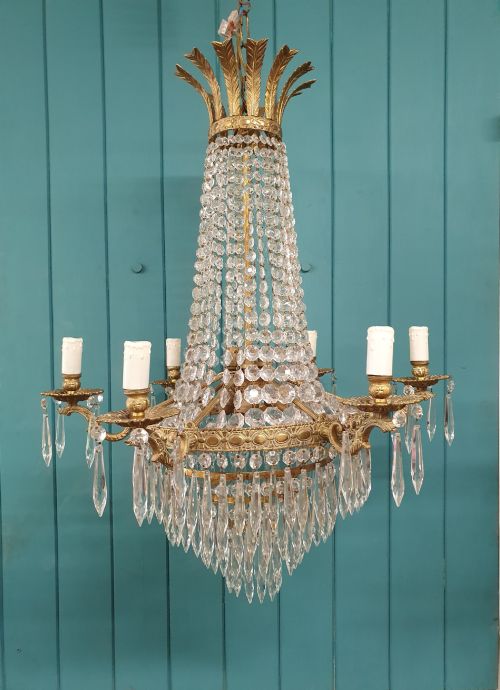
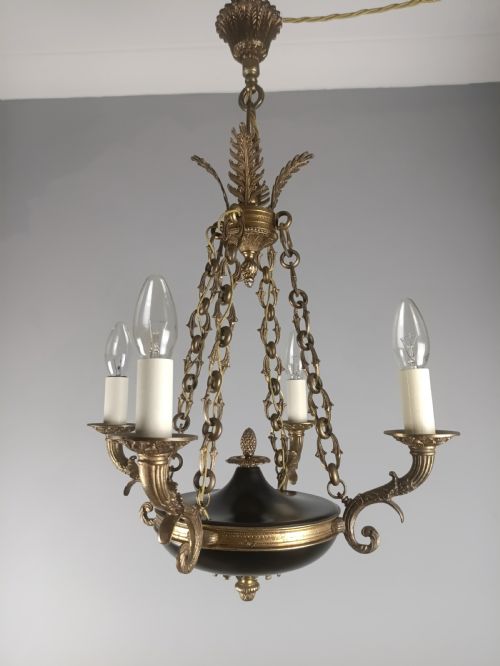
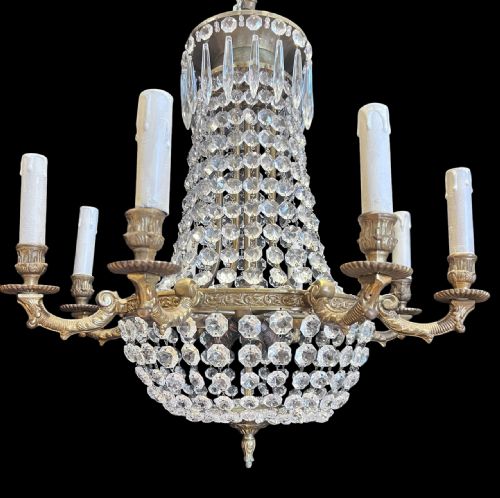
A brass empire chandelier brings together classical restraint and generous illumination, drawing on French designs that span the nineteenth and early twentieth centuries. When searching for a brass empire chandelier, buyers encounter forms ranging from simple single-light baskets to large multi-armed fixtures dressed in cascading crystals.
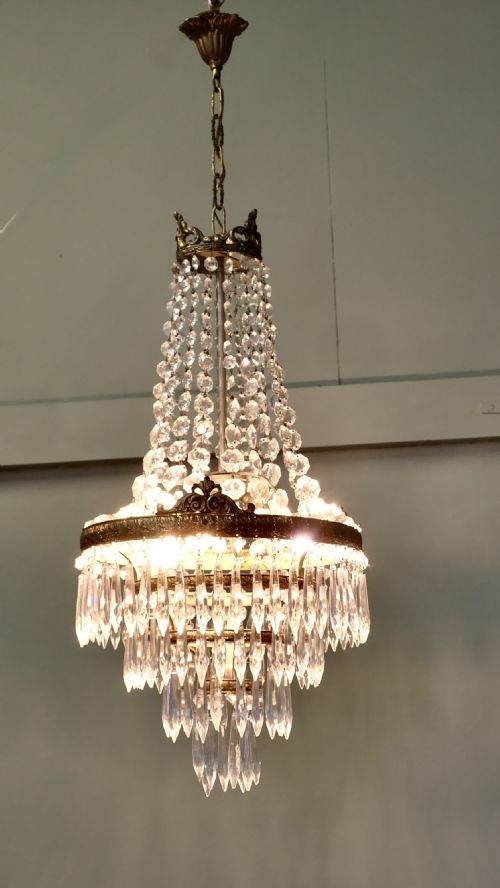
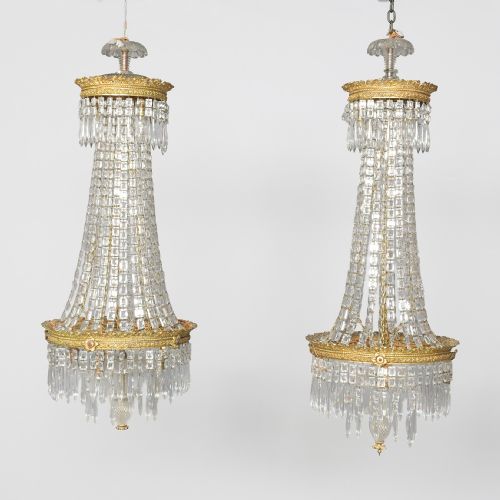
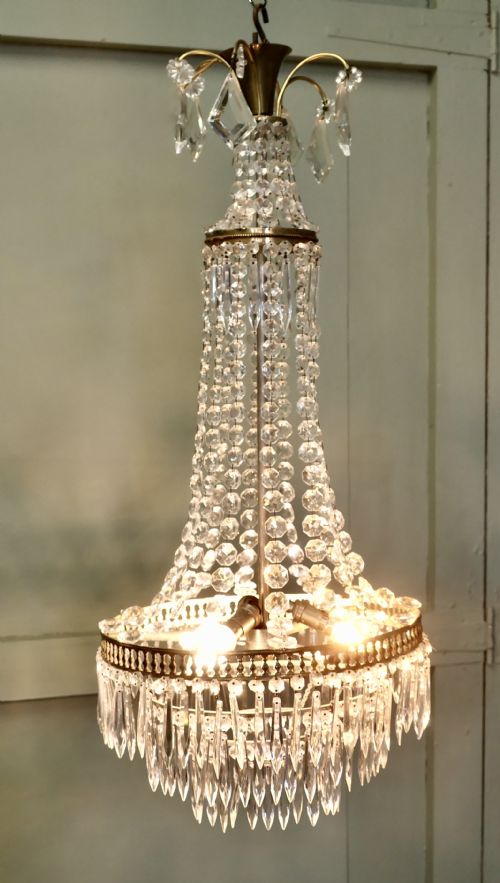
The selections on this page lean heavily towards French aesthetic traditions, encompassing styles from the nineteenth century alongside later twentieth-century revivals. Pieces often incorporate tent and waterfall configurations, where strings of glass beads drop outward from a central crown toward the brass frame.
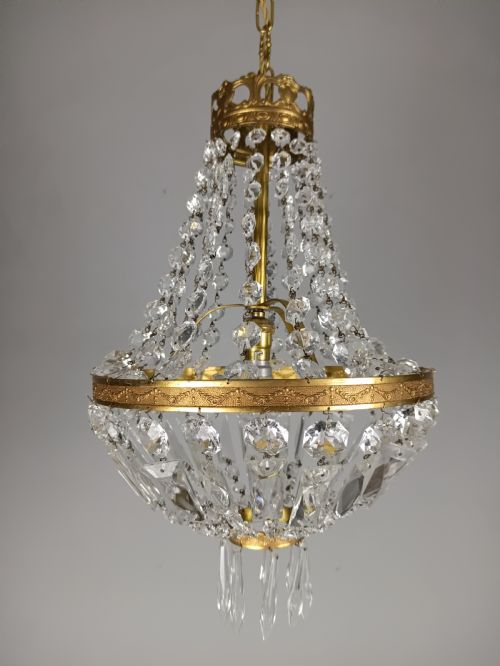
Alongside standard multi-light ceiling fixtures, the category includes related wall lights, lanterns, and basket designs shaped by neoclassical and chateau influences. These pieces suit rooms with sufficient ceiling height to let the gathered prisms and metalwork catch the light properly.
Materials and construction techniques
Makers constructed these fixtures using brass, gilt brass, bronze, and gilt bronze combined with clear glass and crystal prisms. Metal components were cast or spun, then assembled to form crowns, rings, and arms that support the glass elements.
Crystal drops, beads, and cut glass plates are wired or pinned together in tent, waterfall, and bag formations to refract light across the room. Details such as leaf decorations on the arms and cast mounts add definition to the metal framework.
Listings feature brass and gilt bronze fittings dating from the eighteenth century through the Art Deco era.
Distinctions in quality
Quality rests on the crispness of the cast brass or bronze work and the clarity of the glass and crystal elements. Finer examples display sharp detailing on leaf motifs and mounts, alongside heavy, well-cut prisms that catch the light cleanly.
Construction methods also separate standard production from superior pieces, particularly in the density of the bead strands and the sturdiness of the internal wiring framework supporting large tiers of glass.
The Brass Empire Chandelier Glossary
- Tent and waterfall
- A chandelier configuration featuring an upper conical section of strung beads dropping down to a wider tier of cascading crystals. This arrangement creates a layered profile that diffuses light outward.
- Ormolu
- Gilded bronze or brass used for decorative mounts and metalwork on classical furniture and lighting. The technique imparts a rich golden tone to the metal surface.
- Prism
- A cut glass or crystal pendant designed to refract light into spectral colours. These hang from the arms and crowns of the fixture.
- Basket chandelier
- A compact or elongated lighting form where the lower section of glass drops forms a rounded container shape beneath the lights. It is often secured with a central glass plate at the base.
- Lyre
- A decorative motif shaped like an ancient stringed musical instrument, frequently incorporated into the central metal structure of neoclassical light fittings.
Brass Empire Chandelier: Frequently Asked Questions
How do I hang a heavy brass empire chandelier?
These fixtures require secure anchoring to a ceiling joist or a heavy-duty ceiling box capable of supporting the combined weight of the metal and glass elements.
Professional installation is recommended to ensure the electrical wiring and suspension chains safely bear the load of multi-light frames.
What rooms suit an empire style chandelier?
Dining rooms, high-ceilinged hallways, and drawing rooms provide the ideal proportions for these substantial classical fixtures.
Ensure there is adequate clearance beneath the lowest hanging crystals for people to walk underneath comfortably.
How do I clean the crystal prisms?
Prisms and glass drops are best cleaned in place using a specialist spray cleaner and a soft cloth to reach all the facets.
For a thorough clean, individual drops can be unpinned, washed in warm soapy water, dried, and reattached to the frame.
How can I tell an older piece from a revival?
Nineteenth-century originals typically display heavier hand-cast brass components and traditional joining methods, whereas later twentieth-century revivals may feature different casting textures and wiring standards.
Examining the wear on the metal and the cut of the glass helps indicate the likely period of manufacture.