





Brass Drip Tray Stick Stand
A brass drip tray stick stand is a hallway accessory designed to hold wet umbrellas and walking sticks while protecting the floor.
Brass Drip Tray Stick Stand
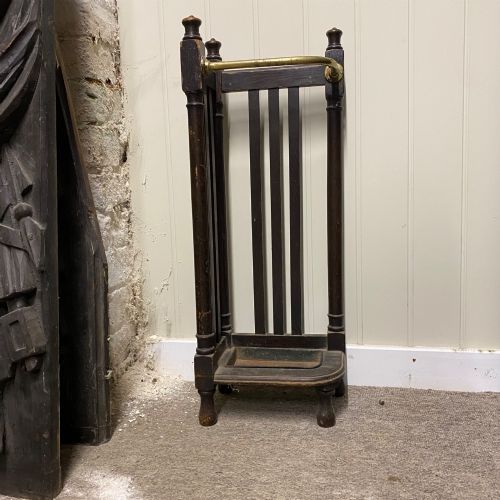
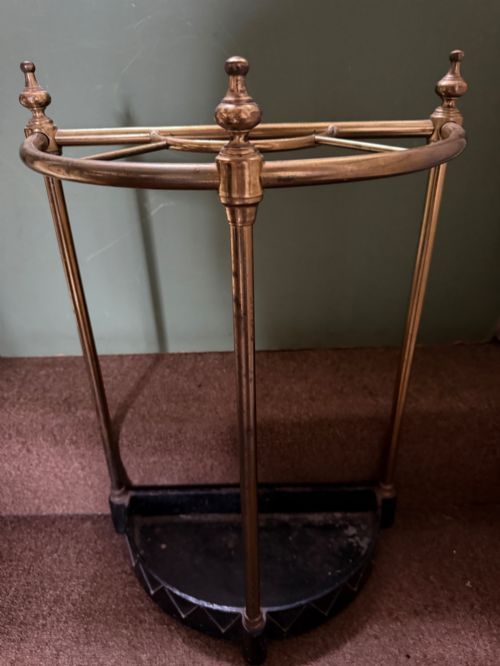
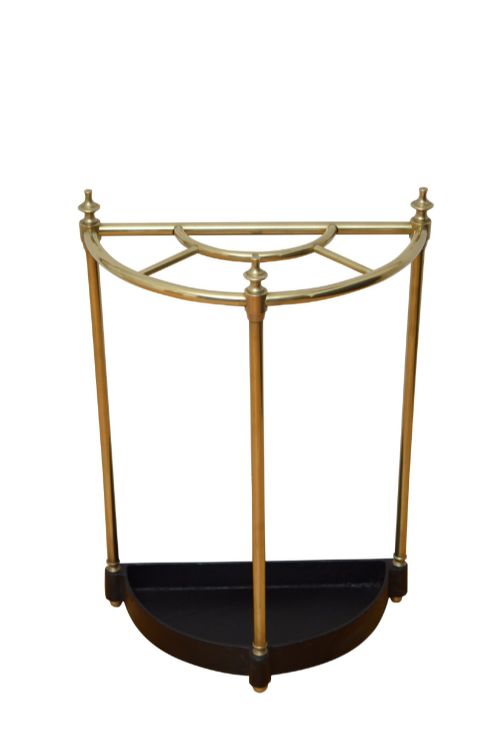
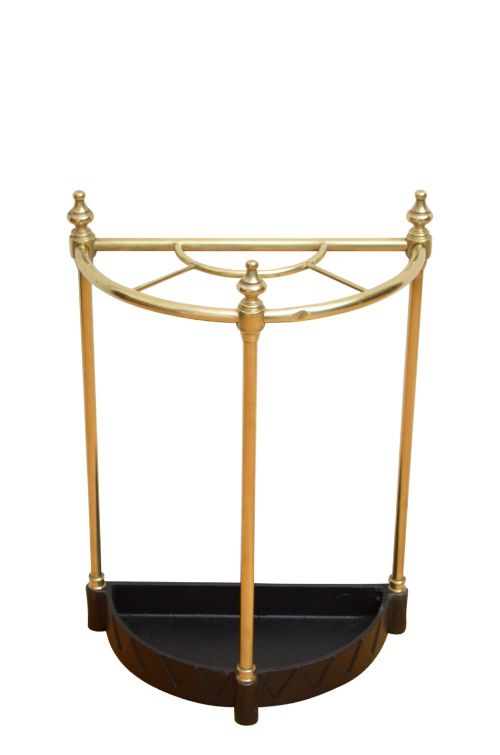
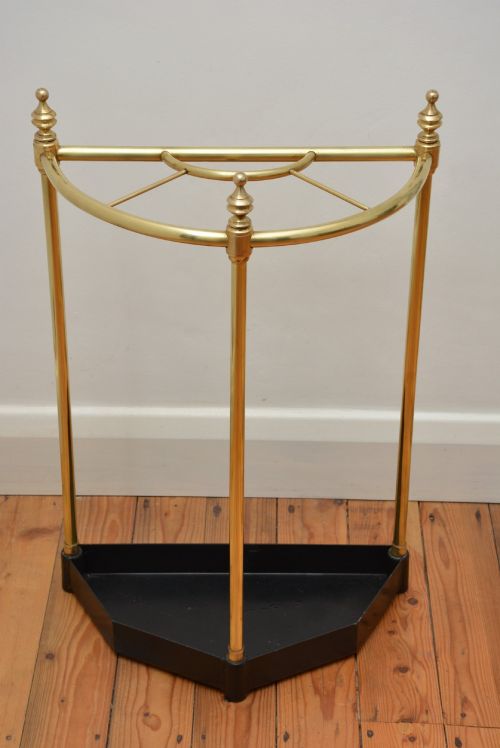
A brass drip tray stick stand appears in several distinct shapes designed to fit hallway spaces, most commonly as a demi-lune or half-moon frame that sits flush against a wall. Circular and corner configurations also recur frequently across the selection, alongside larger hall stands that incorporate umbrella racks into a broader framework.
The pieces on this page span the Victorian and Edwardian eras through to the early twentieth century, showing typical production from the late nineteenth century onwards. English workshops dominate the origin records, often combining polished metal loops with heavier structural bases.
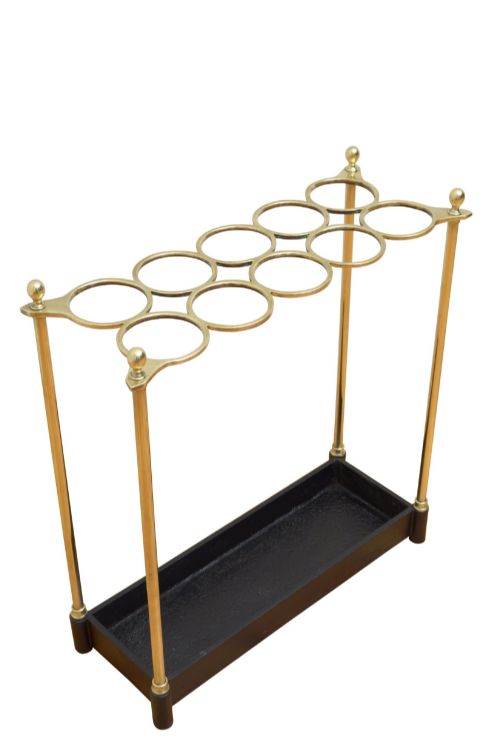
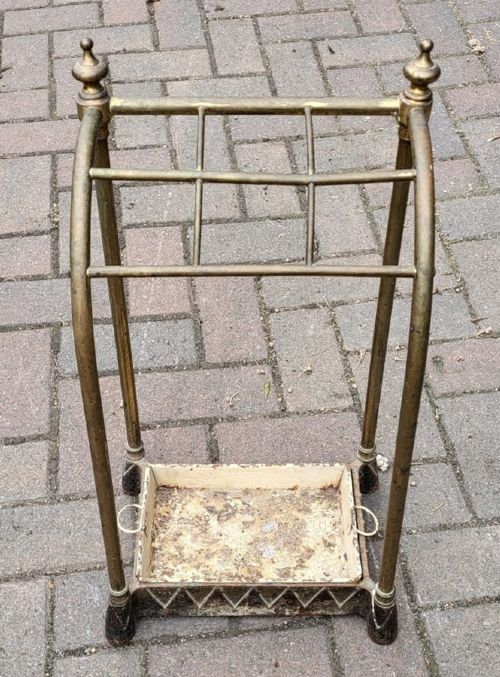
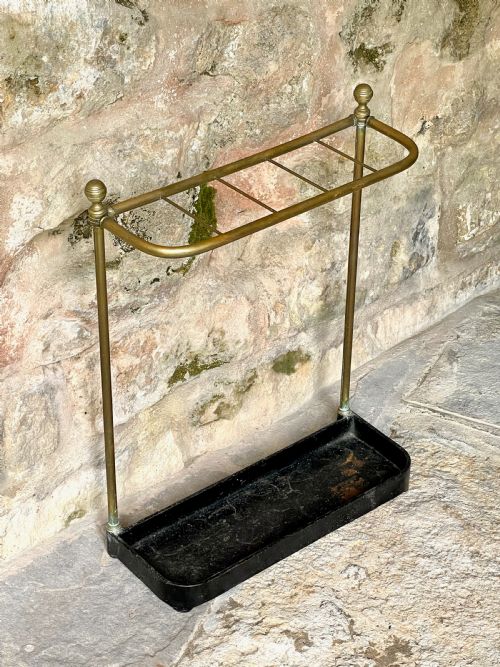
Makers utilised a variety of formats, from narrow walking cane holders to large umbrella stands featuring decorative ball finials or cast iron elements. These utilitarian objects served as functional hall furniture in period homes, designed to keep wet walking aids contained.
Materials and Construction
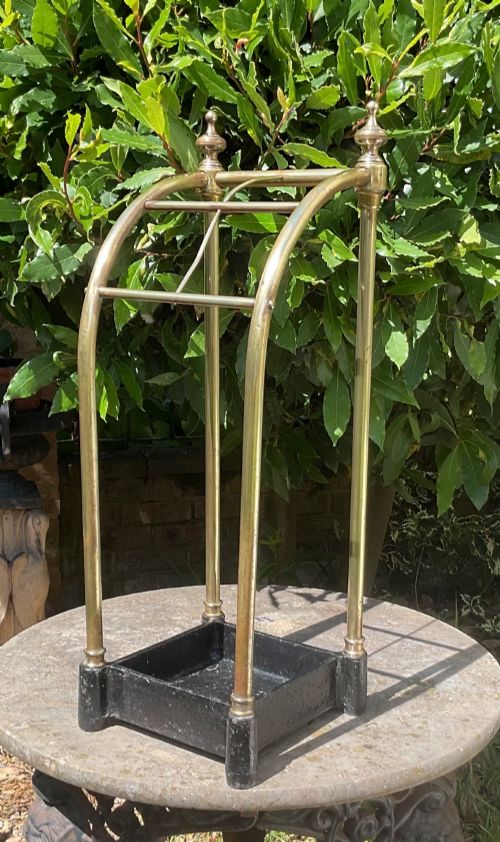
Brass forms the primary visual element of these stands, frequently shaped into tubular rails, stick loops, and decorative frames. Cast iron and steel provide the necessary weight for the base, ensuring stability when heavy wet umbrellas or walking sticks are placed inside.
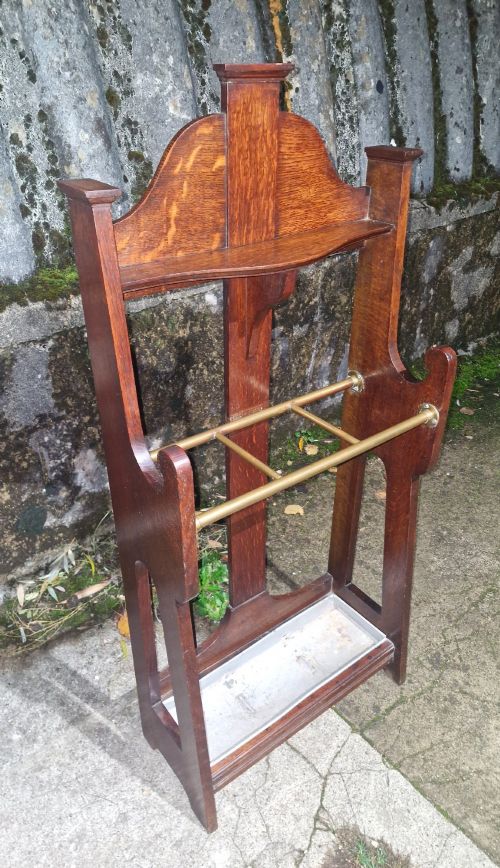
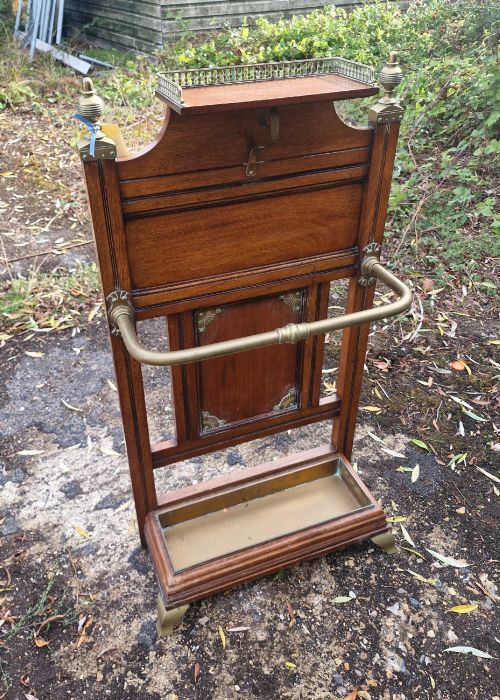
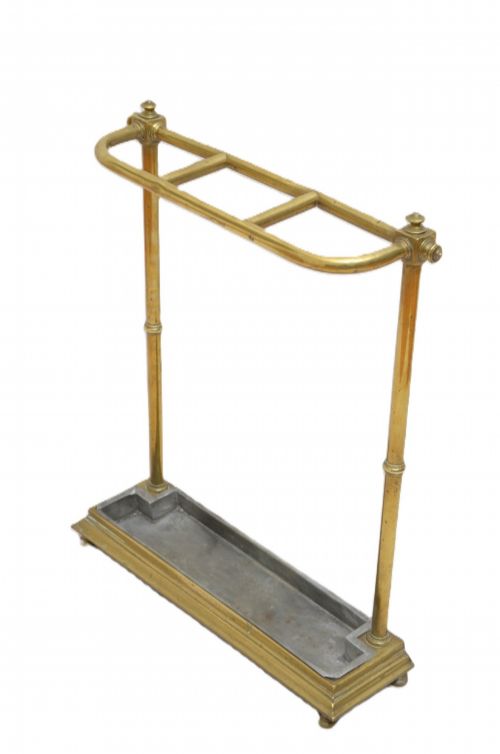
Many examples pair brass with timber components such as oak or mahogany, particularly in hall stand configurations. Removable metal drip trays made of zinc or copper sit at the bottom to catch moisture, while bun feet or raised bases support the main body.
Brass Drip Tray Stick Stand Retail Price Guide 2026
Typical asking prices for brass drip tray stick stand among the pieces listed under this phrase on Sellingantiques today, from the lower quarter to the upper quarter. They describe what is for sale here now, not the wider market.
The listings on this page include both standalone brass frames and hybrid designs that combine brass with oak, mahogany, and cast iron elements.
Quality Variations
The standard of a brass drip tray stick stand often depends on the weight and thickness of the cast metal base. Heavier iron foundations provide superior stability compared to lighter alternatives, anchoring the upper brass loops securely.
Design complexity also separates standard utilitarian models from finer decorative pieces. Examples featuring cast coronets, intricate stick loops, or combination frames utilising solid oak and mahogany reflect more ambitious period craftsmanship.
Shoolbred
The Brass Drip Tray Stick Stand Glossary
- Demi-lune
- A half-moon shape designed to stand flat against a hallway wall. This profile allowed umbrella stands to occupy minimal floor space while accommodating multiple walking sticks.
- Drip tray
- A removable metal basin positioned at the base of the stand to collect water from wet umbrellas. These are typically manufactured from copper, zinc, or iron.
- Stick loop
- The metal divider at the top of the stand that separates individual walking canes or umbrellas. These loops keep the contents organised and upright.
- Finial
- A decorative terminal ornament placed on top of vertical posts. Ball finials are commonly found on Victorian brass frames.
Brass Drip Tray Stick Stand: Frequently Asked Questions
How do I clean an antique brass stick stand?
Polishing should be approached with caution to preserve the aged patina that accumulates over decades of use. Many collectors prefer to leave the surface undisturbed rather than restoring it to a bright shine.
Light dusting with a soft cloth is usually sufficient for regular maintenance. Avoid abrasive cleaners that might damage the original metal surface or remove historic wear.
Where were these stands placed in a period home?
These items traditionally stood in entrance halls, vestibules, or boot rooms. Their primary function was to receive wet umbrellas and walking sticks immediately upon entering the house.
Because they sat near the front door, they were frequently designed as decorative furniture pieces rather than purely utilitarian objects.
Are all brass stick stands from the Victorian period?
While a large proportion date from the Victorian and Edwardian eras, production continued into the early twentieth century. Variations in style, such as Art Nouveau or Gothic Revival influences, help indicate the specific period of manufacture.
Construction details and patent numbers stamped on the metal or wood can also assist in narrowing down the date.
What is the purpose of the cast iron base?
The heavy iron foundation provides stability for the taller, lighter brass superstructure. Without a dense base, the weight of multiple heavy walking sticks or wet umbrellas could cause the stand to topple.
Iron also resists rust better when exposed to the moisture collected in the removable drip tray.