



Brass Desktop Organizer
These brass desktop organizer pieces keep papers and correspondence tidy on the writing table while bringing period timber and metalwork into the room.
Brass Desktop Organizer
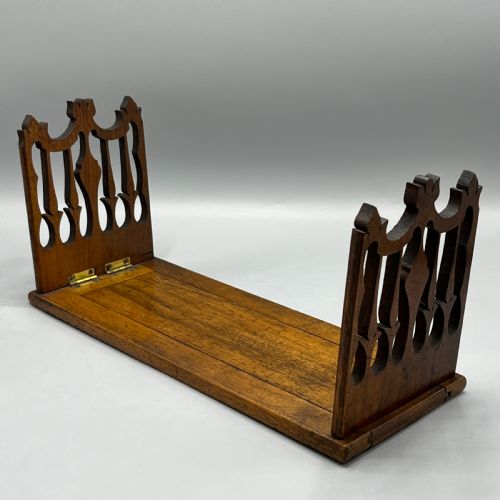
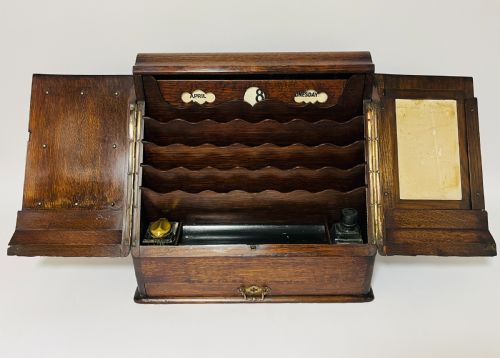
A brass desktop organizer groups utilitarian office items such as stationery cabinets, letter boxes, inkstands, and extending book slides designed for the nineteenth and early twentieth century desk. You will most frequently meet oak, walnut, or mahogany cabinets fitted with brass mounts, hinges, and handles across the Victorian and Edwardian periods.
The selection ranges from compact bank of drawers and index filing units to coromandel stationery boxes inlaid with mother of pearl or agate. Pieces stretch from the Regency era through to early twentieth century office accessories, reflecting changing habits of personal and household correspondence.
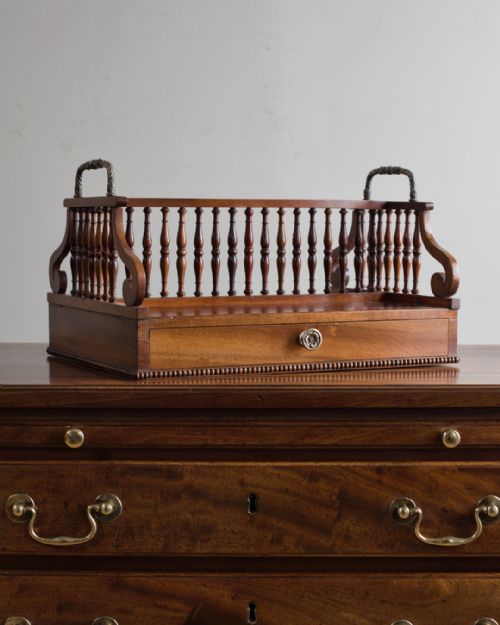
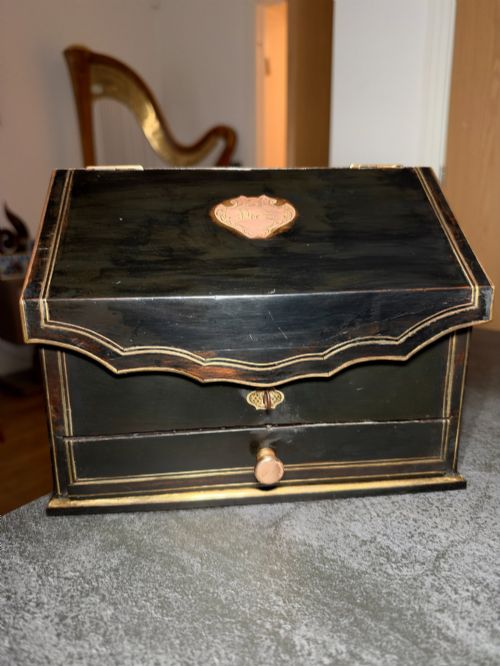
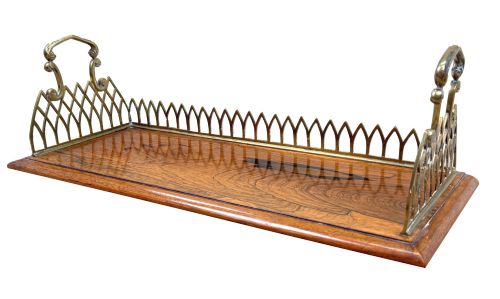
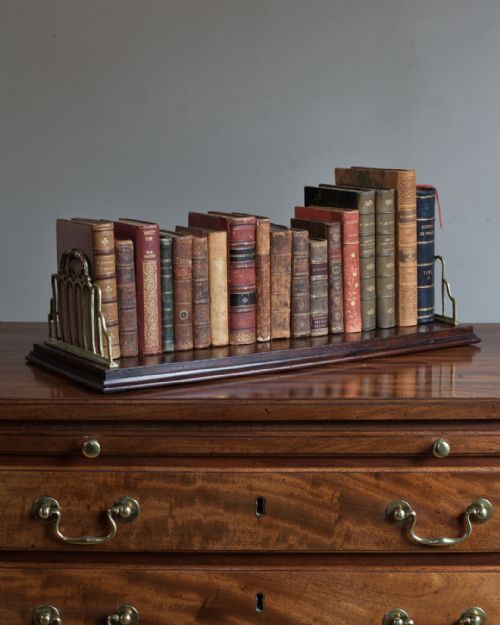
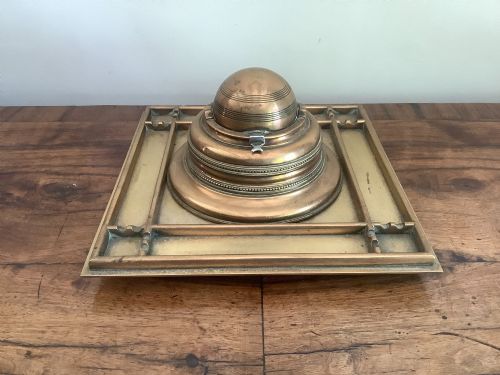
Forms include slope-front letter boxes, double inkstands with glass wells, and expanding book slides that adjust to hold rows of octavo volumes. Each serves a distinct desktop function, whether sorting daily post or keeping ink and nibs ready for use.
Materials and construction
Cabinetmakers built these pieces using dense hardwoods like walnut, oak, mahogany, rosewood, and coromandel, often framing the structure with solid timber and applying figured veneers to visible surfaces. Brass provided functional reinforcement through strapwork, hinges, drop handles, and escutcheons, screwed securely into the wood.
More elaborate examples incorporated decorative inlays such as mother of pearl and agate panels set flush into the timber lids and doors. Glass found use in removable inkwells and internal dividers, while patinated brass hardware secured drop fronts and kept stationery compartments organised.
Brass Desktop Organizer Retail Price Guide 2026
Typical asking prices for brass desktop organizer among the pieces listed under this phrase on Sellingantiques today, from the lower quarter to the upper quarter. They describe what is for sale here now, not the wider market.
Oak appears most frequently in country house letter boxes and stationery cabinets, while coromandel and mother of pearl define decorative nineteenth century desk stands.
Assessing quality and finish
Quality rests upon the choice of timber and the precision of the joinery, particularly where brass mounts meet shaped wood on sloping correspondence boxes and cabinet doors. Substantial brass hardware cast with clean edges and secured with matching countersunk screws indicates higher workshop standards.
Finer items display thoughtful interior partitioning, such as velvet-lined ledges, well-fitted glass ink inserts, and patent mechanisms that operate smoothly. Simpler utility pieces rely on straightforward dovetailing and basic brass drop handles without decorative engraving.
Betjemanns
The Brass Desktop Organizer Glossary
- Stationery cabinet
- A desktop box featuring doors or a drop front designed to hold writing paper, envelopes, and sealing wax. These often include internal dividers and shallow drawers.
- Book slide
- An expanding desktop rack flanked by hinged or fixed ends that pulls outward to support a row of books. Brass mechanisms frequently allow the wooden sections to glide smoothly.
- Inkstand
- A tray or stand holding one or more inkwells, often accompanied by pen troughs and sanders. Glass reservoirs with brass collars form the central receptacles.
- Coromandel
- A dense, heavily figured exotic timber imported from Asia, prized for dark brown colouring and contrasting pale yellow streaks. Makers used it for luxury nineteenth century desktop boxes.
- Escutcheon
- A protective metal plate surrounding a keyhole, usually fashioned from brass on these pieces to match corner brackets and hinges.
Brass Desktop Organizer: Frequently Asked Questions
What is a brass desktop organizer?
A brass desktop organizer encompasses nineteenth and early twentieth century accessories like stationery boxes, letter boxes, inkstands, and book slides that use timber frames reinforced with brass.
These items were manufactured to keep correspondence, writing implements, and reference books ordered on library and study desks.
How do I date a stationery box?
Dating relies on observing the primary wood species, the style of the brass mounts, and the construction methods used inside the cabinet. Walnut and coromandel boxes with Gothic revival details or patent mechanisms typically point to the mid to late nineteenth century.
Later Edwardian examples often feature simpler oak construction intended for country house studies and administrative use.
Can I use an antique inkstand today?
Antique inkstands accommodate modern fountain pens if the glass inkwells are intact and free from internal cracking. Many retain their original glass inserts, though metal collars and hinged lids should be checked for smooth movement before filling.
They function well on modern desks as decorative holders or pen rests.
How should I clean wood and brass?
Maintain the timber surfaces using a gentle application of microcrystalline wax to nourish the grain without building up sticky residues. Brass mounts respond best to careful dry dusting, avoiding harsh chemical polishes that can remove the aged patina or stain the surrounding wood.