

Brass Crystal Light Fitting
A brass crystal light fitting brings unmistakable architectural presence and fractured prismatic brilliance to a room.
Brass Crystal Light Fitting
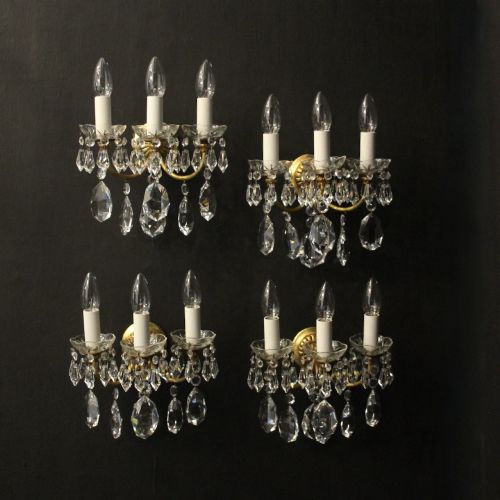
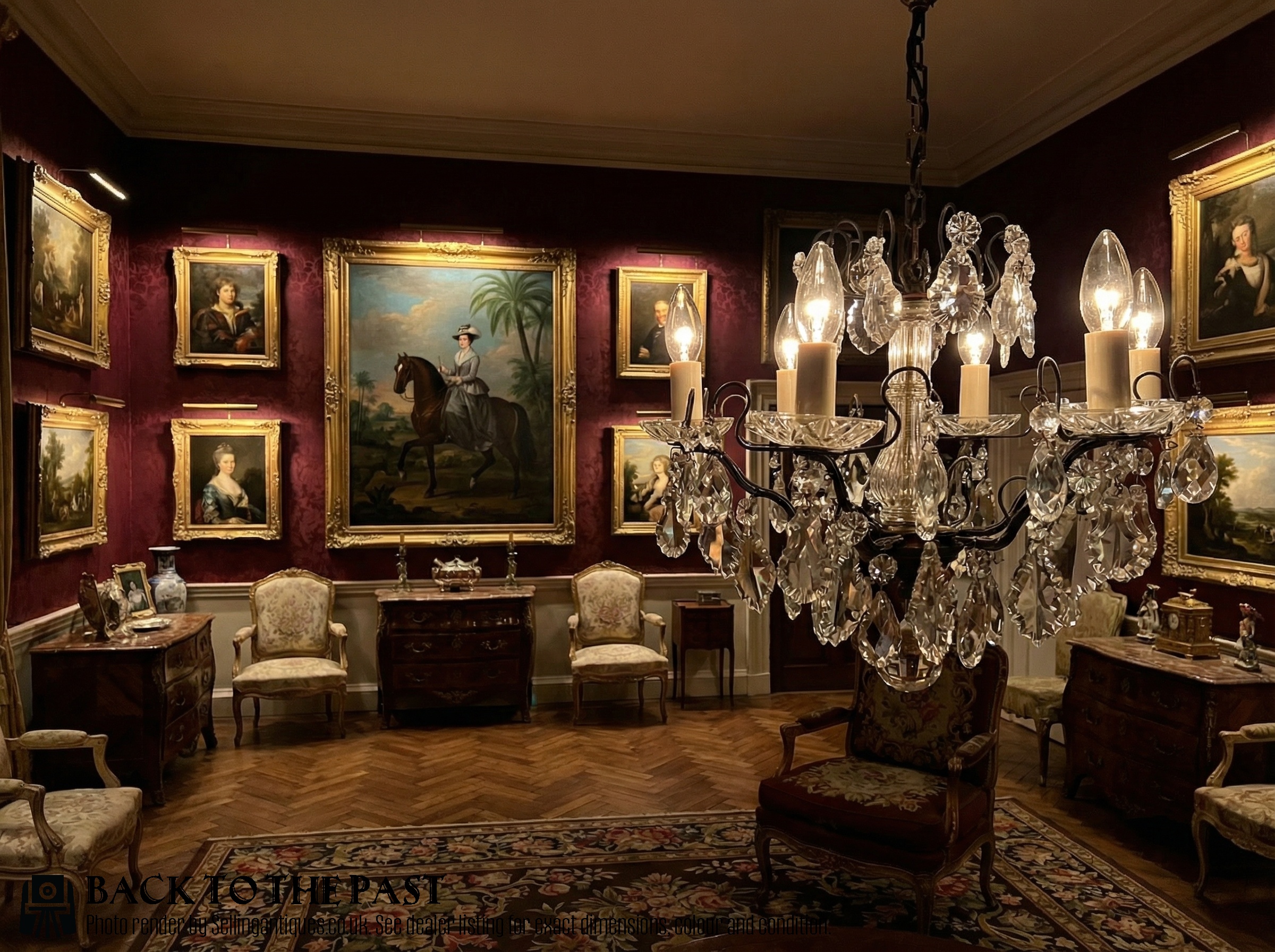
When you search for a brass crystal light fitting, you encounter a range of ceiling-mounted and wall-mounted fixtures designed to illuminate interiors with reflective brilliance. The selections span chandeliers, pendant lights, plafonieres, and wall lights originating primarily from the late nineteenth century through the early twentieth century.
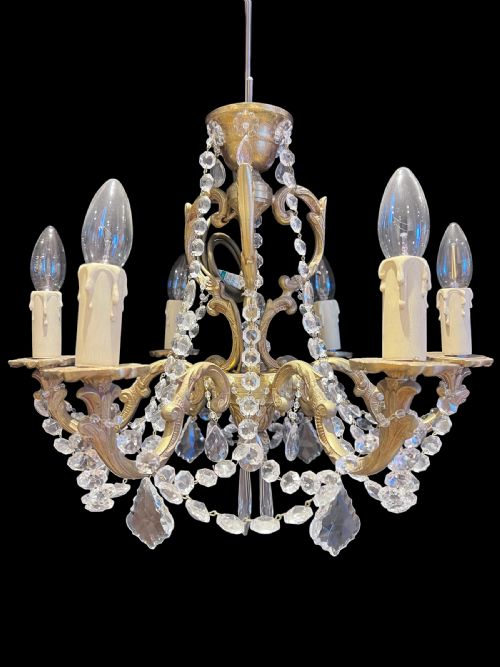
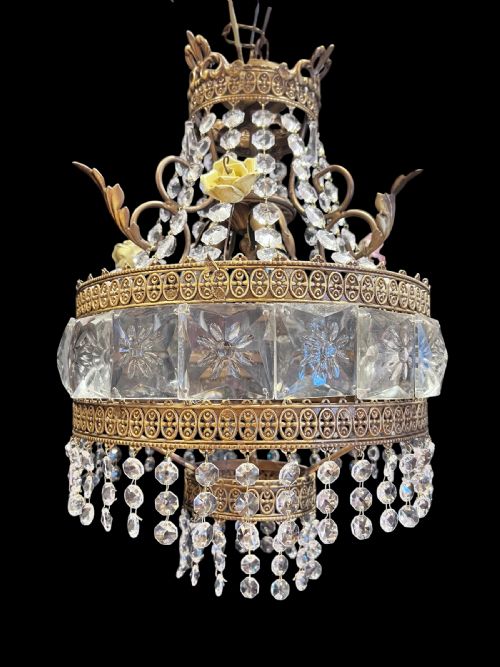
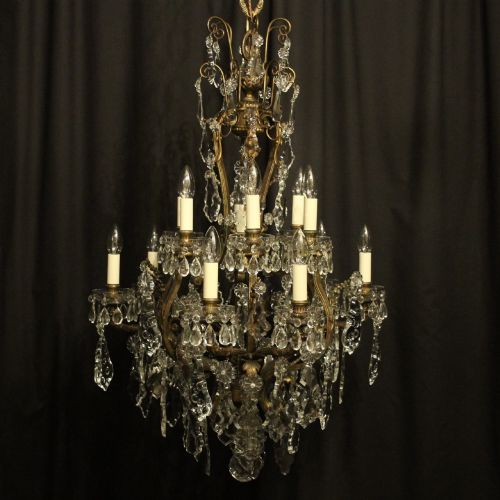
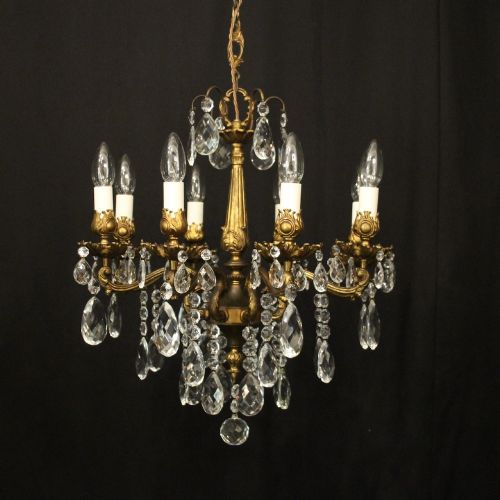
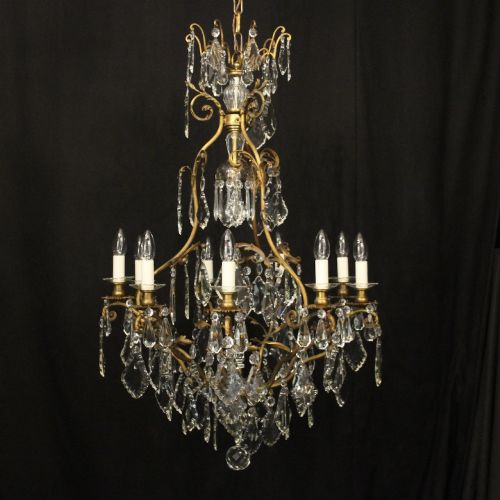
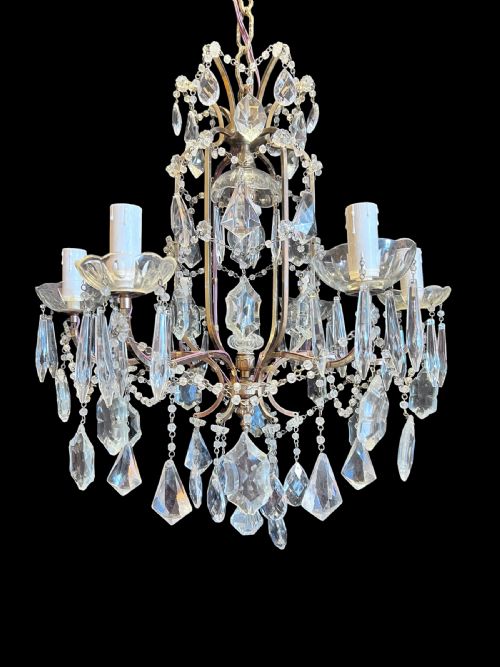
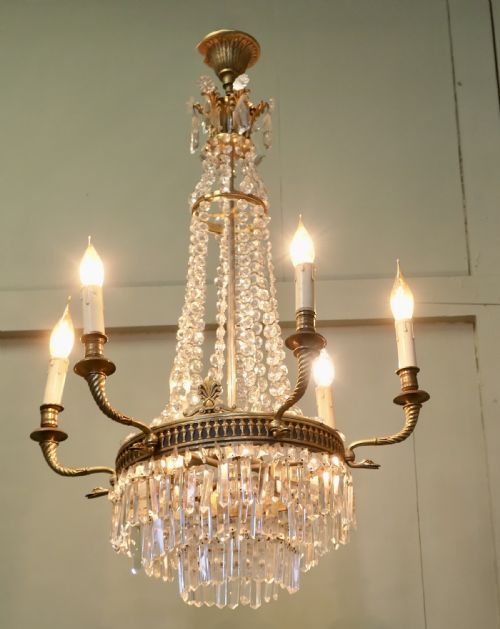
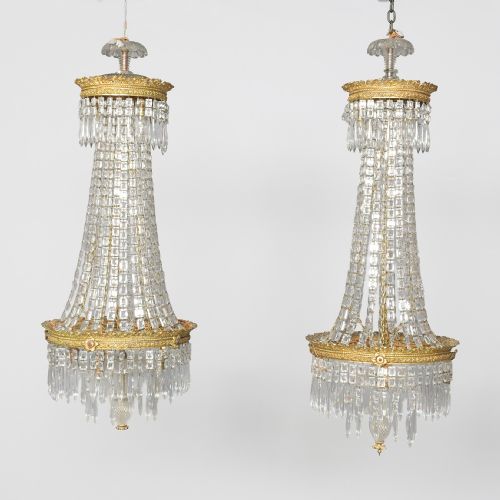
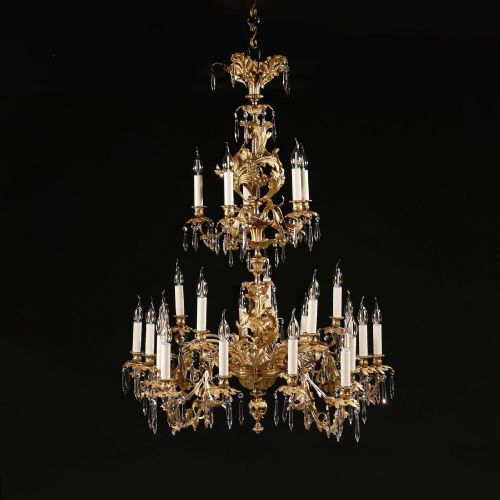
The version you are most likely to meet on this page is the multi-light French chandelier, often styled around Empire or Rococo traditions with tiered drops and gilded metal frames. These pieces combine structural brass or bronze armatures with cut glass, crystal, and occasionally porcelain flowers or coloured crystals.
How they were made
The structural foundations of these fittings rely on cast brass, gilded bronze, or toleware shaped into arms, rings, and decorative bands. Metal components were frequently cast and chased before receiving gilt finishes to enhance their reflective warmth.
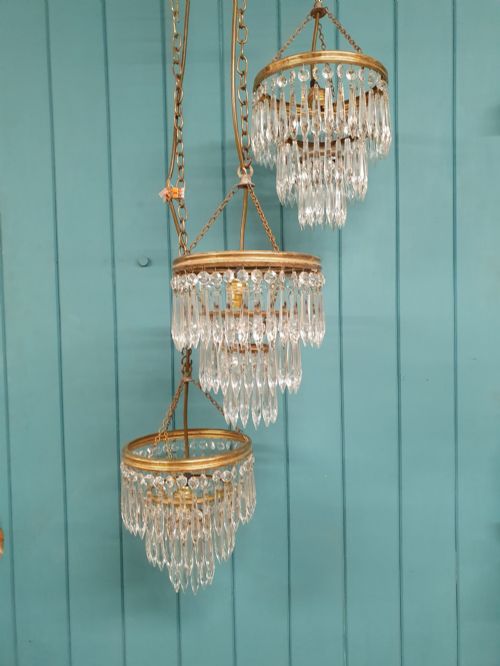
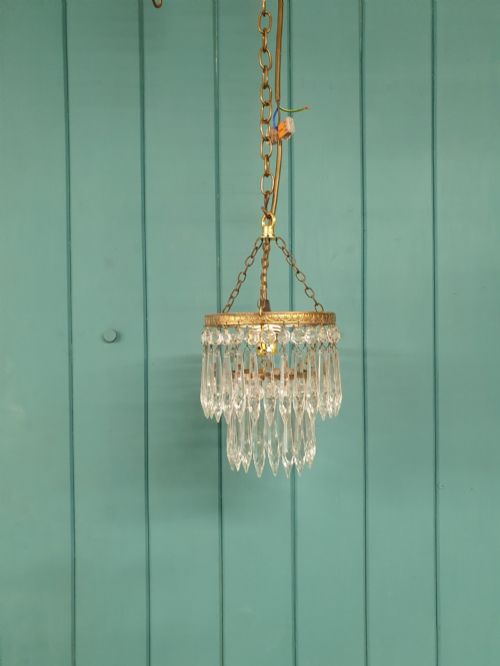
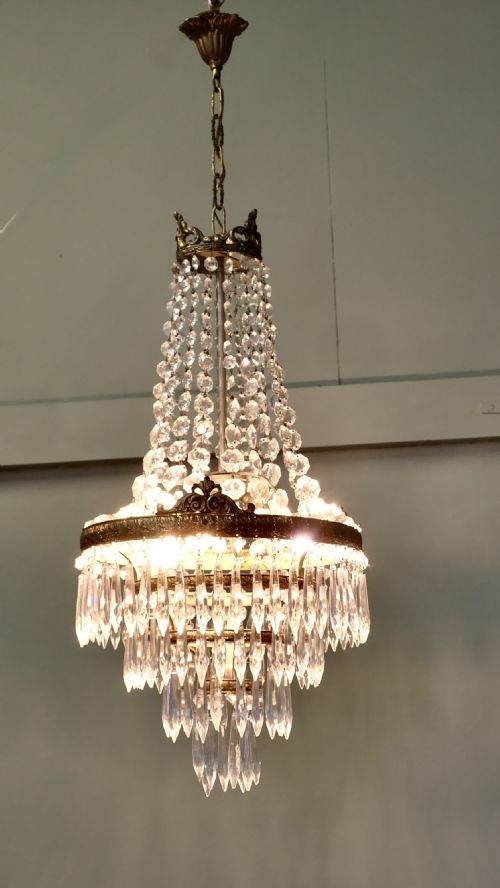
Pendant prisms, drops, and beads consist of cut glass and crystal, shaped by hand or early machine methods to maximise light refraction. These elements hang from the metal frame using wire pins or chains, creating tent and waterfall configurations or dense arrays of coffin prisms and lustre drops.
Materials recorded across the current inventory include cut glass, gilt bronze, toleware, and coloured crystals set within brass and bronze frames.
What varies in quality
The distinction between tiers of quality rests heavily on the depth of hand-chasing in the bronze or brass work and the clarity of the crystal components. Superior examples display crisp casting details such as lion masks or leafy motifs alongside lead-rich glass that refracts light into sharp prismatic spectra.
Proportion and structural integration also dictate value, with higher-grade fittings exhibiting balanced weight distribution and harmonious arrangements of drops rather than crowded or mismatched ornamentation. The integrity of the original gilding and the precision in how the crystal elements attach to the armature reveal the maker's original investment of labour.
The Brass Crystal Light Fitting Glossary
- Chandelier
- A branched decorative ceiling fixture designed to hold multiple electric lamps or candles. These fixtures suspend heavy arrangements of metal and glass from a central chain or rod.
- Tent and waterfall
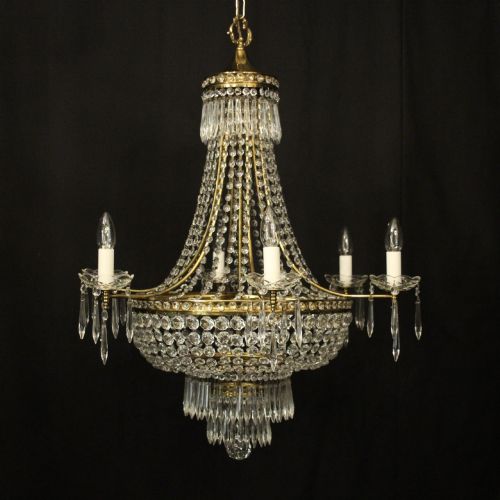
- A specific chandelier silhouette featuring an upper triangular tent of glass beads descending into a cascading lower fringe of draped crystal strands. This configuration maximises the distribution of reflected light across a space.
- Plafoniere
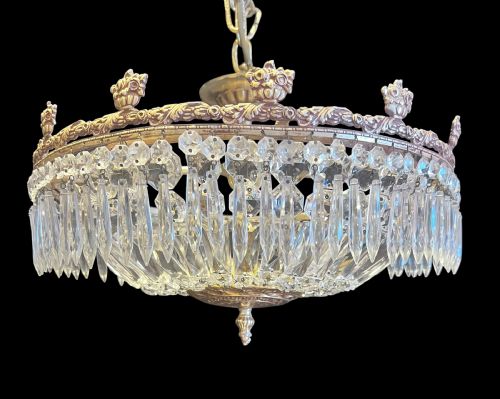
- A shallow bowl-shaped ceiling light mounted directly against the plasterwork rather than suspended on a drop chain. They often combine brass frames with cut glass plates.
- Coffin prism
- A long, flat, geometric glass drop with bevelled edges shaped like a traditional coffin. They frequently edge early twentieth-century and Edwardian light fittings to catch ambient light.
- Gilt bronze
- A bronze substrate treated with a fine layer of gold amalgam or leaf, commonly known as ormolu. This material resists tarnishing and provides a warm, enduring metallic sheen.
- Lustre
- A glass pendant or hanging prism designed to dangle from the arms or crown of a light fitting. Their movement creates shifting patterns of light as air currents circulate in the room.
Brass Crystal Light Fitting: Frequently Asked Questions
Can these antique fittings be wired for modern electricity?
The majority of period fittings found on the market have already been adapted for modern electrical standards during their lifespan. Rewiring is straightforward for a qualified electrician who can integrate contemporary lamp holders while preserving the original metal body.
Keep the original candle tubes and wiring layout in mind when planning the room's circuit load. Using low-heat LED bulbs styled to look like traditional candle flames protects fragile historical glass from excessive heat exposure.
How do I clean the crystal drops without damaging the frame?
Routine maintenance involves dusting the fixture gently with an ostrich feather duster or microfiber wand while the crystals remain in place. For a deeper clean, remove the glass drops individually and wash them in lukewarm water with a mild dish detergent, avoiding harsh chemical sprays that can strip the brass or gilt finish.
Dry each glass piece thoroughly with a lint-free cloth before rehanging it on the frame. Ensure the power is switched off at the mains before performing any maintenance near the electrical components.
What is the difference between an Empire style and a Rococo style fitting?
Empire style fittings draw inspiration from neoclassical architecture and military motifs, featuring symmetrical tents, waterfalls, and martial emblems like wreaths or lion masks. They project a formal, structured elegance with clean geometric lines.
By contrast, Rococo style fittings embrace asymmetrical scrolls, naturalistic floral elements, and organic leaf motifs. They feel more exuberant and fluid, often incorporating porcelain flowers or swirling bronze armatures.