



Brass Crest Wall Mirror
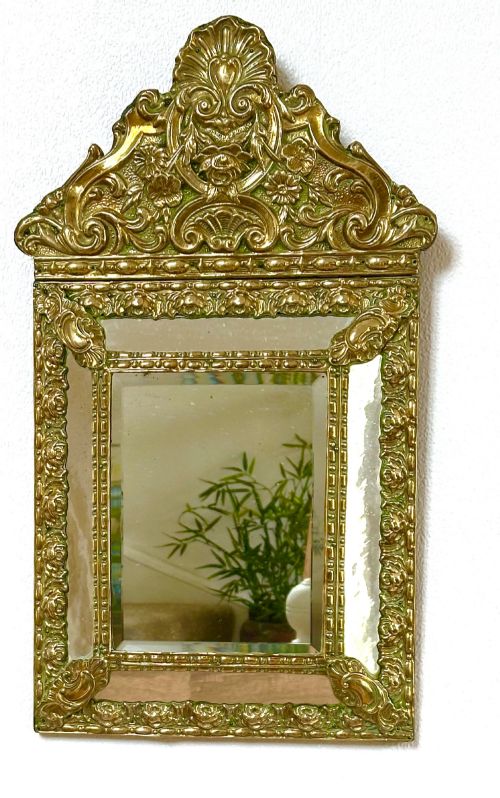
A brass crest wall mirror brings heavy metalwork and clear glass together, offering an instant focal point with period presence for any hallway or reception room.
Brass Crest Wall Mirror
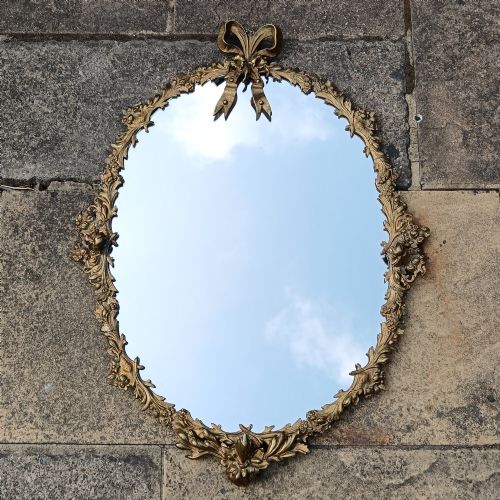
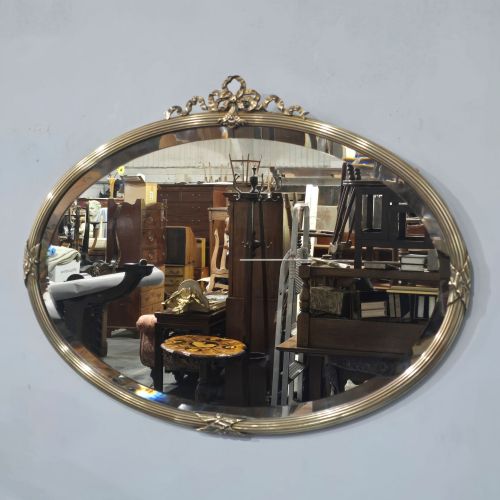
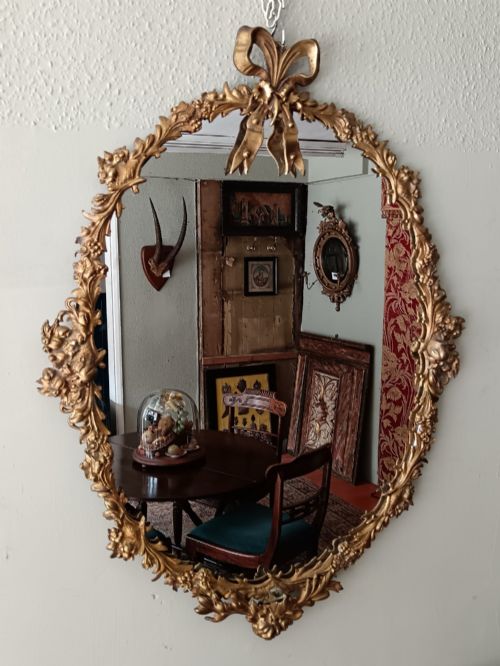
A brass crest wall mirror combines a functional looking-glass with decorative metallic framing, frequently featuring distinct crests, masks, or cartouches at the top. The selection spans periods from the Regency era through to the early twentieth century, with Victorian and nineteenth-century examples appearing most frequently.
The forms range from oval cushion frames to rectangular mirrors set with pressed, cast, or repoussé brass mounts. French and Flemish revivals dominate the design vocabulary, alongside Dutch Baroque influences and simpler domestic pieces.
Buyers will encounter single mirrors as well as matched pairs, often incorporating bevelled glass and secondary wooden or ebonised backings. These objects serve as both functional reflectors and decorative wall ornaments rooted in historic European design.
How they were made
The frames rely heavily on brass work executed through casting, pressing, or repoussé techniques, allowing makers to hammer and shape intricate relief patterns from sheet metal. Gilt bronze and gilt brass finishes provide a bright metallic sheen, whilst patinated brass surfaces offer a more subdued, aged appearance.
Glass plates are cut to fit cushion frames or secure metal mounts, with many pieces featuring bevelled edges that catch the light. Secondary structures of wood or giltwood frequently support the heavier metal mounts and provide stability to the hanging mechanism.
Fierce metal dragons occasionally guard the crests of these mirrors, keeping a watchful eye on anyone checking their reflection.
What varies in quality
The crispness of the casting or repoussé work separates standard production from superior pieces, particularly in the definition of crests, masks, and decorative foliage. Finishes also dictate quality, whether through the depth of original gilding or the controlled patination of the brass surface.
Structural integrity of the frame and the quality of the glass plate, such as the presence of bevelling and the preservation of original silvering, mark the distinction between ordinary domestic mirrors and finer decorative works.
The Brass Crest Wall Mirror Glossary
- Repoussé
- A metalworking technique where the metal is hammered from the reverse side to create a raised design in relief on the front. This method allowed makers of nineteenth-century mirrors to achieve deep, ornate floral and figural crests.
- Cushion mirror
- A frame style with a rounded, convex profile that slopes outward towards the edges, frequently wrapped in metal mounts or velvet. This form creates extra depth and reflects light from multiple angles.
- Girandole
- A wall mirror that incorporates one or more candle sconces attached to the frame to multiply the flicker of candlelight in a room. These decorative pieces combine illumination with reflective glass.
- Bevelled glass
- A glass plate with an angled edge cut and polished to a thinner width around the perimeter. This treatment adds a prismatic sparkle when light hits the margin of the mirror.
- Gilt bronze
- Copper alloy treated with a gold amalgam or finish to give a rich, metallic golden appearance. It provides a durable and brilliant surface for elaborate French revival frames.
Brass Crest Wall Mirror: Frequently Asked Questions
How do I hang a heavy brass mirror safely?
Use heavy-duty wall fixings appropriate for your wall type, such as solid masonry plugs or toggle bolts for drywall, ensuring the weight is distributed evenly across the hanging loops.
Check that the wire or chain fixed to the back of the mirror frame is robust and securely attached to the structural wooden or metal backing before mounting.
Are these mirrors original to the nineteenth century?
Many examples date from the Victorian period, nineteenth century, and Edwardian eras, utilising traditional casting, pressing, and repoussé techniques typical of those decades.
Revival styles from the same period often drew inspiration from earlier Dutch Baroque and Louis XVI designs, so check the construction details on the reverse for period indicators.
How should I clean a brass and glass mirror?
Dust the brass frame gently with a soft, dry cloth and avoid harsh chemical polishes that can strip away the historic patination or damage surrounding glass.
Apply standard glass cleaner to a cloth rather than directly onto the mirror surface to prevent liquid from seeping behind the plate and harming the silvering.
What rooms suit a cushion framed mirror best?
Cushion framed mirrors work well in hallways and reception rooms where their convex profiles and reflective borders can draw in and amplify natural light.
Their substantial metal crests make them effective as overmantel ornaments or focal points above sideboards and console tables.