




Brass Correspondence Box
A brass correspondence box is a desk accessory built to keep letters tidy, combining functional metalwork with fine cabinet timber.
Brass Correspondence Box
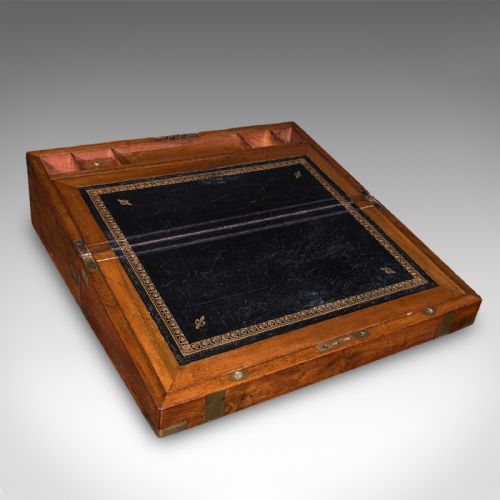
A brass correspondence box serves to organise letters, stationery, and desk accessories in period interiors. The items span Georgian, Regency, William IV, Victorian, Edwardian, and Arts and Crafts eras, appearing in forms such as stationery boxes, letter boxes, and writing slopes with integrated compartments.
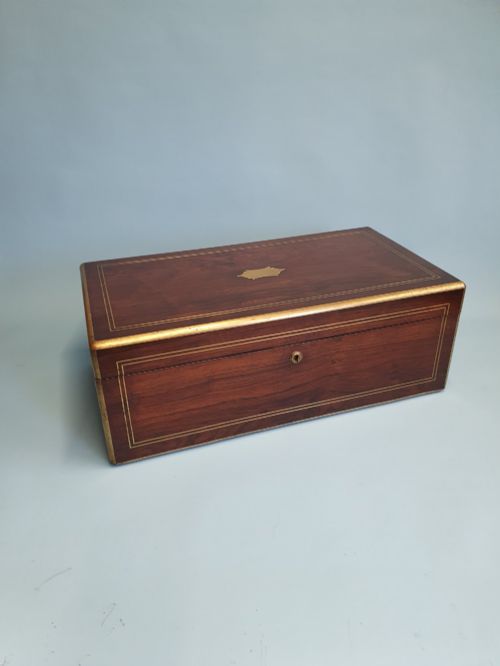
Examples on this page draw from country house aesthetics, campaign design, and Gothic Revival styles. Makers shaped these pieces from timbers including mahogany, oak, rosewood, burr walnut, walnut, and coromandel, mounting them with solid brass fittings.
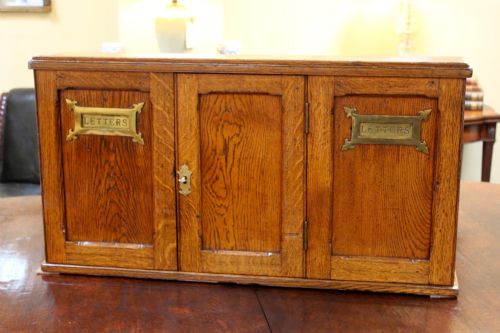
Buyers meet variations that range from compact oak letter boxes to elaborate burr walnut stationery cabinets fitted with fall fronts and porcelain plaques. Many pieces combine writing slopes with correspondence storage, offering secret drawers and book rests.
Materials and Construction
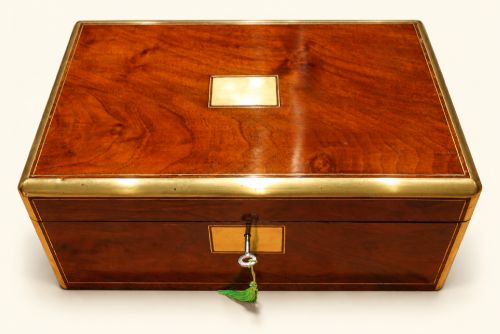
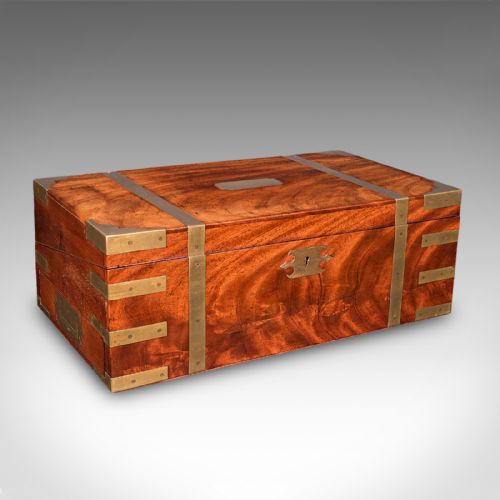
Cabinet makers constructed these boxes using dense hardwoods such as mahogany, oak, rosewood, and walnut, often accentuating the grain with burr walnut or coromandel veneers. Brass mounts, corner braces, and strapwork provided structural reinforcement and protection for travel or heavy desk use.
Interior fittings frequently incorporated secondary woods, bone, and leather writing surfaces, alongside secret drawers operated by concealed spring mechanisms. Exterior surfaces received hand-polished finishes to highlight the natural figuring of the timber and the bright contrast of polished brass.
Brass Correspondence Box Retail Price Guide 2026
Typical asking prices for brass correspondence box among the pieces listed under this phrase on Sellingantiques today, from the lower quarter to the upper quarter. They describe what is for sale here now, not the wider market.
The listings on this page span the Georgian, Regency, Victorian, Edwardian, and Arts and Crafts periods, incorporating woods like rosewood, oak, mahogany, and burr walnut.
Evaluating Craftsmanship and Detail
Quality in a brass correspondence box rests on the precision of the joinery and the gauge of the metalwork. Superior examples exhibit heavy brass mounts countersunk flush into the timber, well-fitted internal divisions, and dense, highly figured veneers.
Austin
The Brass Correspondence Box Glossary
- Writing slope
- A desk box with a sloping lid that opens to reveal a slanted writing surface and internal compartments for pens and paper. These pieces often double as correspondence boxes.
- Stationery box
- A desk cabinet designed to hold envelopes, notepaper, and writing equipment upright in dedicated slots. They frequently feature fall fronts or sloping top lids.
- Campaign style
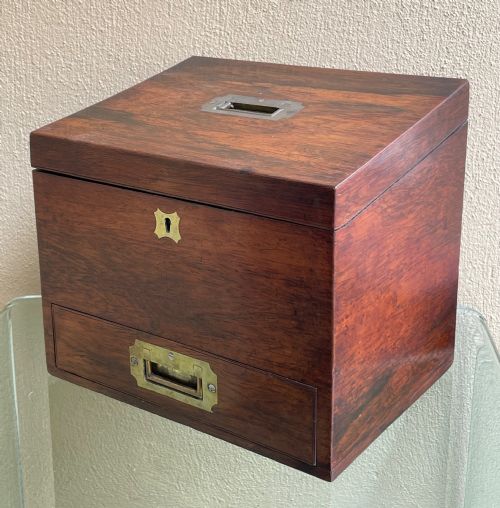
- Furniture and accessories built for travel, characterised by recessed brass handles, reinforced corners, and robust construction. These items were used by military officers and travellers.
- Fall front
- A hinged front panel that drops forward to provide access to internal stationery racks and writing surfaces. This mechanism allows quick access to letters.
- Coromandel
- A dense, heavily figured exotic hardwood from Asia with dark brown and black streaks, utilised for high-end Victorian decorative boxes. It provides a striking contrast against brass mounts.
Brass Correspondence Box: Frequently Asked Questions
What is a brass correspondence box used for?
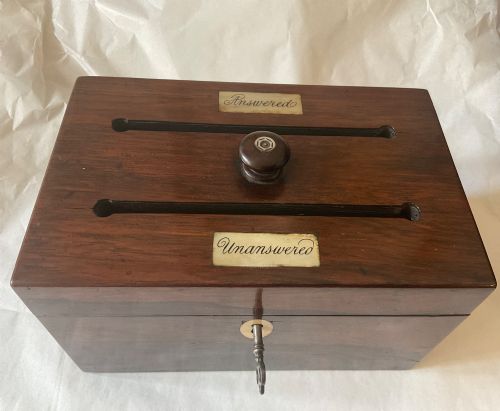
These boxes were designed to hold incoming and outgoing letters, envelopes, and writing implements neatly on a desk or table in the home or office. Their internal partitions kept different sizes of stationery sorted and protected from dust.
Today, they serve a similar purpose for modern desk organisation or act as decorative period storage for letters, photographs, and small keepsakes.
How do I date a correspondence box?
Dating relies on identifying the prevailing style, timber choices, and construction methods used in the piece. For instance, Regency and Georgian examples often feature rosewood or mahogany with understated brass inlay, while Victorian items frequently utilise burr walnut, heavy brass banding, or Gothic Revival motifs.
Examining internal secondary woods, hinges, and lock types also helps narrow down the decade of manufacture, matching the piece to periods like the mid nineteenth century or the Edwardian era.
How should I care for an antique wood and brass box?
Keep the piece away from direct sunlight and heat sources to prevent the wood from drying out and the veneers from lifting. Regular dusting with a soft, dry cloth maintains the finish, and occasional applications of appropriate furniture wax help nourish hardwood surfaces.
Brass mounts can be left with their natural aged patina or gently polished with a non-abrasive metal cleaner if a brighter finish is desired. Ensure any leather writing surfaces inside are treated with care to avoid moisture damage.