


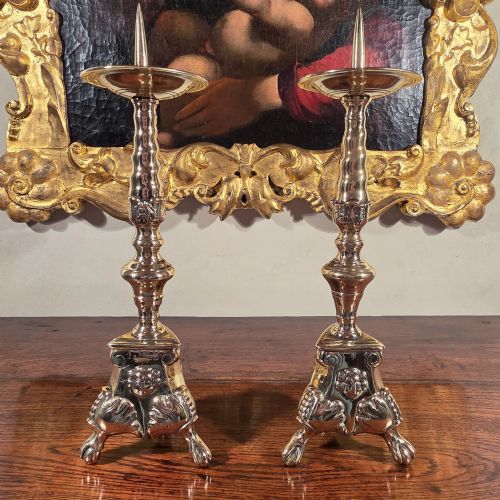


Brass Church Candles
Brass church candles light grand rooms with solid weight and height, bringing centuries of ecclesiastical dignity into modern homes.
Brass Church Candles
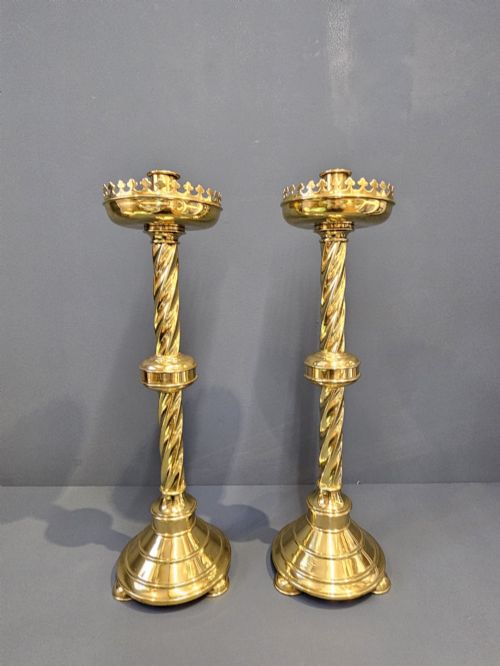
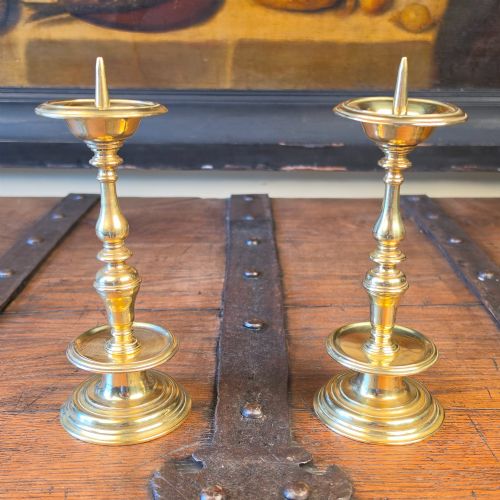
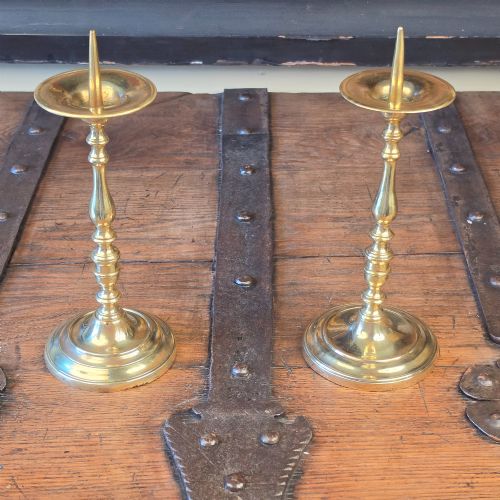
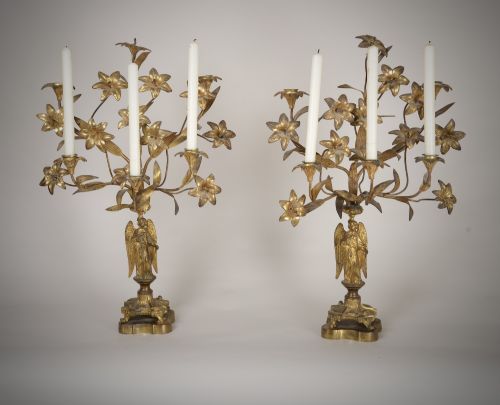
Brass church candles encompass tall pricket sticks, multi-branch candelabra, and heavy floor-standing holders sourced from nineteenth-century and early twentieth-century ecclesiastical settings. Buyers search for these pieces to anchor a room with vertical presence and historical gravitas.
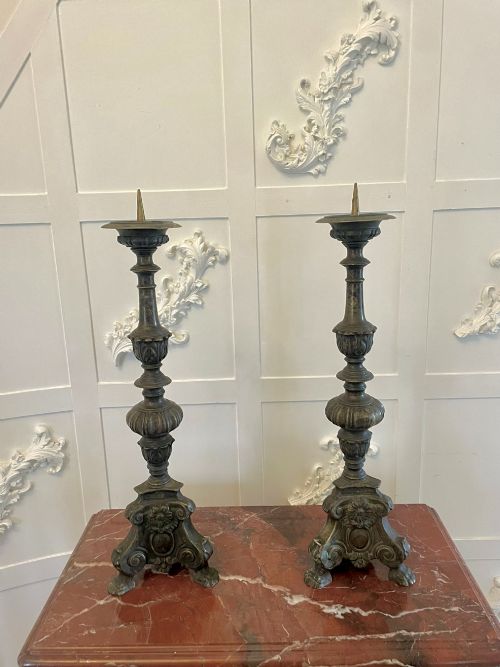
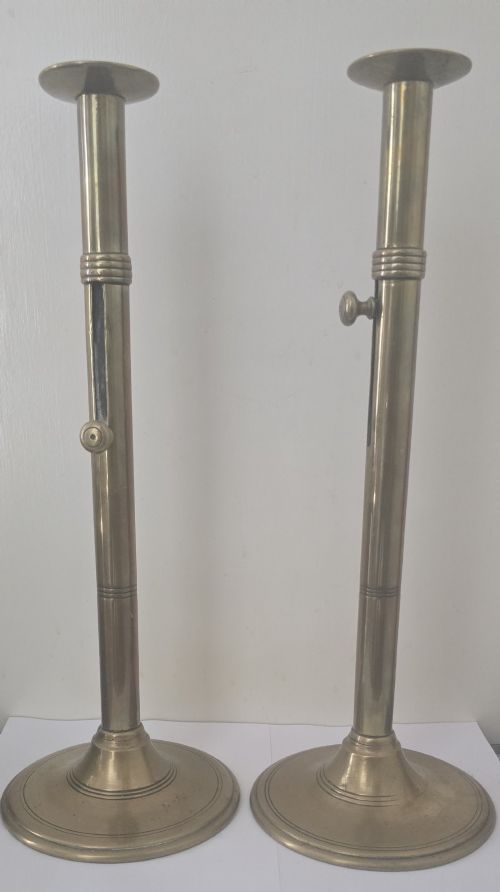
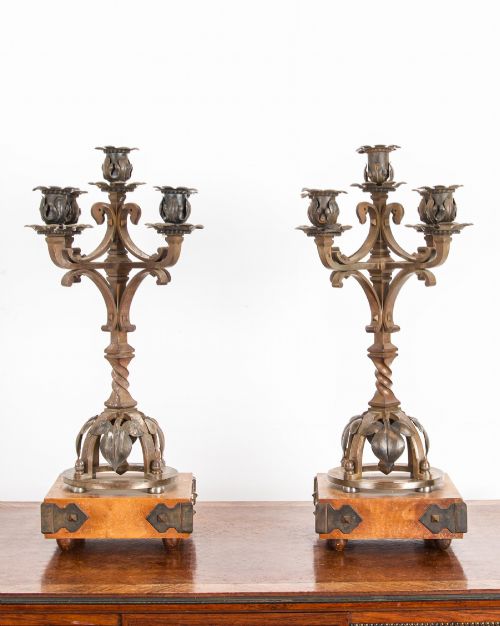
The selections available here lean heavily toward Victorian Gothic Revival designs, alongside Amsterdam School pieces and seventeenth-century revival forms. Candlesticks and alter sticks dominate the current offerings, often found in matching pairs or larger graduated sets.
Origins stretch from English workshops to continental European makers, incorporating materials like cast brass, bronze, and wrought iron into substantial liturgical furnishings.
How they were made
Metalworking techniques relied on heavy casting and turning to produce the rigid columns and broad drip pans required for sanctuary use. Brass and bronze components were frequently joined with threaded fixings or rivets to support the considerable height of altar pieces.
Surface treatments range from polished gilt brass to patinated bronze and painted iron details, showing the varied methods workshops employed to achieve both shine and solemnity.
Brass Church Candles Retail Price Guide 2026
Typical asking prices for brass church candles among the pieces listed under this phrase on Sellingantiques today, from the lower quarter to the upper quarter. They describe what is for sale here now, not the wider market.
Masonic candlesticks appear alongside church furniture, proving that secret brotherhoods enjoyed the same lofty illumination as the clergy.
What varies in quality
Substance separates the finest examples from lighter iterations, measured in the sheer heft of the cast metal and the stability of the base. Heavy gauges of brass and well-balanced proportions ensure that tall pricket sticks stand securely.
Artistry in the casting and chasing of decorative motifs, such as Corinthian capitals or intricate Gothic tracery, dictates the visual merit of an altar stick. Crisp detailing and thoughtful assembly signify superior workshop production.
Joseph Wilmotte, Liege
The Brass Church Candles Glossary
- Pricket
- A sharp metal spike on top of a candlestick designed to impale the base of a candle. This form predates socket holders and remains standard for traditional altar pieces.
- Gothic Revival
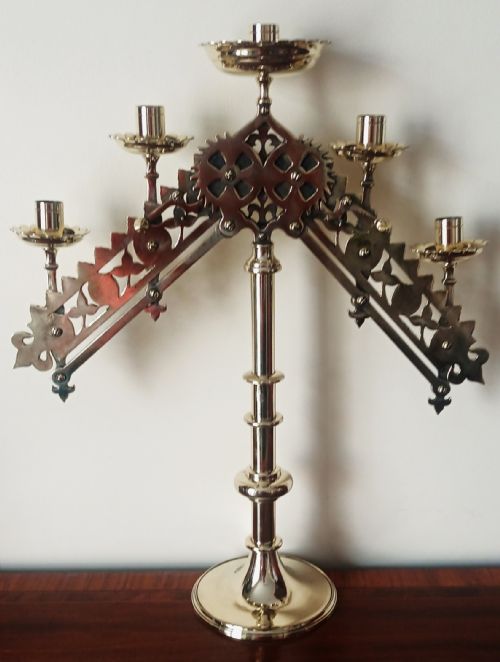
- An architectural and decorative style popular during the nineteenth century that mimics medieval pointed arches, trefoils, and ecclesiastical ornamentation. It defines the majority of Victorian church metalwork.
- Candelabra
- A branched candlestick holding multiple lights on separate arms. These large fixtures often feature detachable branches for versatile display.
- Altar stick
- A tall candlestick specifically manufactured for placement on or near a church altar. They generally exceed domestic lighting in scale and decoration.
- Corinthian column
- A classical column style featuring an ornate capital decorated with acanthus leaves. This motif appears frequently on formal ecclesiastical candlesticks.
Brass Church Candles: Frequently Asked Questions
What is a pricket candlestick?
A pricket candlestick uses a sharp upward-pointing spike rather than a socket to hold the candle in place. This traditional format secures large wax pillars firmly atop the metal plate.
Such designs originate from medieval ecclesiastical lighting traditions and remain common on historic altar sticks.
How do I clean antique brass?
Historic brass benefits from minimal intervention to preserve the dark patination accumulated over generations. Gentle dusting with a dry cloth prevents the buildup of grime without stripping the surface.
Aggressive metal polishes remove the aged skin that collectors value on nineteenth-century ecclesiastical pieces.
Where were these candlesticks used?
These large fixtures stood upon church altars, chancels, and cathedrals to provide ceremonial illumination during services. Grand floor-standing holders flanked liturgical spaces to create dramatic vertical accents.
Domestic spaces now adopt them to anchor dining tables, mantelpieces, and hallways with historic weight.
How do I date a brass candlestick?
Dating relies on examining the casting methods, base construction, and stylistic clues such as Victorian Gothic revival motifs or Amsterdam School forms. Component parts assembled with hand-cut threads or heavy pins often point toward nineteenth-century manufacture.
Comparing proportions and decorative details against documented ecclesiastical catalogues helps narrow down the period.