

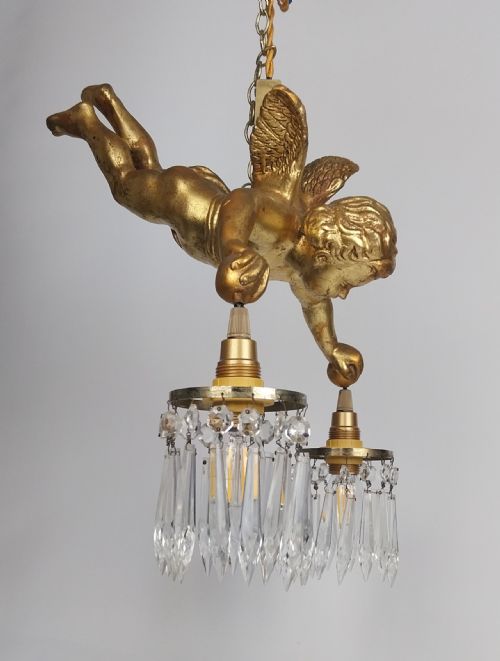


Brass Cherub Chandelier
A brass cherub chandelier brings sculptural warmth and period weight to a ceiling, combining cast metal figures with practical illumination.
Brass Cherub Chandelier
A brass cherub chandelier centres on figurative cast metal winged figures, cupids, or putti integrated directly into the body or arms of the ceiling light. These pieces appear most frequently in nineteenth century and early twentieth century French and Edwardian forms.
The objects span varied lighting types, from small four light fittings to eight light gilded bronze arrangements and delicate swag designs. Buyers encounter everything from small Victorian brass examples to substantial French chateau fixtures.
Stylistic influences lean heavily toward French rococo revival, classical French design, and Edwardian domestic adaptations. The cherubs act either as structural support arms or as flying figures suspended within the chandelier framework.
Materials and construction methods
Makers utilised cast brass, gilt bronze, and gilt metal to build the primary framework, suspension rods, and branch arms of these ceiling lights. Metal components are frequently combined with glass, crystal, or frosted glass elements to diffuse the illumination.
Foundry work involved traditional sand casting or lost wax casting for the figurative cherub components, allowing sharp detail in the wings and hair. Surface finishes range from natural brass to heavy fire gilding or silver plating on specific nineteenth century fixtures.
Brass Cherub Chandelier Retail Price Guide 2026
Typical asking prices for brass cherub chandelier among the pieces listed under this phrase on Sellingantiques today, from the lower quarter to the upper quarter. They describe what is for sale here now, not the wider market.
The listings on this site record brass cherub chandeliers spanning the mid nineteenth century through to the 1930s.
Assessing quality in period lighting
Integration of the arms and electrical or candle conversion components dictates the overall structural integrity of the ceiling light. Original matching glass components, crystal drops, and intact surface gilding elevate the historical value of the fixture.
The Brass Cherub Chandelier Glossary
- Putto
- A plump, often winged child figure commonly depicted in classical and rococo art. These figures form the primary sculptural motif of the chandelier.
- Gilt bronze
- Bronze that has been coated with a thin layer of gold or gold amalgam. This technique provides a durable, warm metallic lustre.
- Rococo revival
- A nineteenth century design style characterised by asymmetry, scrollwork, and naturalistic ornamentation. It heavily influences many French cherub chandeliers.
- Swag chandelier
- A ceiling light design featuring draped chains, garlands, or crystal strands hanging between structural arms. These frequently incorporate cherub figures into the upper crown.
Brass Cherub Chandelier: Frequently Asked Questions
How do I hang a heavy bronze chandelier safely?
Suspension requires locating a structural ceiling joist and installing a rated steel ceiling box capable of holding the full weight of the cast metal fixture.
Professional electrical installation ensures the internal wiring safely handles modern voltage alongside period brass components.
Can I convert a candle chandelier to electricity?
Many period fixtures originally designed for candles have been safely converted to wired lamp holders over time. This preserves the original bronze or brass arms while meeting domestic lighting needs.
Working with an experienced lighting restorer prevents damage to delicate cast figures and fragile glass or crystal elements.
How do I clean an antique brass chandelier?
Dusting with a soft, dry brush removes surface particles without disturbing the aged patina or delicate gilt surfaces of the cherub figures. Liquid chemical polishes should be avoided on antique bronze and brass to retain the historical finish.
Glass and crystal drops can be removed carefully, washed in warm soapy water, and dried thoroughly before reattachment.
How do I distinguish nineteenth century pieces from later copies?
Nineteenth century examples show hand-finished chasing on the bronze cast figures and heavier metal weights than mid twentieth century reproductions. Construction methods, such as threaded brass rods and period screw types, offer clear clues to the date of manufacture.
Examining the wear patterns on the gilt surface provides additional confirmation of age and handling over time.