



Brass Chain Pocket Watch
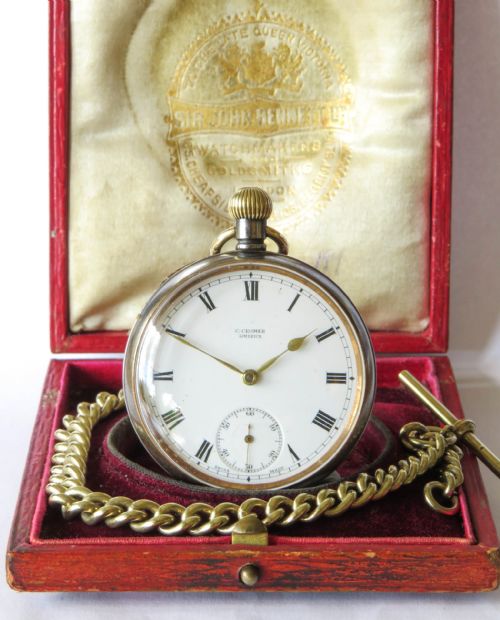
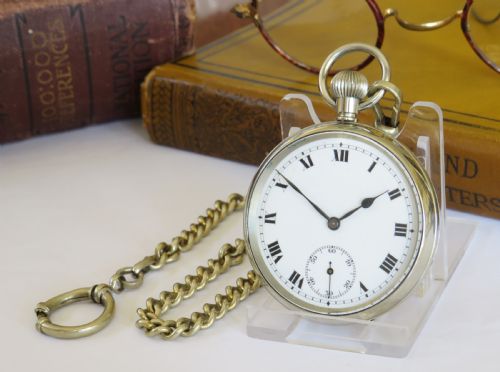
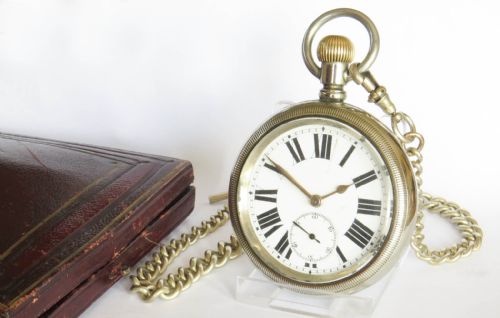
A brass chain pocket watch brings together a mechanical timepiece and its matching metal link length for daily carrying.
Brass Chain Pocket Watch
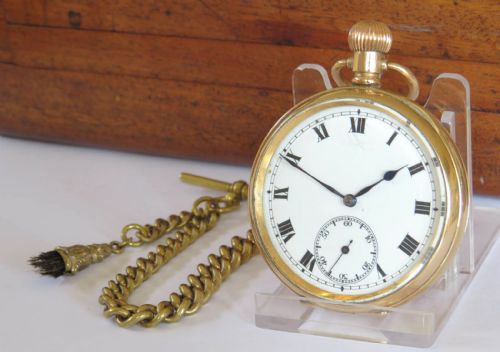
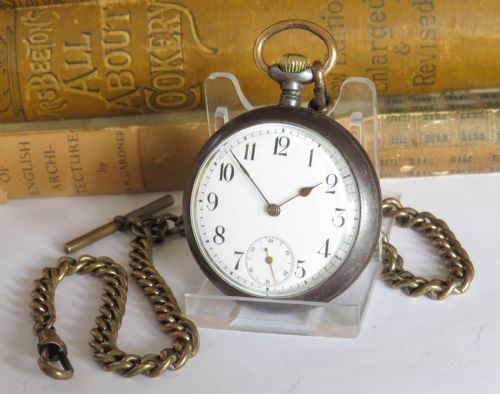
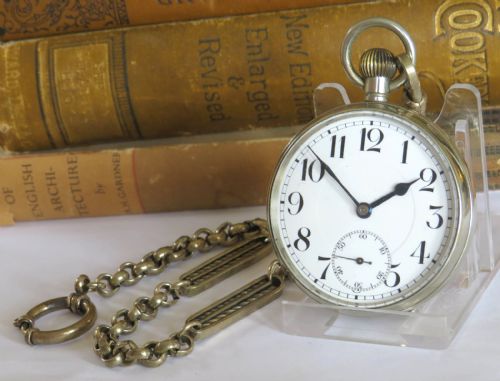
When you search for a brass chain pocket watch, you are looking at portable timekeepers paired with lengths of linked metal designed to secure them to a waistcoat or lapel. These pieces span from the Victorian era through the Edwardian period, Art Deco styles, and into the 1930s and 1940s.
The versions you are most likely to meet on this page include standard pocket watches alongside associated items such as gilt pedometers intended for watch chains. They frequently incorporate associated watch chains or alberts to complete the historical set.
How they were made
The construction relies heavily on base metals and plated finishes, utilising brass, gilt brass, gold plate, gunmetal, and nickel silver for the cases and chains. Glass protects the dial faces, while enamel provides the smooth surface for numerals and markers on the dial.
Internal mechanisms combine steel components housed within these durable metal outer shells. These watches were produced across various decades, incorporating specialised movements like eight-day springs and lever escapements.
Brass Chain Pocket Watch Retail Price Guide 2026
Typical asking prices for brass chain pocket watch among the pieces listed under this phrase on Sellingantiques today, from the lower quarter to the upper quarter. They describe what is for sale here now, not the wider market.
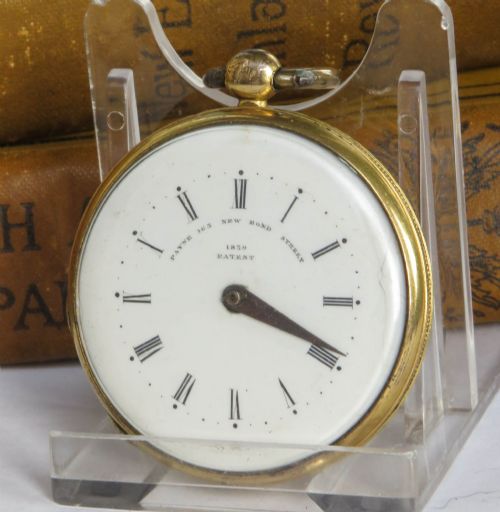
Wm Payne made a gilt pedometer so you could track your walks while checking the time on your chain.
What varies in quality
Quality separates pieces through the complexity and reputation of the maker's movement, ranging from standard Swiss calibres to specialised manufacturers like Zenith, Omega, and Octava. The refinement of the case metal, whether solid brass, gilt brass, or gunmetal, also dictates the standard of the object.
The inclusion of a matching chain or albert influences the completeness and historical cohesion of the piece. Higher quality items often feature distinctive dial treatments, such as enamel work, or specialised functions like pedometer mechanisms.
Wm Payne·Omega·Octava·Syren·Helvetia
The Brass Chain Pocket Watch Glossary
- Albert
- A type of watch chain attached to a pocket watch, named after Prince Albert. It typically secures to a buttonhole on a waistcoat.
- Gunmetal
- A type of bronze alloy used for watch cases to provide a dark, non-reflective finish. It was popular in the late nineteenth and early twentieth centuries.
- Gilt brass
- Brass that has been treated with a thin layer of gold wash or gilding. This technique gives the metal a bright gold appearance.
- Pedometer
- A device that measures the distance a person walks by recording the number of steps taken. Some historical examples were made to attach directly to a watch chain.
Brass Chain Pocket Watch: Frequently Asked Questions
What is an albert chain?
An albert chain is the specific metal link chain used to secure a pocket watch to a garment. It ensures the timepiece does not drop to the floor if fumbled.
These chains often include a T-bar at one end to pass through a buttonhole and a swivel clasp at the other to fasten to the watch bow.
How do I wind these watches?
Most pocket watches from the Edwardian and later periods are wound via the crown at the top of the case. Turning this knut winds the mainspring inside.
Some variants, such as eight-day models, require specific attention to their longer power reserves compared to standard daily-wind movements.
Are gunmetal watches made of steel?
Gunmetal is actually a copper-tin-zinc alloy rather than pure steel. It offers a distinct dark metallic grey or blackish sheen that resists tarnishing.
This material became common for utilitarian and sports pocket watches around the turn of the twentieth century.
What is a pedometer watch chain attachment?
A pedometer attachment is a pocket-sized measuring instrument designed to count steps during walking. These devices were often carried on the end of a watch chain.
They record motion through an internal pendulum mechanism activated by the wearer's stride.