

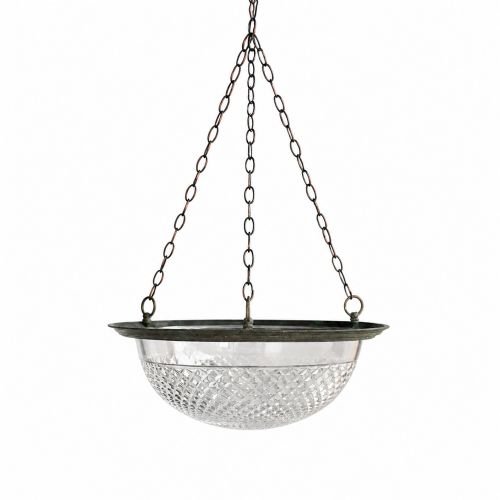


Brass Chain Light
A brass chain light brings period character and practical illumination to high ceilings, suspended securely from links that carry both weight and style.
Brass Chain Light
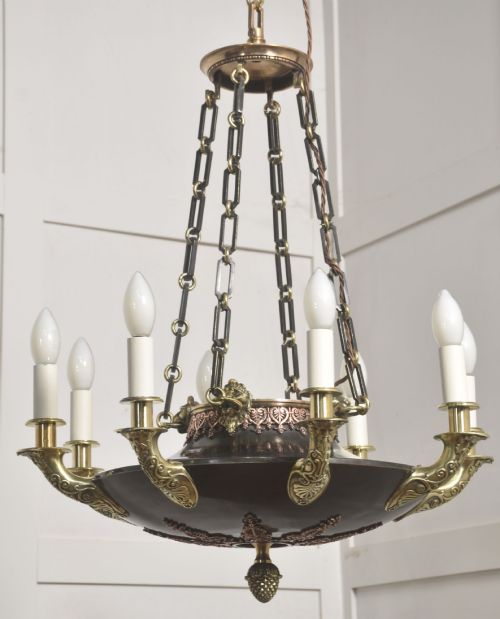
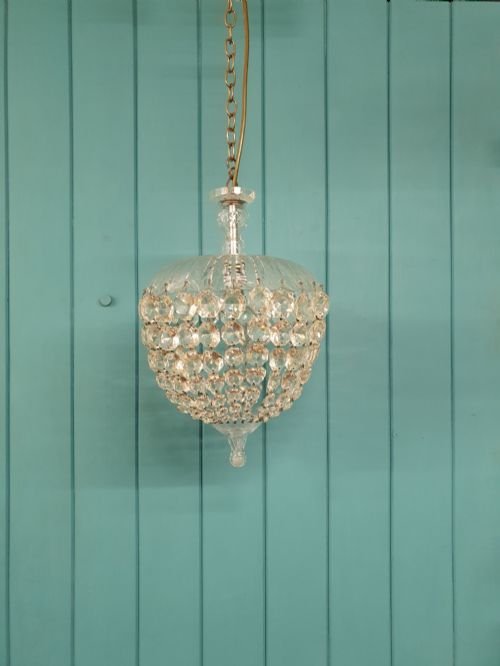
When you search for a brass chain light, you enter a diverse field of ceiling fixtures spanning the Victorian, Edwardian, and Art Deco eras. These hanging fittings range from simple glass pendants to large multi-light chandeliers and enclosed hall lanterns.
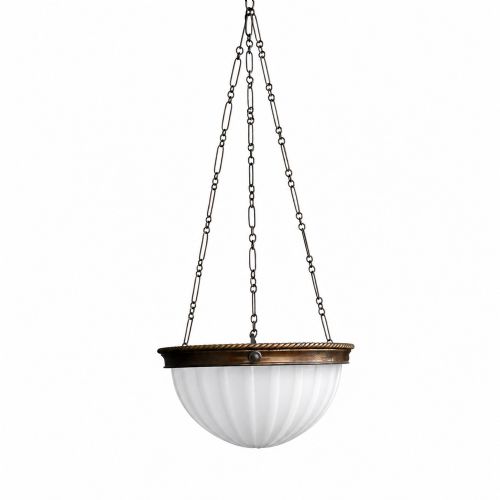
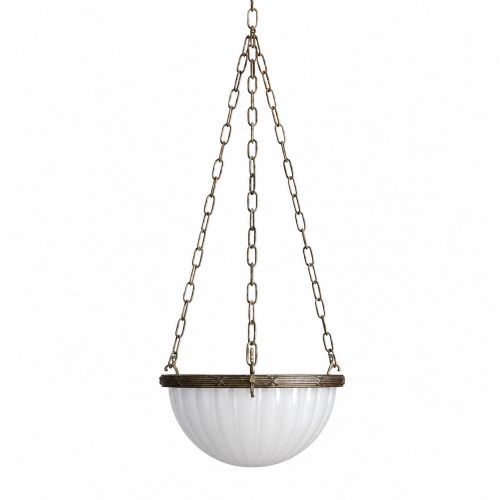
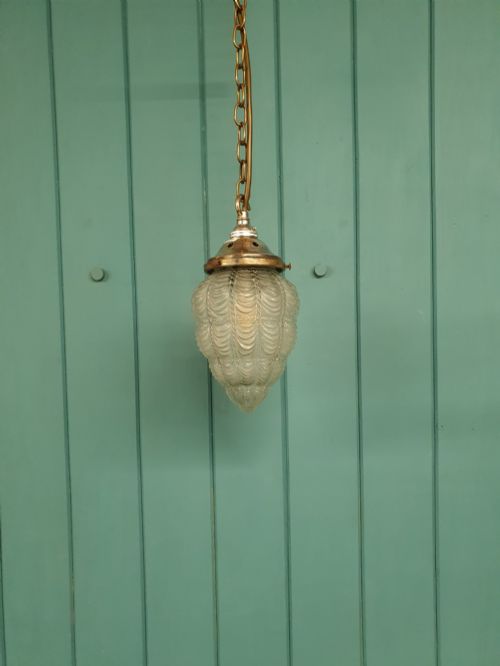
The most common versions on this page are early twentieth century English and French shades suspended on metal links. You will regularly encounter practical plafonniers, opalescent bowls, and prismatic glass shades designed to diffuse interior illumination evenly.
Period examples draw upon varied design vocabularies including Neoclassical, Empire Revival, and Arts and Crafts aesthetics. Each piece demonstrates how historical interiors prioritized both decorative metalwork and functional glasswork for overhead lighting.
Materials and construction methods
Makers utilised cast and spun brass for the structural fitments, suspension chains, and ceiling roses, often pairing the metal with lead or copper accents. This robust framework supports delicate glass elements securely while maintaining a cohesive aesthetic.
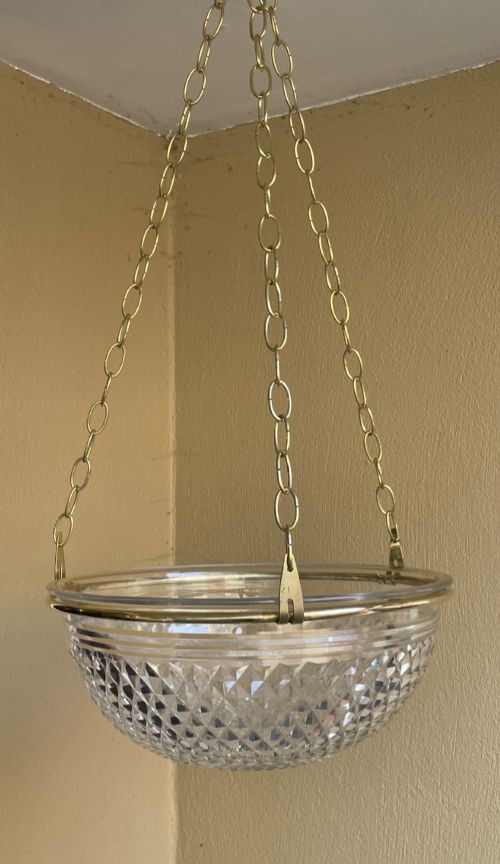
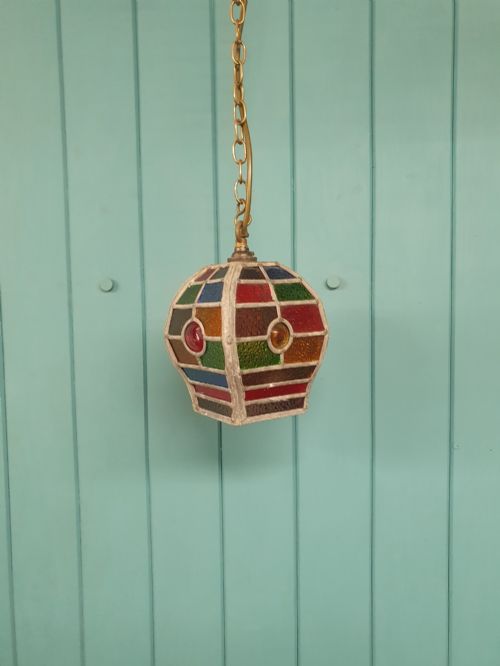
The glass components encompass cut, frosted, moonstone, prismatic, and opalescent varieties, alongside white alabaster and stained leaded glass. These shades were mouth-blown, moulded, or cut to achieve specific diffusion properties for domestic and public spaces.
The archive includes both French and English lantern designs suspended on original brass chains.
Distinguishing quality in period hanging lights
Quality rests upon the weight and purity of the brass elements and the fineness of the glasswork. Heavier castings, crisp surface chasing, and thick, unblemished glass shades separate superior production from standard utility items.
The integrity of the original suspension components, including matching chains and ceiling fitments, indicates higher original status. Subtle details like hand-cut facets, complex opalescent swirls, or signed glass panels elevate an ordinary pendant into a notable collector piece.
Jefferson Light
The Brass Chain Light Glossary
- Plafonnier
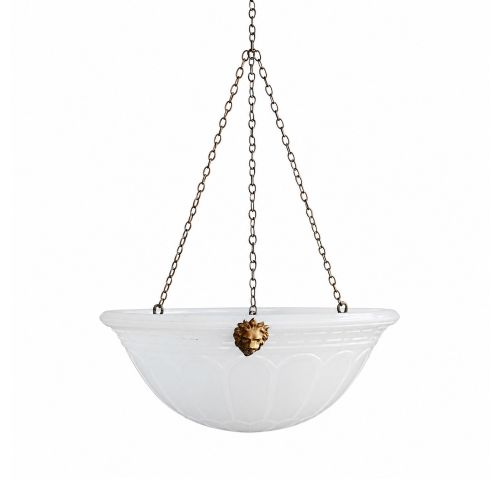
- A bowl-shaped ceiling light that fits close to the fixture or hangs slightly by short suspension chains. These fixtures direct light downwards and outwards into the room.
- Holophane
- A specific type of prismatic glass shade engineered to control and distribute light efficiently without glare. These commercial and domestic shades feature distinctive ribbed patterns.
- Moonstone glass
- A semi-translucent white glass type that resembles the soft glow of the moon. It diffuses bulb glare gently across Edwardian and later interiors.
- Chandelier
- A branched ornamental light fixture designed to hold multiple light sources. They hang from ceilings via central rods or suspension chains.
- Alabaster
- A fine-grained mineral stone carved into shallow dishes and bowls for interior illumination. When lit, the stone reveals natural veining and a warm glow.
Brass Chain Light: Frequently Asked Questions
How do I clean an antique glass shade?
Remove the glass component from the brass fitting if possible, then wash it gently in warm soapy water using a soft cloth. Avoid harsh chemical cleaners that might damage historical glass surfaces or aged patination.
Dry the shade thoroughly before reattaching it to the suspension chain. Handle cut and prismatic glass with care to protect sharp edges and delicate mouldings.
Can these vintage lights use modern bulbs?
Many period fixtures accept modern LED bulbs provided the wattage matches the historical wiring capacity. Consult a qualified electrician to ensure safety compliance before installation in your home.
Bulb selection should consider the transparency of the glass shade. Frosted and opalescent shades tolerate standard brightness well, while clear glass requires decorative filament bulbs.
What rooms suit a hall lantern?
Hall lanterns provide focused, ambient lighting ideal for entryways, corridors, and high-ceilinged stairwells. Their enclosed glass designs protect the interior burner or bulb from drafts.
Selecting a lantern size depends on the ceiling height and floor area of your space. Ensure adequate clearance beneath the lowest point of the hanging chain.
How do I date a brass chain light?
Dating relies on stylistic clues found in the glass moulding, decorative motifs, and metal casting techniques. Victorian pieces often display ornate brasswork, whereas Art Deco examples favour geometric opalescent glass.
Examine the suspension hardware and ceiling rose for manufacturing characteristics typical of the nineteenth or early twentieth century. Structural construction methods provide reliable chronological markers.