





Brass Castor Round Table
These pieces of brass castor round table furniture bring timeless circular dining and drum forms into your rooms with authentic period proportion.

Brass Castor Round Table
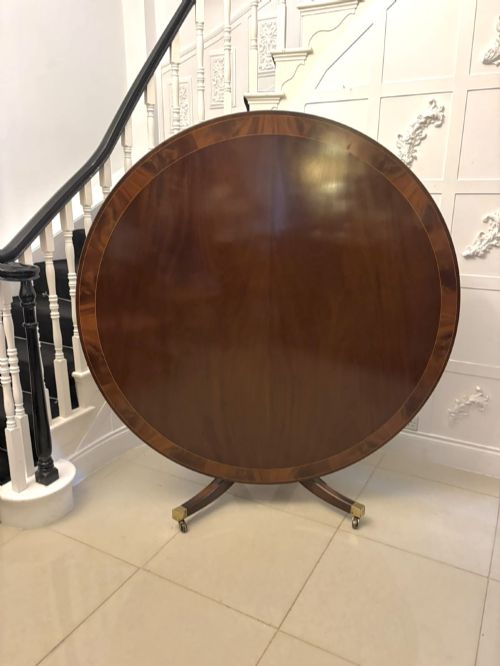
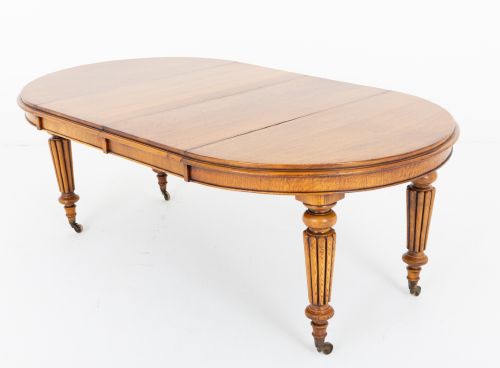
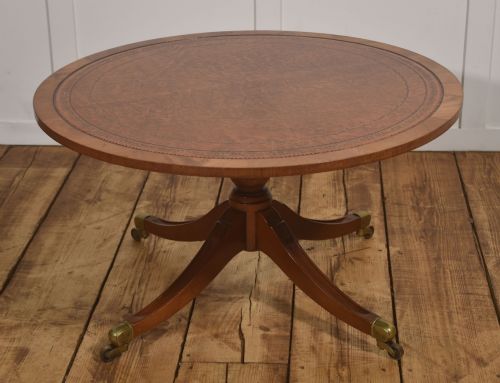
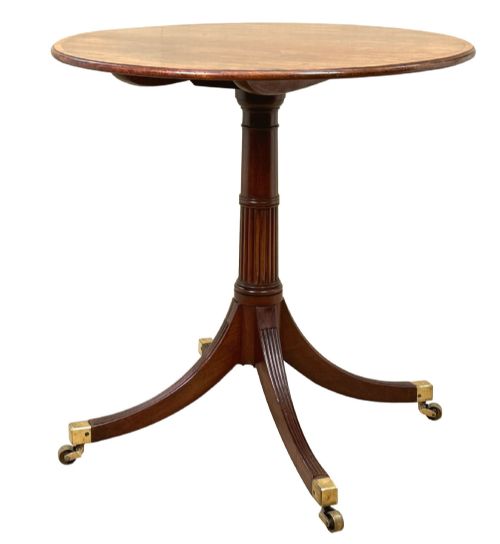
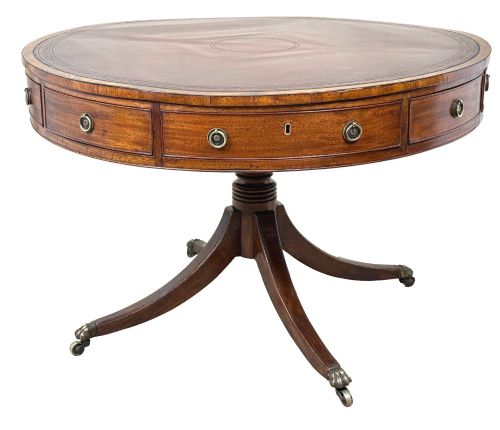
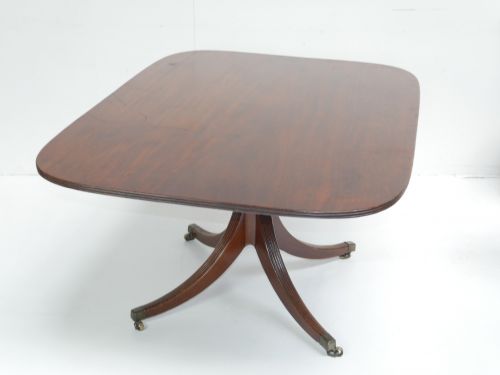
When you search for a brass castor round table, you are looking at circular dining, centre, drum, and occasional tables raised on small metal wheels. The examples on this page span the eighteenth century, the Regency period, the Edwardian era, and later revivals, drawing on classic mahogany, rosewood, and satinwood timbers.
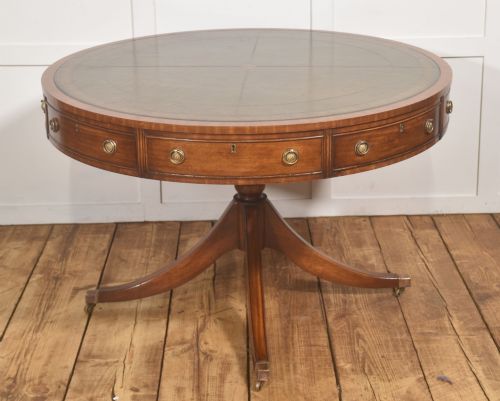
The form is most commonly met as a drum table or a circular dining table, often featuring a tilt top or drum compartments. These designs balance functional versatility with formal proportion, making them adaptable centrepieces for dining rooms and libraries alike.
Originating largely within English cabinet-making traditions, these tables reflect the shifting tastes from strict Regency symmetry to Edwardian and revival interpretations. Each piece retains the characteristic circular top paired with the mobility afforded by brass castors.
How they were made
Cabinet-makers constructed these circular tables using dense primary timbers such as mahogany and rosewood, frequently incorporating satinwood inlay and cross-banding for decorative contrast. The timber was selected for grain movement and stability, particularly across wide circular tops that risked warping.
Metalworking was integral to the design, with brass castors fitted to the feet to allow heavy dining and drum tables to be moved across carpets and floorboards. Joinery techniques included tilt-top mechanisms, drum drawer construction, and stable pedestal or pillar supports.
Brass Castor Round Table Retail Price Guide 2026
Typical asking prices for brass castor round table among the pieces listed under this phrase on Sellingantiques today, from the lower quarter to the upper quarter. They describe what is for sale here now, not the wider market.
One Edwardian drum table in this group bears a celestial zodiac motif, proving that nineteenth and twentieth-century makers liked to look up while working down.
What varies in quality
Quality in these tables rests primarily on the selection of timber figures and the crispness of any inlaid satinwood or cross-banding. Superior examples display thoughtful grain matching across the circular top, whereas lesser pieces rely on plain veneers or simpler construction.
The integrity of the structural joinery, from the tilt-top mechanism to the attachment of the pedestal and brass castors, marks the difference between workshop mastery and standard production. Heavier proportions and refined turning on the central column elevate the presence of the piece.
The Brass Castor Round Table Glossary
- Drum table
- A circular library or occasional table with a deep frieze resembling a drum, often containing drawers around its circumference.
- Castor
- A small wheel fitted to the foot of a piece of furniture, made of brass in these examples to ease movement.
- Cross-banding
- A border of veneer laid with the grain running perpendicular to the main surface of the table top.
- Tilt-top
- A table top hinged to the pedestal so it can be tilted vertically to save space when not in use.
- Satinwood
- A pale, hard wood with a lustrous finish utilised for inlay and decorative banding.
Brass Castor Round Table: Frequently Asked Questions
What is a drum table?
A drum table is a circular form featuring a deep frieze that typically houses several small drawers for papers or books. They originated as library tables designed to sit in the middle of a room.
The deep wooden skirts give them a distinct cylindrical profile, which is why cabinet-makers likened them to drums. Many examples from this selection incorporate this specific configuration alongside brass castors.
How do tilt-top tables work?
Tilt-top tables utilise a simple wooden catch and pivot mechanism beneath the centre of the circular top. This allows the surface to be tipped into a vertical position when the table is pushed against a wall.
This practical feature was common in smaller dining and breakfast rooms where floor space was at a premium. It allowed homeowners to clear the room easily between meals.
Where should I place a centre table?
A centre table is designed to stand free in the middle of a room rather than pushed against a perimeter wall. Because the circular top and timber grain can be appreciated from all angles, they work best in principal reception spaces.
The inclusion of brass castors makes repositioning these tables straightforward when arranging furniture for gatherings. They anchor a room while maintaining physical flexibility.
How do I identify a Regency table?
Regency tables typically feature dark mahogany timbers, clean architectural lines, and sturdy central pedestals rather than four corner legs. They often incorporate brass toe caps and castors to match the formal restraint of the period.
Revival pieces from later decades emulated these proportions, so examining the construction methods and timber ageing helps determine whether a piece is from the original period or a later revival.