
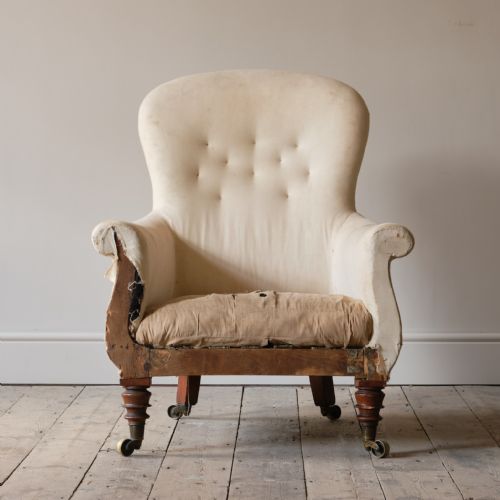
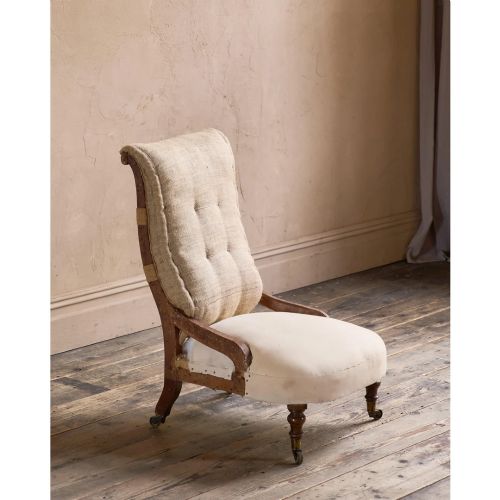
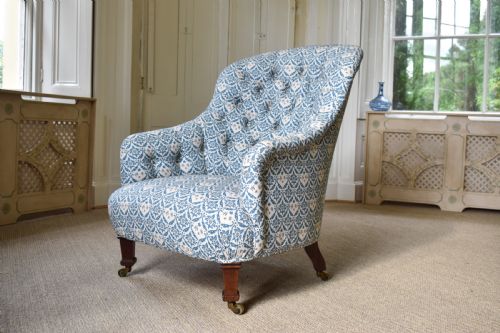

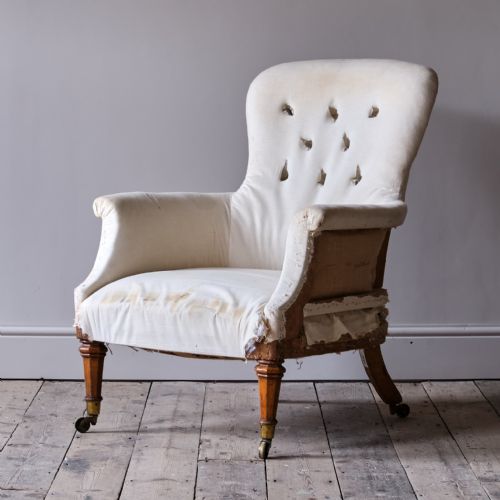

Brass Castor Library Chair
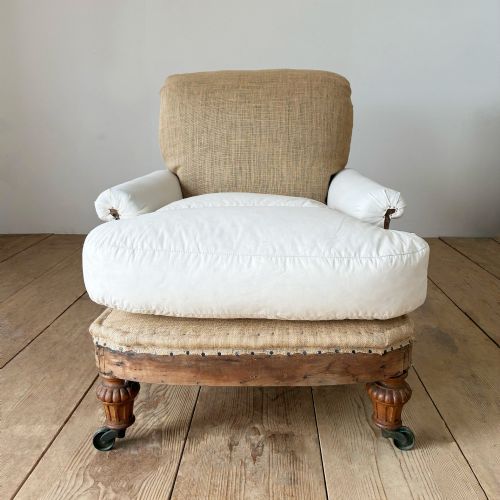
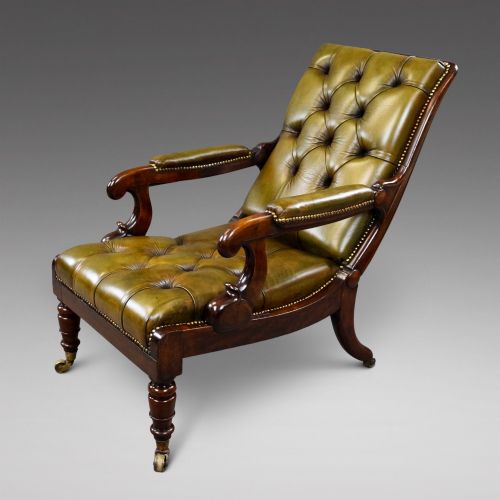
A brass castor library chair provides robust, movable seating designed for studies and country houses across Georgian, Regency, and Victorian periods.
Brass Castor Library Chair
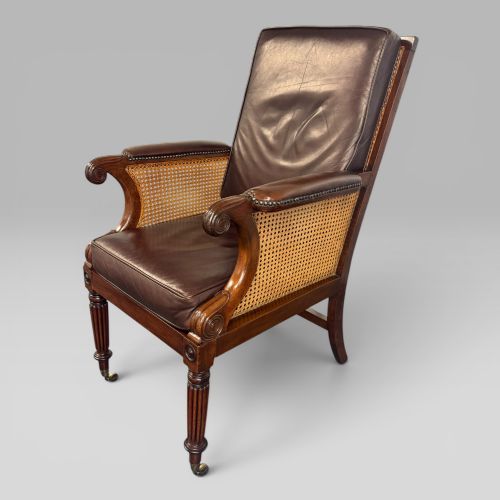
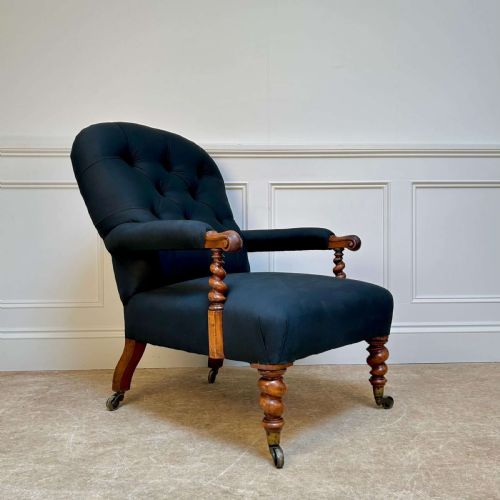
A brass castor library chair encompasses robust seating designed for study and reading rooms, appearing frequently in sturdy mahogany, rosewood, and walnut show frames. The selection spans from Georgian and Regency prototypes through to William IV, Victorian, and Edwardian interpretations.
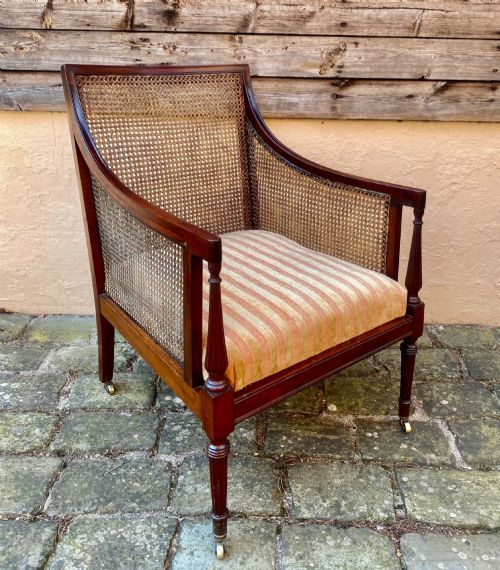
Buyers encounter various designated forms, including open armchairs, bergères with caned panels, button-backed club chairs, and revolving or reclining desk chairs. Many examples feature substantial proportions intended for country house libraries and studies.
The historical span recorded in these pieces reaches from the eighteenth century into the early twentieth century, showing shifting tastes in upholstery from exposed timber frames to fully padded leather and fabric coverings.
Materials and structural construction
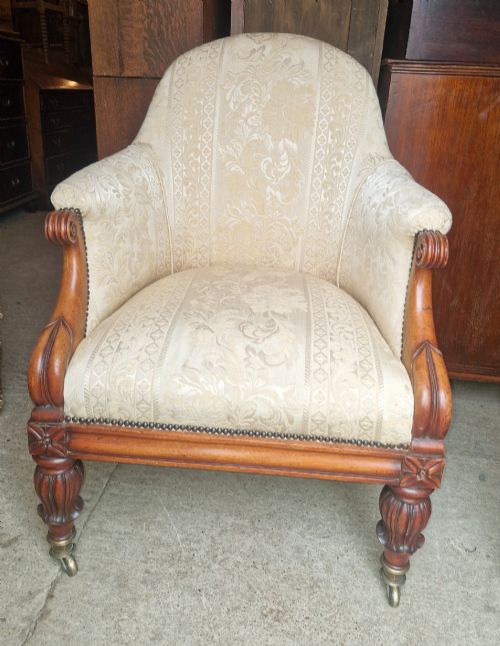
Makers built the structural frames primarily from dense hardwoods like mahogany, rosewood, walnut, and polished oak, often shaping the timber with reeded details or carved supports. These heavy timbers provided the necessary strength for daily use in domestic libraries.
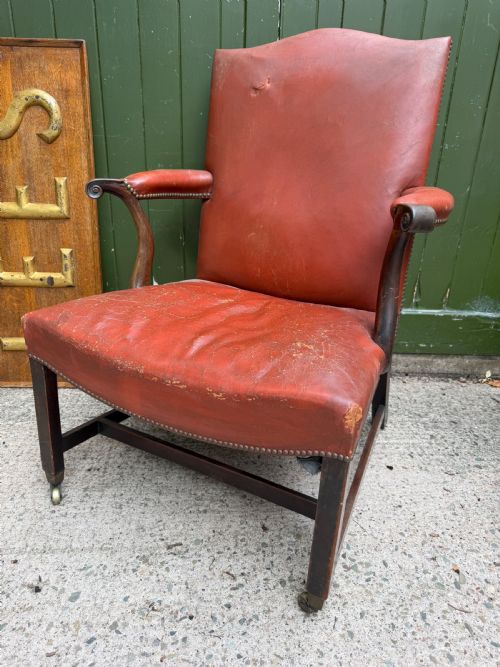
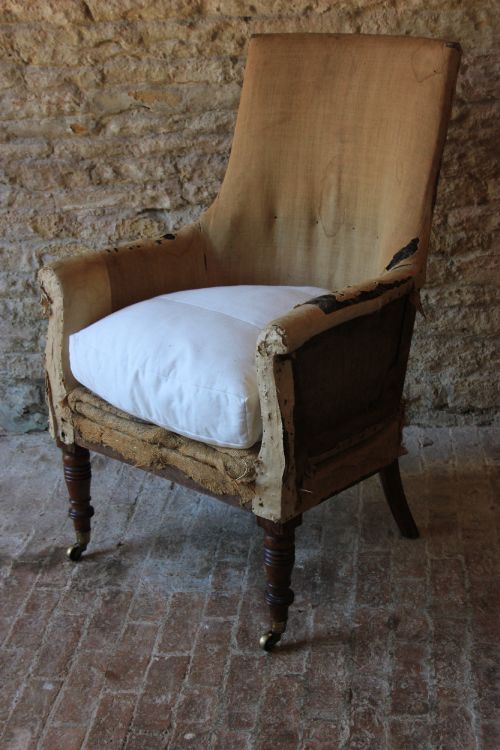
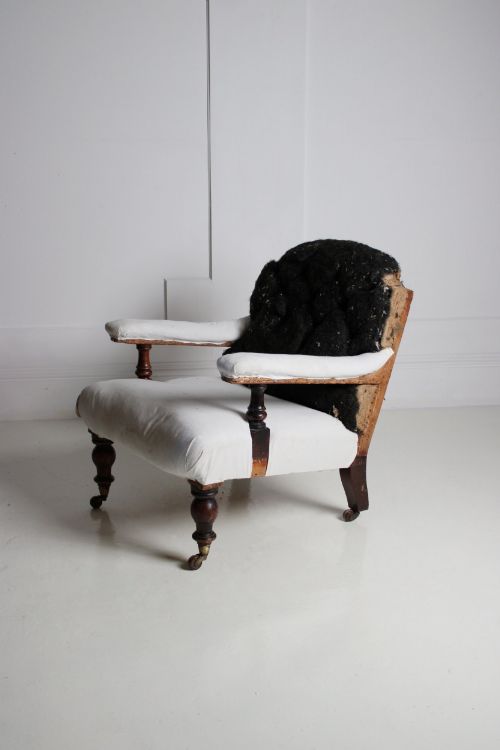
Upholstery methods varied widely according to the period, employing materials such as red leather, morocco leather, velvet, calico, ticking, Hessian, and woven cane panels. Deep buttoning and sprung systems appeared in later nineteenth-century examples to increase comfort.
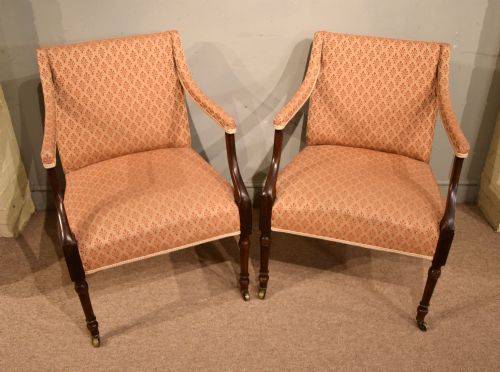
Metal castors fitted to the base of the legs allowed these heavy wooden chairs to move smoothly across carpets and wooden floors without damaging the surface.
Brass Castor Library Chair Retail Price Guide 2026
Typical asking prices for brass castor library chair among the pieces listed under this phrase on Sellingantiques today, from the lower quarter to the upper quarter. They describe what is for sale here now, not the wider market.
The listings demonstrate that mahogany and rosewood served as the primary framing timbers for nineteenth-century library seating.
Distinctions in craftsmanship and condition
The standard of a brass castor library chair depends upon the crispness of the timber carving, the integrity of the frame construction, and the quality of the turning on the legs. Superior examples retain their original show frames and timber patination without excessive structural repairs.
The execution of the upholstery and the choice of covering materials dictate much of the piece's character, from plain calico foundations to fine red leather or caned panels. Retaining original castors and supporting brass hardware adds considerably to the integrity of the piece.
Howard and Sons·Gillows·Hindley and Sons·William Birch
The Brass Castor Library Chair Glossary
- Bergère
- An enclosed armchair with stuffed or caned back and sides, originating in France and widely adopted in English Regency seating. The wooden frame is frequently exposed around the upholstered panels.
- Castor
- A small wheel mounted on a swivel attached to the base of a furniture leg, allowing the piece to be rolled across the floor. On these chairs, they are typically cast in brass.
- Reeded
- A decorative moulding formed of parallel convex strips resembling bundled reeds, frequently carved into the mahogany legs and arms of Regency chairs.
- Show frame
- The exposed wooden structure of an armchair that surrounds the upholstered areas, displaying the grain and polish of the timber.
- Morocco leather
- A fine goatskin leather with a distinctive pebble grain, traditionally used for high-end upholstery on nineteenth-century library furniture.
Brass Castor Library Chair: Frequently Asked Questions
What defines a library chair?
A library chair is a sturdy, comfortable armchair traditionally designed for reading and writing in studies or country house libraries. They often feature robust timber frames and mobility aids like brass castors.
These pieces prioritise user comfort alongside formal presence, accommodating long hours of reading through padded armrests and supportive backrest angles.
How do I identify a Regency period chair?
Regency chairs typically display classical restraint, featuring dark mahogany or rosewood timbers, reeded legs, and occasionally lyre-shaped arm supports. They reflect design influences from the early nineteenth century.
Look for clean architectural lines and proportion, alongside structural elements such as brass castors integrated directly into the foot design.
What is a caned bergere chair?
A bergere chair incorporates woven cane panels along the back and sides of the wooden frame, creating a lighter visual appearance than fully upholstered models. They often include loose squab cushions for the seat.
This style became particularly popular during the Regency period, combining wooden craftsmanship with flexible woven seating surfaces.
How should I care for leather upholstery?
Leather-upholstered chairs benefit from gentle cleaning with appropriate conditioning products to maintain the suppleness of the hide over time. Keeping them away from direct heat sources prevents the leather from drying and cracking.
Regular dusting with a soft cloth preserves the finish on both the leather covering and the polished wooden frame.