
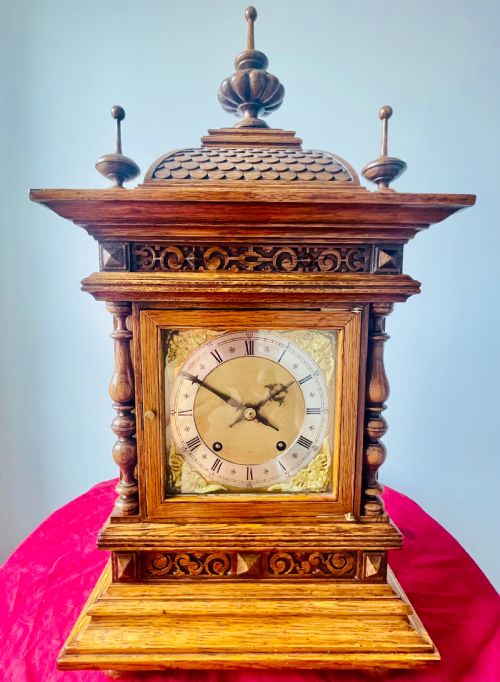


Brass Case Desk Clock
These brass case desk clock examples combine functional timekeeping with solid metal framing, offering a dependable desk accent.
Brass Case Desk Clock
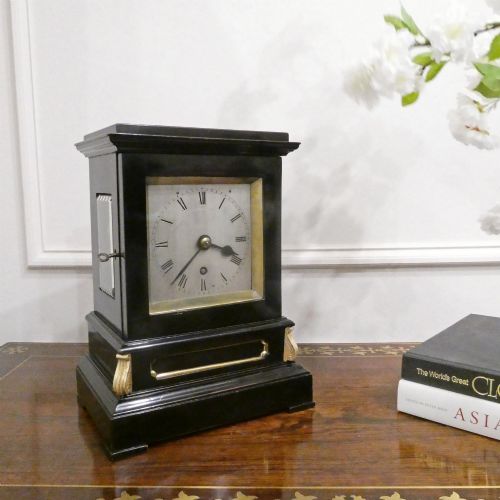
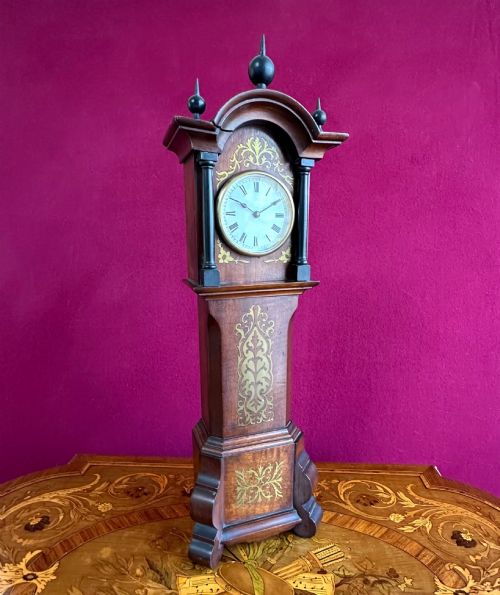
A brass case desk clock serves as a functional timepiece designed specifically for a desktop or tabletop surface, housed primarily in a heavy metallic frame. When searching for this phrase, buyers encounter various forms including carriage clocks, miniature bracket pieces, and glass-cased regulators from the nineteenth and early twentieth centuries.
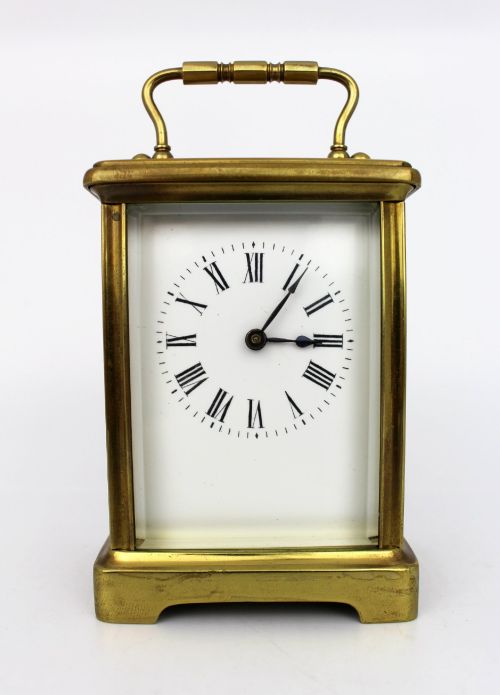
The most common version met on this page is the portable brass carriage clock, often featuring bevelled glass panels and an integrated handle. These pieces originate predominantly from French and English workshops spanning the Victorian and Edwardian periods.
Beyond standard timepieces, related items occasionally emerge under this heading, including weather instruments, barographs, and specialised desk movements set within protective metal housings. Each variation relies on the durable properties of brass to protect the internal mechanical gears.
Materials and Construction
Makers constructed these clocks using heavy cast or sheet brass, frequently applying a gilt finish to enhance the metallic lustre and prevent tarnishing. Glass panels, often bevelled or crystal clear, were fitted into the metal housing to allow a clear view of the escapement and gear train within.
Interiors rely on intricate steel and brass components, driven by mainsprings housed in barrels or fusee chains depending on the complexity of the mechanism. Dial faces commonly feature white enamel with Roman or Arabic numerals, sometimes complemented by hand-engraved brass masks.
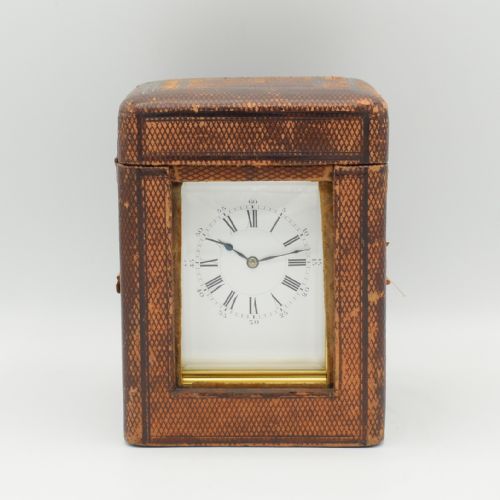
Outer protection often involved leather travel cases lined with velvet or silk, safeguarding the brass housing during transit. Secondary materials such as mahogany, oak, walnut, marble, and leather occasionally form the surrounding plinths or dedicated travel boxes.
Several examples include original leather travel cases, proving that nineteenth-century travellers took their timekeeping very seriously indeed.
Judging Quality
The sophistication of the internal movement dictates the primary tier of quality, distinguishing standard time-only pieces from those with striking mechanisms, repeaters, or alarm functions. Heavier, fully engraved gilt brass cases and complex platforms indicate superior workshop output.
Precision in the hand-engraving across the brass mask and case panels separates standard production items from master-tier examples. Crisp lettering on enamel dials and the presence of signed maker movements further elevate an individual piece.
The survival of original components, including matching winding keys and fitted leather travel cases, influences the overall integrity of the item. Unaltered mechanical trains demonstrate superior original craftsmanship compared to heavily rebuilt examples.
Henri Jacot·Pickford of London·Drocourt Paris·Antoine Redier of Paris·Winterhalder·Joseph Jump of London·William Evans of Handsworth·Luxor·Dwerrihouse and Bell·James Grohe·Walker and Hall·Jaeger LeCoultre
The Brass Case Desk Clock Glossary
- Carriage clock
- A portable spring-driven timepiece originally designed for travelling officers and gentry. These units typically feature a rectangular brass housing with glass windows and a handle on top.
- Gorge case
- A specific style of carriage clock housing defined by a stepped, tiered top moulding above a rectangular brass frame. This design originated in nineteenth-century French workshops.
- Fusee
- A conical pulley used in mechanical clocks to maintain an even pull on the gear train as the mainspring unwinds. This mechanism ensures consistent timekeeping accuracy.
- Enamel dial
- A clock face created by fusing powdered glass onto a copper or metal base at high temperatures. This technique provides a durable, glossy white surface for painted numerals.
- Escapement
- The internal mechanism that controls the release of power from the mainspring to the gear train. It gives the clock its characteristic ticking sound.
Brass Case Desk Clock: Frequently Asked Questions
How do I wind a brass carriage clock?
Use the matching key on the winding square located on the underside or back plate of the movement. Turn gently until resistance is felt, avoiding over-winding to protect the mainspring.
Ensure you support the clock securely during the process, particularly if the handle is hinged, to prevent accidental drops.
What is a repeating carriage clock?
A repeating clock strikes the last hour and quarter-hour on demand when a small button on top of the case is pressed. This allowed owners to check the time in darkness without lighting a candle.
Such complications require intricate gear trains and indicate higher manufacturing quality.
How do I clean the brass case?
Dust the exterior regularly with a soft, dry microfibre cloth to prevent the accumulation of grime in the engraved crevices. Avoid harsh chemical polishes that can strip the original gilding or lacquer.
Keep moisture away from the dial and glass panels to protect the internal mechanical movement from corrosion.
Why does my clock gain or lose time?
Mechanical clocks are sensitive to temperature changes, level surfaces, and the tension of the mainspring. Most pieces feature a small adjustment regulator on the internal platform to fine-tune the speed.
Place the clock on a stable, vibration-free surface for the most consistent timekeeping results.