

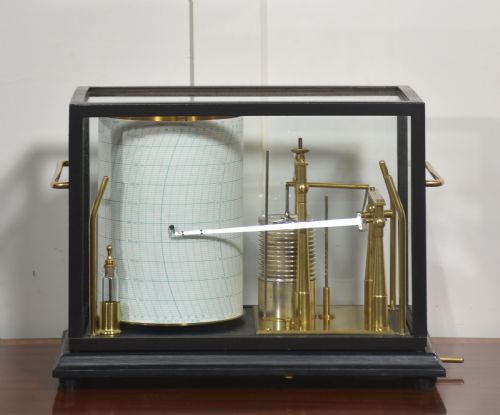
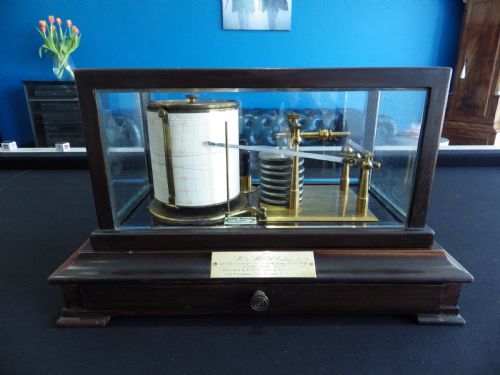


Brass Case Barometer
A brass case barometer records atmospheric pressure housed in metal and glass, offering functional weather observation and period interior charm.
Brass Case Barometer
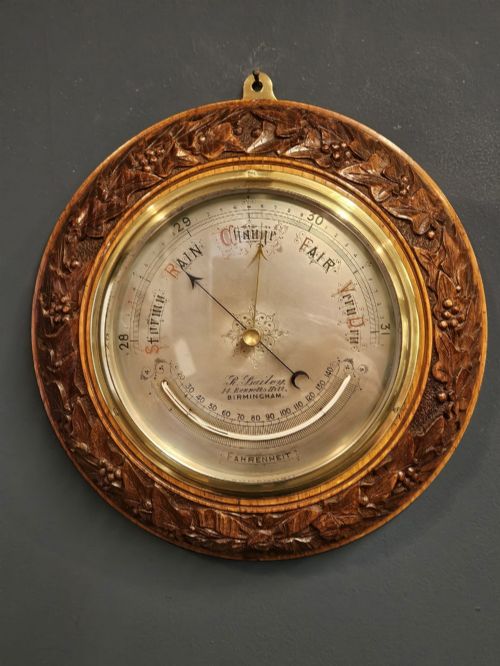
A brass case barometer encompasses weather instruments housed in metal surrounds, frequently appearing alongside barographs and scientific pieces on this page. The selection spans Victorian, Edwardian, and interwar periods through the twentieth century, bringing mechanical utility into domestic spaces.
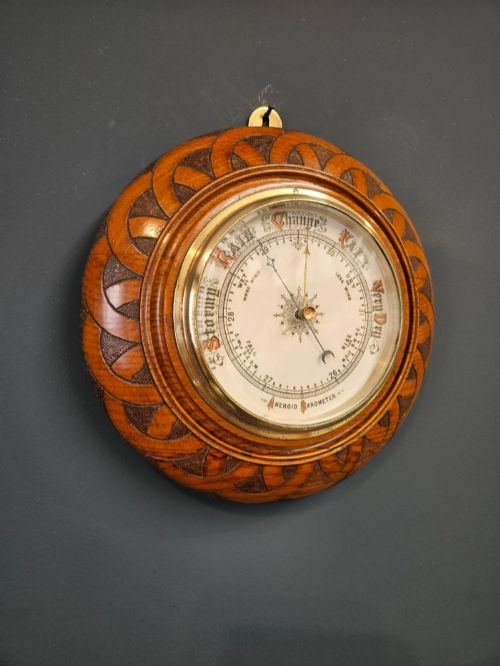
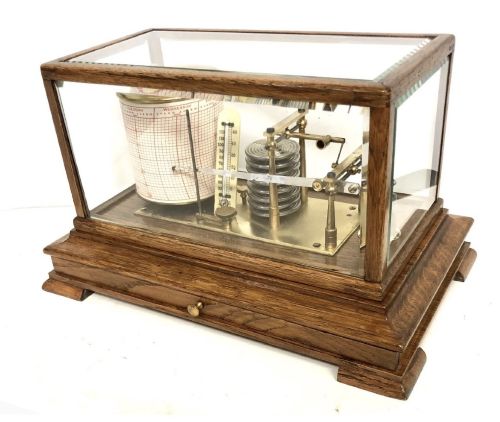
Most examples present timber frames such as mahogany, oak, and walnut fitted with bevelled glass panes to protect the sensitive movements inside. These range from desk instruments to large shop displays and wall-mounted pieces.
Makers and retailers recorded in the evidence range from scientific instrument specialists to department stores, reflecting how weather monitoring transitioned into middle-class homes.
How they were made
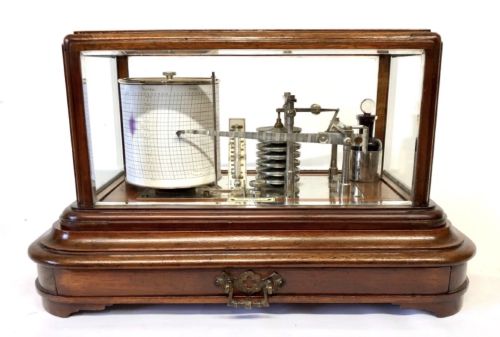
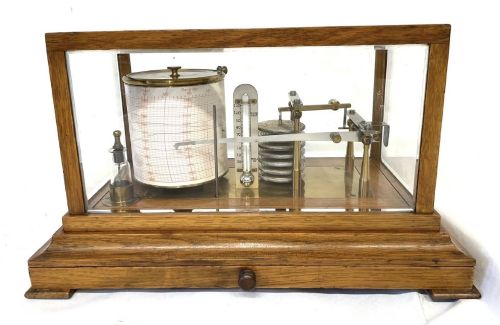
The construction relies on brass elements forming the dials, bezels, and internal stacked metal vacuum chambers that respond to barometric pressure. These are housed in wooden cabinetry made from mahogany, oak, or walnut, joined with glass panels for viewing the mechanism.
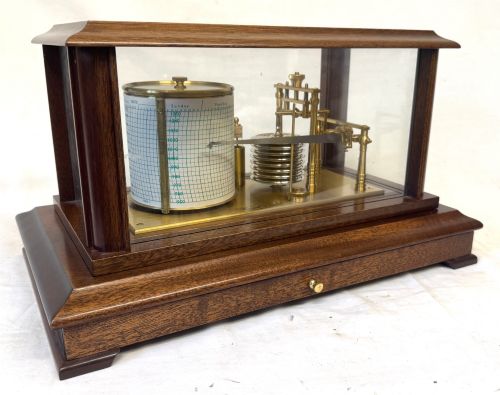
Movements incorporate steel levers, silvered metal dials with engraved graduations, and paper recording charts driven by clockwork drums. High precision engineering allows the physical expansion of internal chambers to transfer directly onto a recording pen or pointer.
Brass Case Barometer Retail Price Guide 2026
Typical asking prices for brass case barometer among the pieces listed under this phrase on Sellingantiques today, from the lower quarter to the upper quarter. They describe what is for sale here now, not the wider market.
Some barographs were sold by outfitters like Harrods and weatherproofing shops, treating meteorology as essential gentleman's attire.
What varies in quality
Quality rests in the precision of the mechanical movement and the craftsmanship of the timber casing. Master makers delivered finely engraved silvered dials and robust brass hardware that maintain calibration across decades.
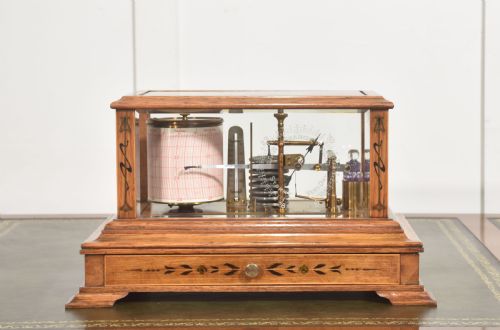
Cabinetry detail separates standard production from finer pieces, evident in selected mahogany or oak veneers, precision bevelling on glass panels, and integrated chart drawers with original paperwork.
Short And Mason·Negretti And Zambra·Alexander Wright·Jules Richard·R Fuess
The Brass Case Barometer Glossary
- Barograph
- A self-recording aneroid barometer that charts atmospheric pressure over a weekly period onto a paper cylinder. It utilises clockwork mechanisms to turn a drum while an inked arm traces the pressure changes.
- Aneroid barometer
- A device for measuring atmospheric pressure without liquid, using a flexible metal box that expands or contracts as pressure shifts. The movement translates through levers to a dial indicator.
- Stick barometer
- A tall, vertical barometer containing a column of liquid, typically mercury, balanced against atmospheric pressure. These require precise calibration and secure mounting.
- Bevelled glass
- Glass with edges cut and polished at an angle to fit snugly into metal bezels or timber door frames. It adds a decorative dimensional quality to instrument cases.
- Compensated barometer
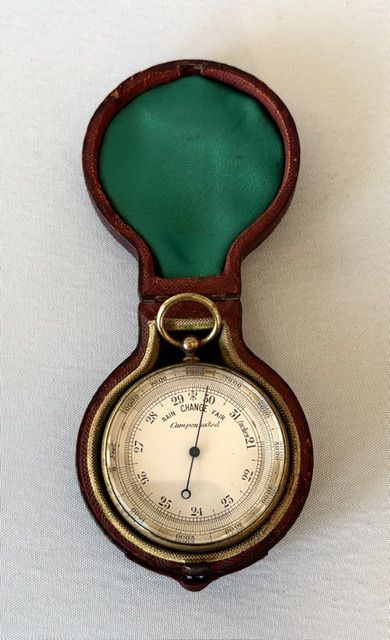
- An instrument fitted with a bimetallic device to adjust for temperature variations that would otherwise affect the accuracy of the reading. This ensures reliability across changing indoor climates.
Brass Case Barometer: Frequently Asked Questions
How does a barograph work?
A barograph operates using sealed metal vacuum chambers that flex in response to changing air pressure. These movements connect to a pivoted arm holding an ink nib which marks a revolving paper chart.
Clockwork mechanisms inside the drum rotate the paper once a week, providing a continuous graphical history of local weather patterns.
Where should I place a barometer?
Barometers perform best away from direct sunlight, radiators, and draughty doors to avoid artificial temperature swings that interfere with internal measurements. Wall-mounted or stable shelf positions keep the mechanism level.
Placing the instrument in a principal living space allows easy daily observation of pressure trends.
How do I read the paper charts?
Paper charts feature horizontal lines calibrated for pressure units and vertical grid lines representing days of the week. The ink trace rises as high pressure brings fair weather and falls as low pressure approaches.
Matching the current pen position to known local weather forecasts helps calibrate the instrument correctly.
How do I date these instruments?
Dating relies on maker signatures, patent dates marked on silvered dials, and the prevailing timber and design styles of the casing. Victorian and Edwardian pieces often feature distinct cabinet joinery and heavy brass bezels.
Original paper labels or retailers stamped on the dial provide further historical context.