




Brass Candle Branch Sconces
Brass candle branch sconces bring architectural warmth to interiors through cast metal forms designed to project flickering candlelight across a room.
Brass Candle Branch Sconces
When buyers search for brass candle branch sconces, they encounter wall-mounted lighting fixtures designed to hold multiple tapers across projecting arms. The selection spans domestic lighting made to illuminate hallways and formal reception rooms with reflected metal surfaces.
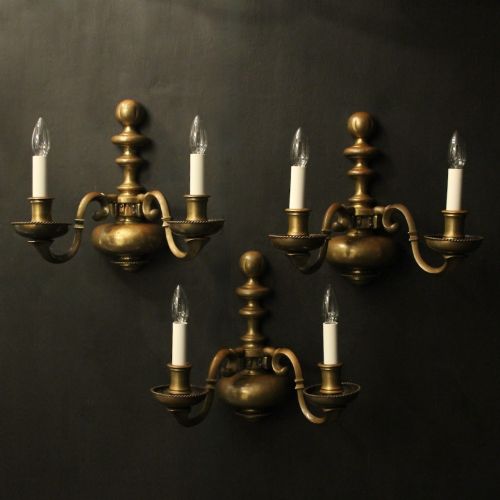
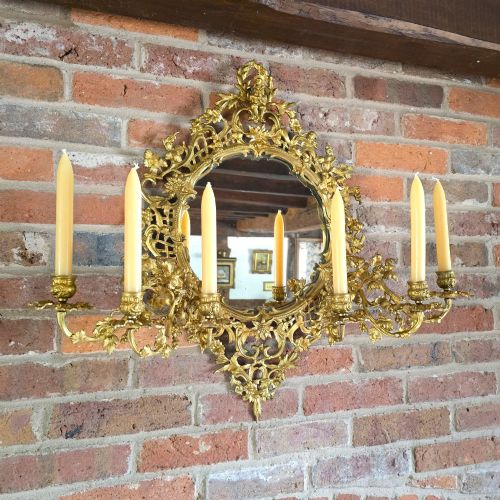
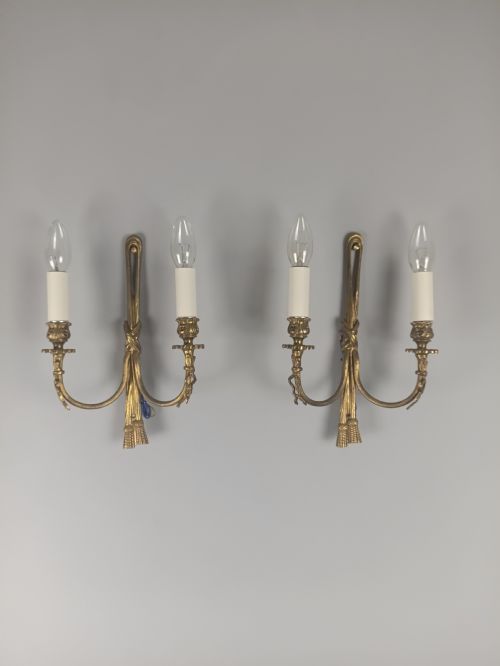
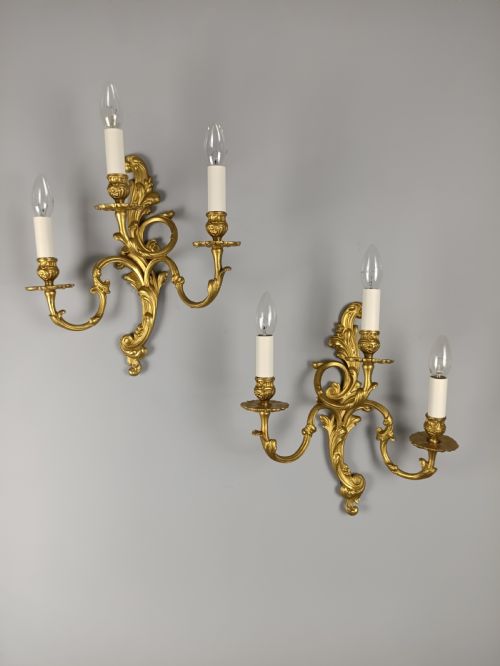
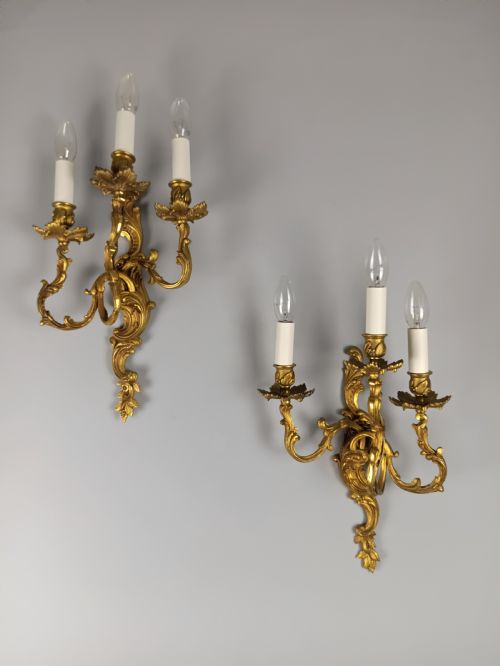
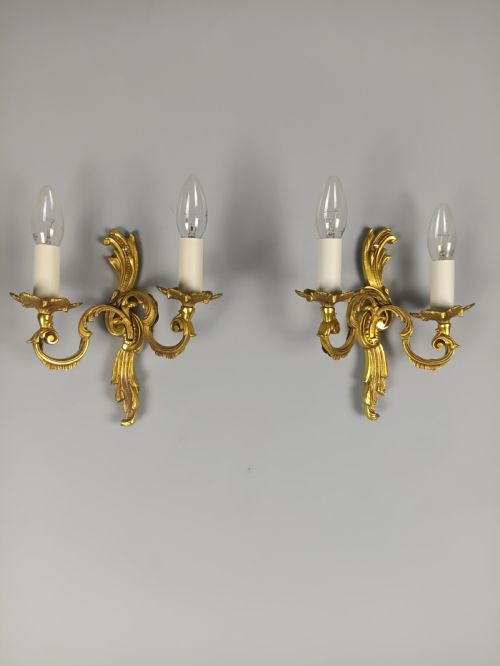
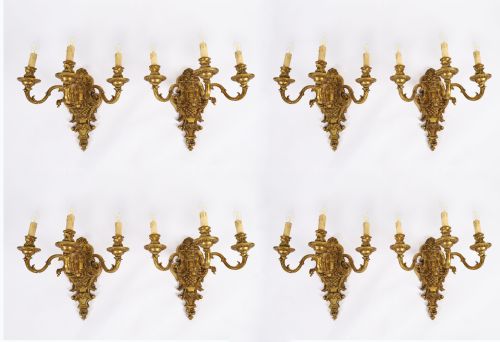
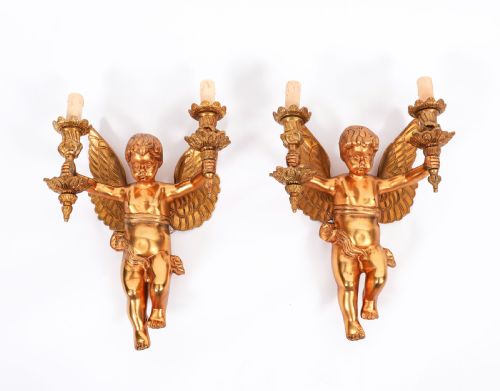
The objects take several distinct structural forms, including twin-arm and triple-arm configurations, as well as mirrored girandoles designed to multiply the available light. Pairs and larger matched sets predominate, reflecting the traditional symmetrical demands of period interior design.
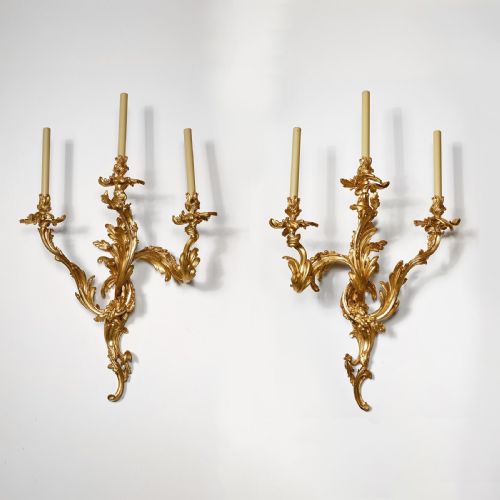
Origin and period vary widely across the inventory, with French workshops producing heavily ornamented ormolu and gilt bronze examples alongside English and Dutch output. The dates stretch from the Regency era through to 1930s revivals of earlier classical styles.
Materials and construction methods
The primary structural metal is brass, often elevated through surface treatments such as gilding, fire-gilding to create ormolu, or patination to darken the alloy. Workshops also utilised bronze and cast metal, sometimes combining glass components or mirrored backplates to enhance luminosity.
Manufacturing relied heavily on sand casting and lost-wax techniques to produce complex sculptural branches, ribbons, and foliate motifs. Finishing involved hand-chasing the cast details to sharpen the surface relief before assembly with threaded rods or pins.
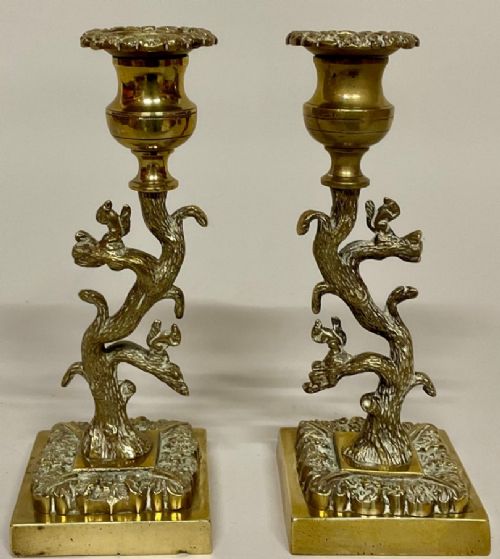
Squirrels occasionally peek out from cast bronze tree branches, reminding us that eighteenth-century forests made unexpected indoor company.
Distinctions in quality
Quality rests significantly on the crispness of the original casting and the depth of the subsequent hand-chasing. Superior pieces retain sharp leaf veins and clean background textures, whereas weaker examples appear soft and smoothed over.
The durability of the surface finish marks another division, with heavy fire-gilt ormolu holding its warm lustre far better than thin later plating. Heavier gauge metal used in the backplates and drip pans ensures structural rigidity across multi-branched arms.
Maison Baques
The Brass Candle Branch Sconces Glossary
- Ormolu
- Gilded bronze produced by applying a mercury and gold amalgam to a bronze base before heating. This French technique yields a distinctive matte golden finish found on higher-tier decorative hardware.
- Girandole
- A branched candleholder incorporating a mirrored backplate to reflect and amplify the flame. They were typically mounted between windows or above mantelpieces.
- Repousse
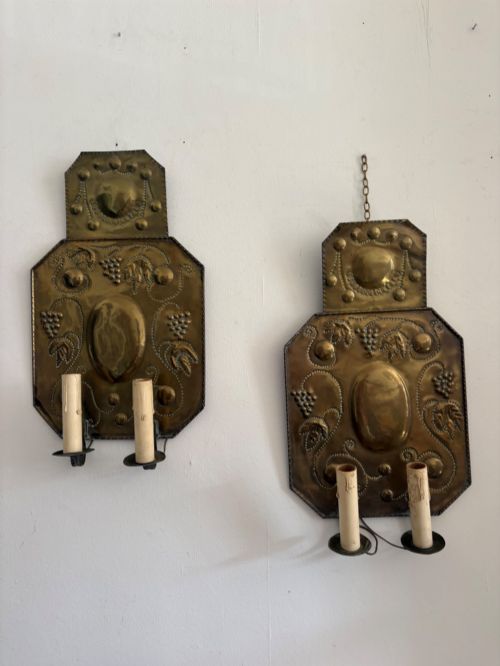
- A metalworking technique where the design is hammered into relief from the reverse side. Dutch and English workshops frequently applied this method to thin brass wall plates.
- Applique
- A French term for a wall-mounted light fitting or sconce. The word appears frequently in descriptions of continental lighting.
- Campana
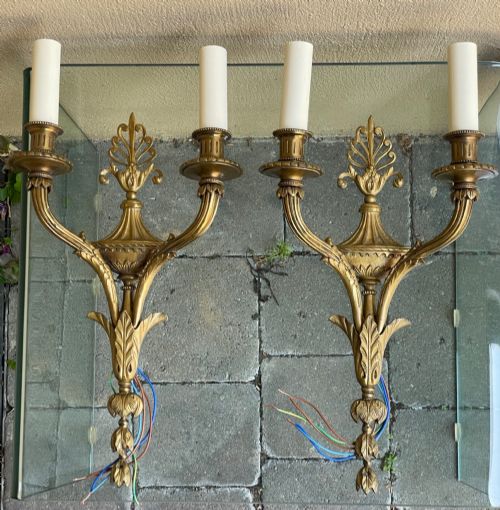
- A bell-shaped socket or drip pan resembling an inverted classical krater. These appear frequently at the terminus of candle branches.
Brass Candle Branch Sconces: Frequently Asked Questions
How do I mount heavy wall sconces securely?
Heavy cast metal sconces require direct anchoring into wall studs or the use of appropriate hollow-wall fixings rated for significant weight. The mounting plate must bear the full cantilevered load of the projecting branches without pulling away from the plaster.
Professional installation is recommended for older fixtures to ensure the electrical components, if converted, meet current safety standards while remaining hidden behind the backplate.
Can these candle sconces be wired for electricity?
Many period sconces are found having undergone conversion to electricity at various points in their history, while others retain their purely candle-lit configuration. Rewiring allows them to function safely as wall lights while preserving the decorative branch structure.
Consulting a qualified electrician ensures that internal wiring respects the narrow diameters of antique brass arms and incorporates proper earthing where required.
How should antique brass and ormolu be cleaned?
Routine maintenance requires only gentle dusting with a soft, dry cloth to prevent the accumulation of grime in the chased recesses. Aggressive metal polishes must be avoided on gilded or ormolu surfaces, as abrasive compounds will strip away the historic finish.
Professional conservation is advised if deeper cleaning becomes necessary to address heavy oxidation or verdigris on unlacquered brass components.
What distinguishes French rococo revival from neoclassical sconces?
French rococo revival pieces display asymmetrical scrollwork, C-scrolls, naturalistic foliage, and shell motifs that create a sense of fluid movement. They celebrate organic asymmetry and exuberant surface ornamentation.
Neoclassical and Adam style sconces, by contrast, emphasise symmetry, geometric precision, urns, ribbons, and classical architectural proportions. This restrained approach reflects an adherence to ancient Greek and Roman design principles.