



Brass Candelabra Standing Light
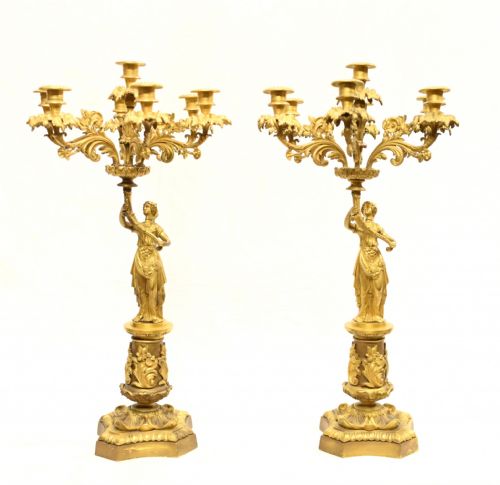
These brass candelabra standing light pieces combine utility and ornament, offering period illumination through metalwork from the nineteenth and early twentieth centuries.
Brass Candelabra Standing Light
Brass candelabra standing light items encompass metal lighting fixtures designed to hold multiple candles, originating mainly from the nineteenth century. Buyers searching this phrase encounter paired and single forms spanning Victorian, Regency, and Arts and Crafts aesthetics.
French styles including Empire and Rococo Revival appear frequently alongside English Victorian and Gothic Revival examples. Adjustable and articulated designs provide functional variation within the surviving inventory.
What varies in quality
Quality appears in the crispness of the bronze and brass casting, where sharper chiselling and deeper relief separate finer works from simpler production. The integration of contrasting materials like marble and enamel dictates the visual depth of the object.
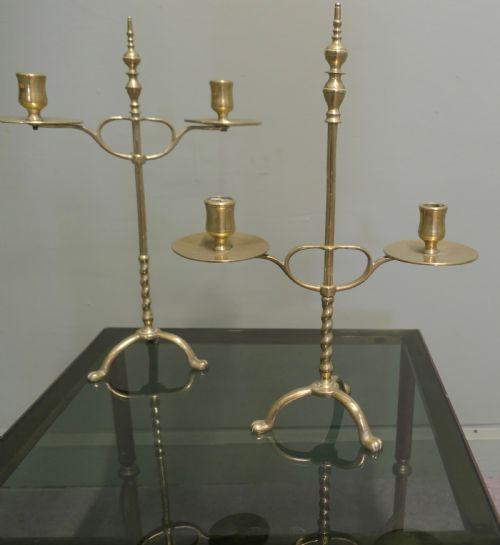
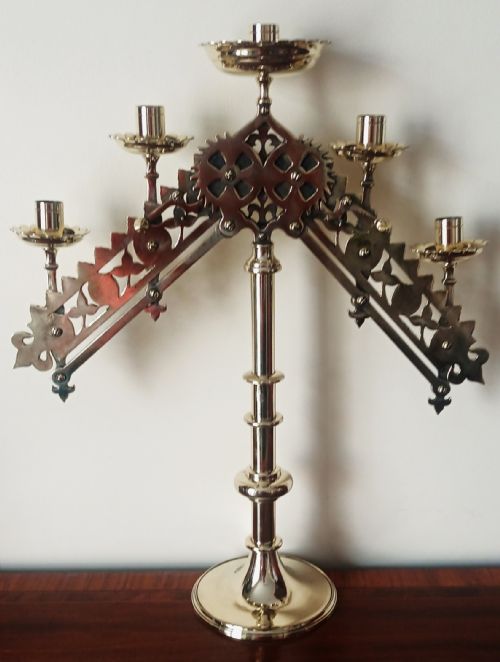
The presence of complex mechanical articulation, such as working adjustable student lights or multi-arm arrangements, distinguishes superior examples. Weight and stability in the base construction further separate standard foundry output from masterwork pieces.
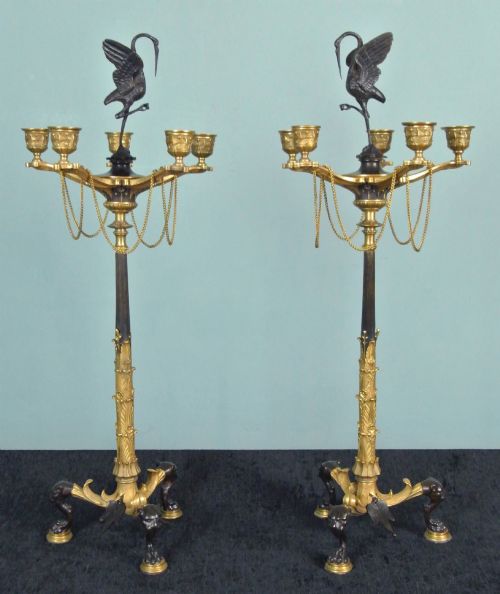
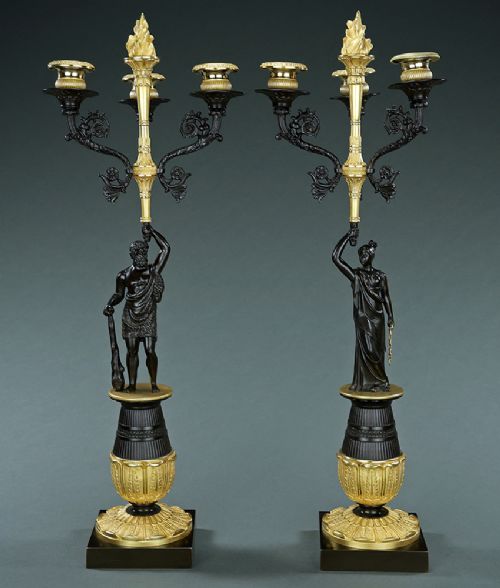
Hercules and Hesione share shelf space with porcelain birds perched inside gleaming ormolu candelabra branches.
Barbedienne·Wm. Tonks & Sons
The Brass Candelabra Standing Light Glossary
- Ormolu
- Gilded bronze applied to ornamental objects and furniture mounts. This technique creates a rich golden finish characteristic of French Empire and Victorian pieces.
- Champleve
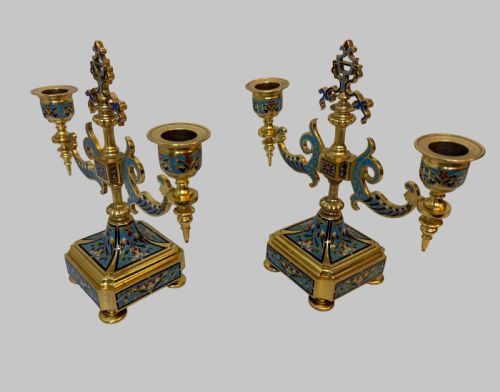
- An enamelling technique where troughs are carved into metal and filled with vitreous paste before firing. It produces vibrant decorative patterns on bronze surfaces.
- Articulated
- Designed with joints that allow movement. Such mechanisms enable the adjustment of light direction on student lamps and standard stands.
- Patinated
- The surface colouring achieved naturally through age or artificially via chemical treatment. This process darkens bronze or brass to accentuate sculptural details.
Brass Candelabra Standing Light: Frequently Asked Questions
How do I clean brass candelabras?
Dust gently with a soft dry cloth to preserve the existing surface patination. Avoid harsh metal polishes that remove historic finishes on antique brass and gilt bronze.
Take care around enamel or marble elements when dusting. Using mild soap and water on a damp cloth is suitable only for unlacquered plain metal parts.
Are these lights wired for electricity?
Most pieces retain their original candle-holding configuration as candelabra or standard lamps. Adaptation for modern wiring varies by individual item and previous ownership.
Consult a professional electrician regarding any conversion work. Reversible wiring methods help maintain the original structure of antique metalwork.
Where were these lighting pieces used?
Nineteenth-century households placed these fixtures on mantelpieces, side tables, and desks for task or ambient illumination. Heavier stands functioned on floors or large surfaces in reception rooms.
Adjustable student lights served workspaces and libraries where directed illumination was necessary. Paired candelabra often decorated formal dining tables and drawing rooms.
How do I identify French Empire style?
French Empire pieces incorporate classical motifs drawn from ancient Greece and Rome. Look for architectural symmetry, laurel wreaths, and figural supports like Hercules.
Ormolu mounts paired with dark patinated bronze provide the characteristic tonal contrast of this period. Such designs emphasise disciplined geometric forms over flowing floral curves.