



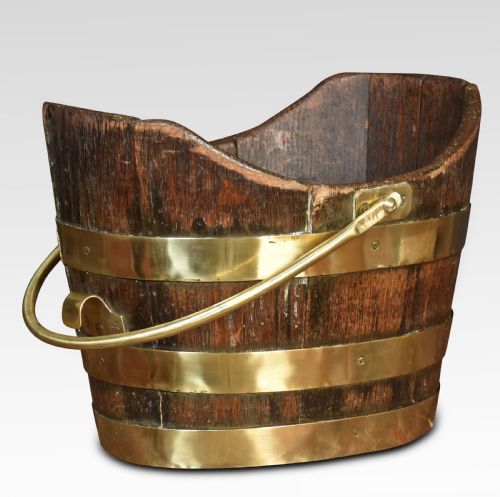


Brass Bound Wooden Scuttle
These brass bound wooden scuttle examples are robust hearthside storage vessels combining sturdy timber construction with heavy metal mounts.
Brass Bound Wooden Scuttle
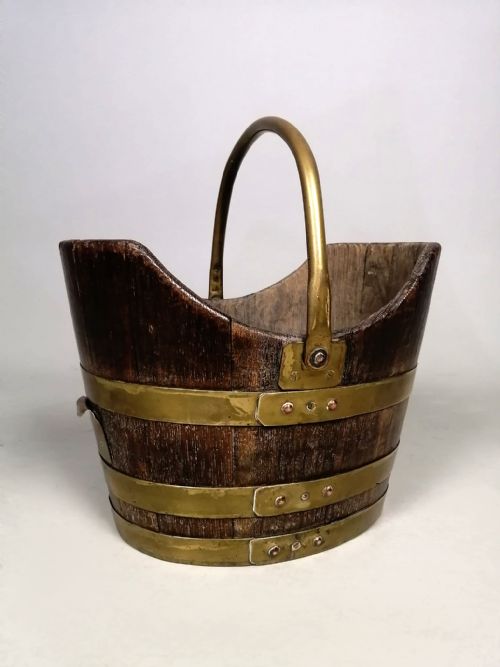
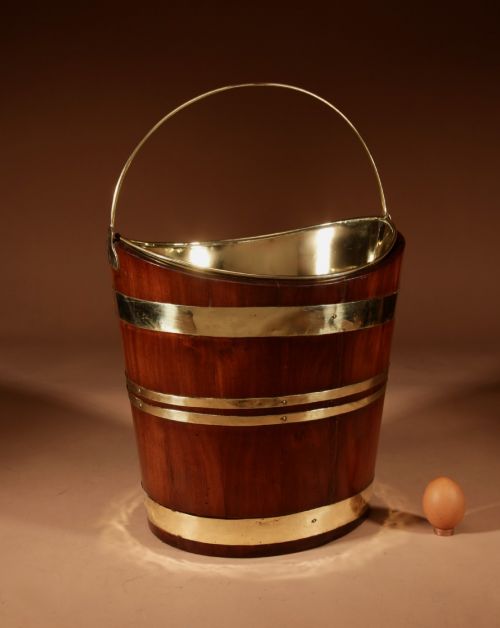
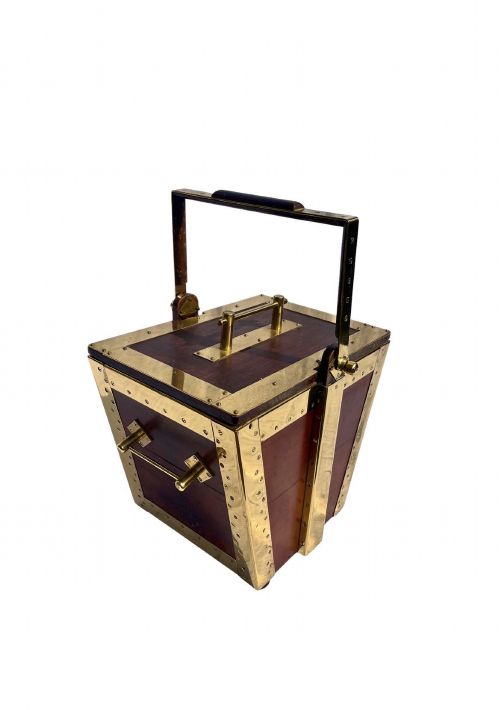
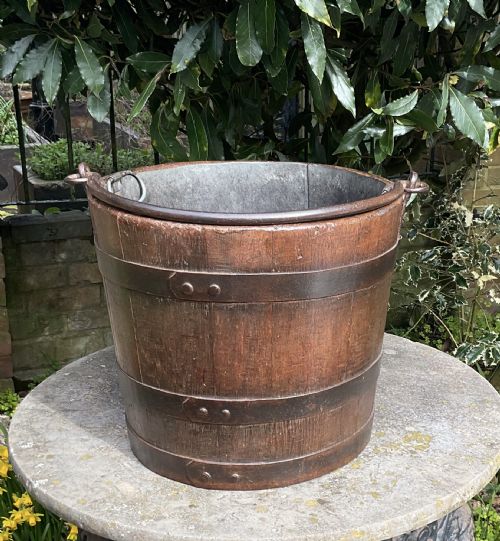
A brass bound wooden scuttle is a heavy hearthside container used primarily for holding coal, peat, or logs by the fireplace. The form ranges from boat-shaped peat buckets and coopered barrels to triangular fireside bins and coal hods.
Originating largely from English, Scottish, and Irish workshops, these vessels utilise traditional joinery and coopered construction. The combination of timber staves and heavy metal bands provides both structural strength and visual contrast.
How they were made
The construction relies heavily on traditional cooperage techniques where seasoned timber staves of oak, mahogany, or walnut are shaped to form circular or oval vessels. These staves are held tightly together by heavy brass bands secured with pins or rivets.
Many examples incorporate internal metal liners or zinc inserts to protect the surrounding wood from moisture and debris left by fuel. Handles, swing Bails, and armorial crests are cast or beaten in brass and iron to complete the assembly.
The materials recorded in these listings span oak, mahogany, walnut, brass, iron, and zinc. Periods range from the 18th century through to the 1920s.
What varies in quality
Quality in a brass bound wooden scuttle rests largely on the selection of timber and the precision of the coopered joints. Dense, well-figured mahogany or quarter-sawn oak with tight staves represents a higher standard of craftsmanship than simpler utility items.
The weight and gauge of the brass bands also dictate the standard, alongside the survival of original liners and feet. Pieces featuring crisp mouldings, dovetailed bases, and substantial cast hardware stand apart from more utilitarian replacements.
The Brass Bound Wooden Scuttle Glossary
- Coopered
- Constructed from curved wooden staves bound together with metal hoops, much like a barrel. This technique provides immense strength for holding loose materials.
- Peat bucket
- A specialised container designed to hold dried peat sods for fuel near a hearth. These often feature distinctive boat shapes or shallow proportions.
- Coal hod
- A vessel used for carrying and storing coal, typically fitted with a handle and flat base. They are closely related to fireside bins and buckets.
- Armorial crest
- A heraldic design engraved or applied to metal plates on an object. Such crests denote the original owning family or institution.
- Schuitje
- A Dutch term for a boat-shaped vessel, sometimes applied to specific peat bucket forms. The curved profile resembles a small watercraft.
Brass Bound Wooden Scuttle: Frequently Asked Questions
What were brass bound wooden scuttles used for?
Dust the timber regularly with a dry cloth and avoid using harsh chemical polishes that can degrade the finish. If the wood requires nourishment, a light application of appropriate wax is suitable.
Take care around the brass bands and metal liners to prevent moisture accumulation. Keeping the interior dry preserves both the timber staves and any original metal components.
How do I date an antique coal bucket?
Not every example retains its original metal or zinc liner, as these components frequently wore out or were removed over centuries of use. Many surviving pieces feature replacement liners or lack them entirely.
The presence of an original liner adds to the completeness of the piece. However, unlined vessels remain authentic examples of period fireside storage.
Where were these wooden scuttles made?
While structurally robust, most antique vessels are now treated as decorative display pieces or dry storage containers. Using them for damp fuel can damage fragile internal linings and aged timber staves.
Displaying them empty or filled with dry logs preserves their condition. Treating them as historical artefacts ensures they survive for future generations.