

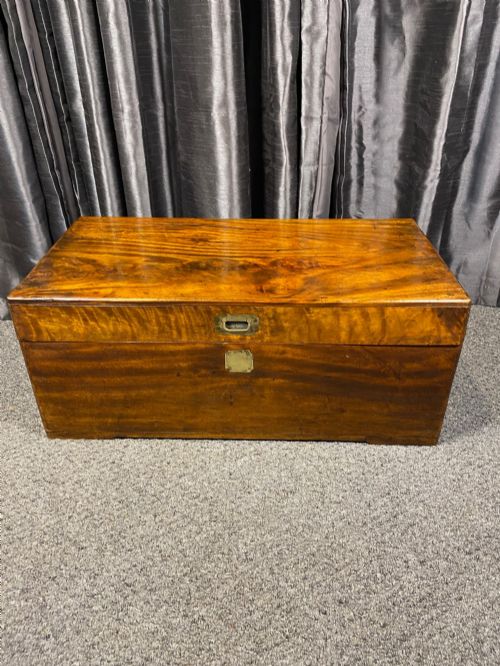
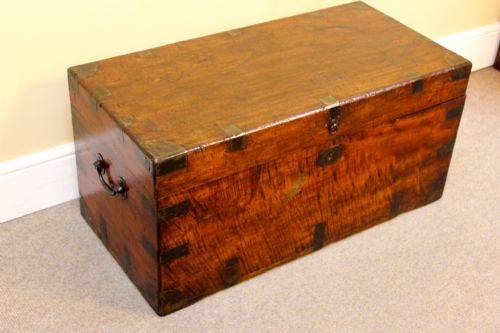
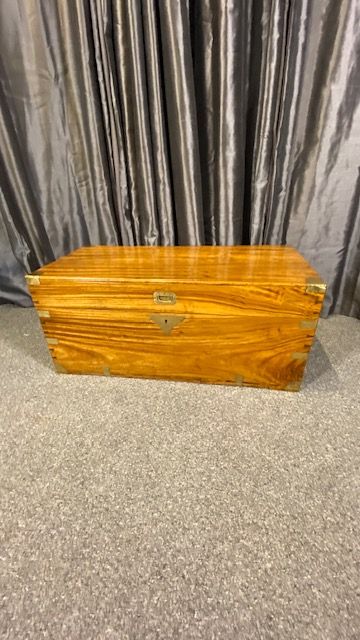
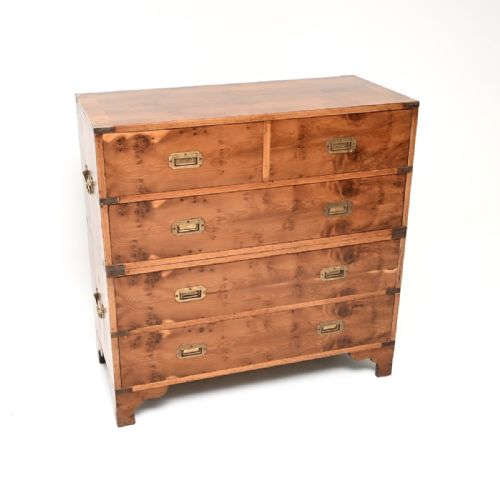
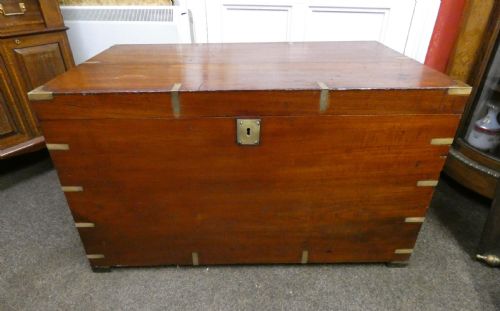
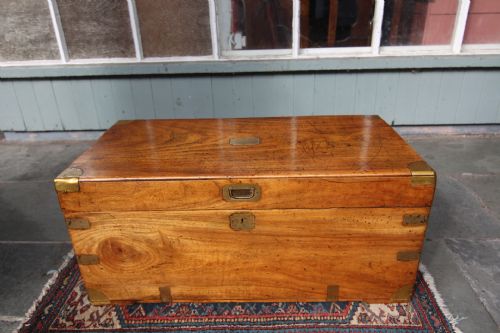
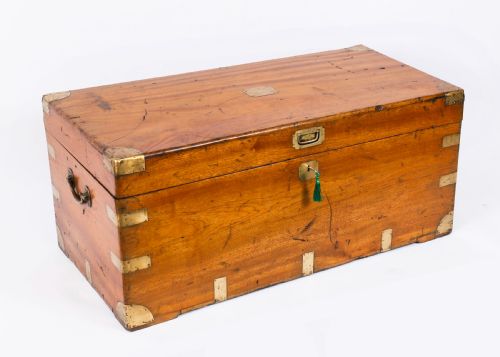
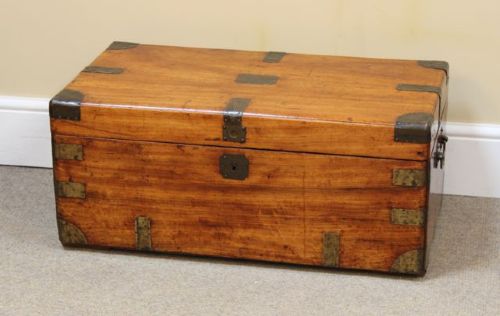

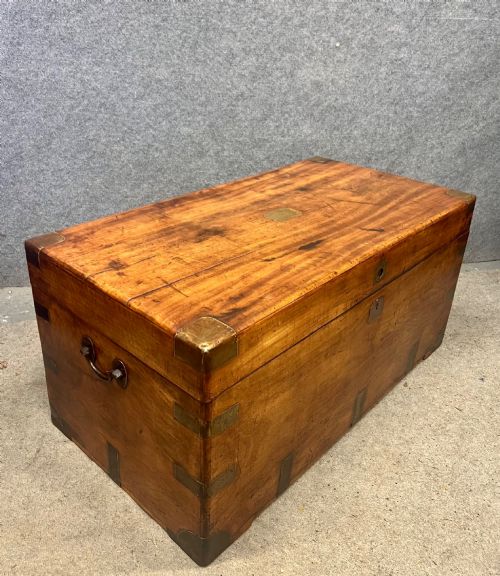
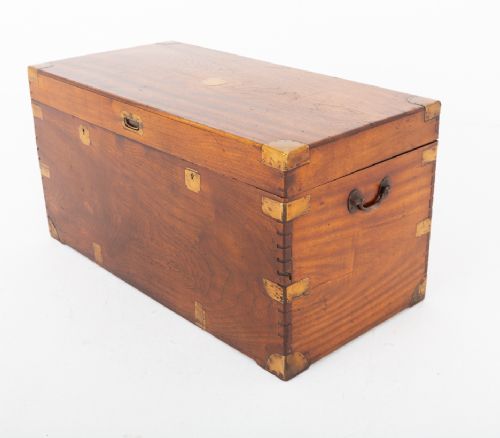
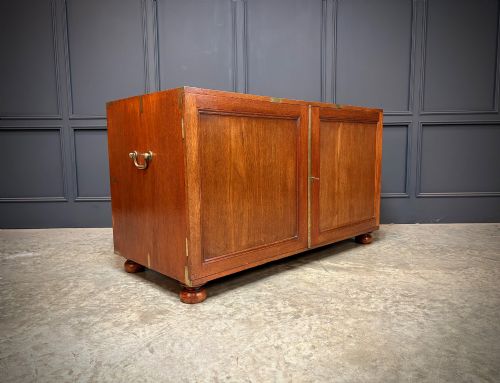
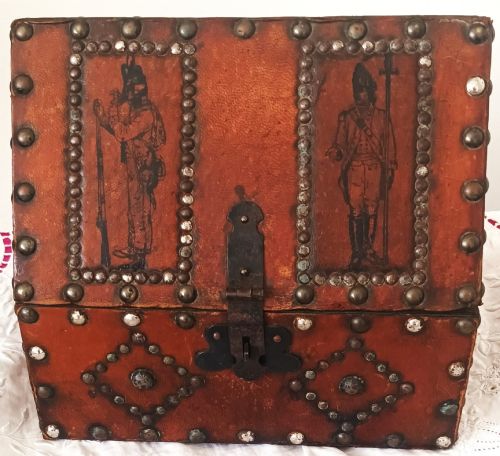

Brass Bound Military Trunk
A brass bound military trunk is built for travel, combining solid timbers and structural metalwork to survive distant campaigns.
Brass Bound Military Trunk
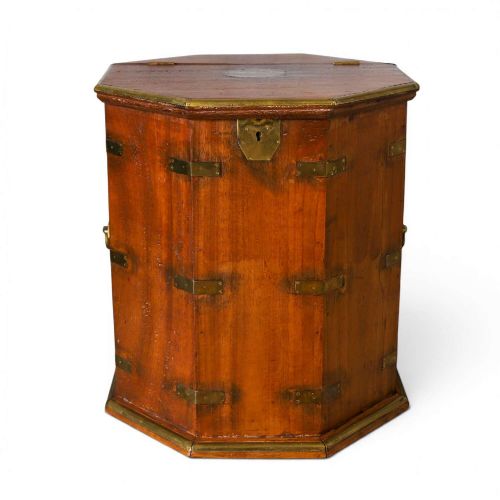
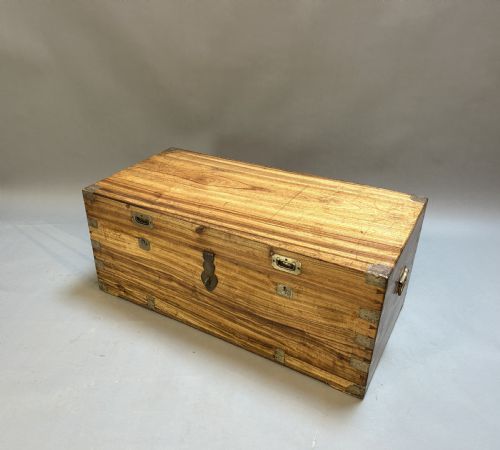
A brass bound military trunk is a piece of campaign furniture designed for officers on the move during the nineteenth century. These objects served as luggage, storage chests, and sometimes makeshift desks during long voyages and postings across the empire.
Camphor wood and teak form the core of what appears on this page, often built in two distinct sections for easier loading onto pack animals or ships. Trunks, coffers, and chests of drawers predominate, showing the practical forms officers required on active service.
Victorian examples dominate the selection, spanning from the early decades of the eighteen-hundreds through to the turn of the twentieth century. Buyers encounter simple lift-top trunks alongside more complex fitted interiors and low chests of drawers.
How they were made
Carpenters utilised dense, durable timbers such as camphor wood, teak, mahogany, and oak to withstand severe humidity and heavy handling. Camphor wood was particularly favoured for its insect-repellent properties, protecting uniforms and documents during tropical postings.
Brass corners, straps, and flush-fitting drop handles were screwed or riveted to the exterior to reinforce joints and protect edges from impact during transit. Iron hardware occasionally appears, working alongside leather elements on specific travelling caskets and boxes.
Brass Bound Military Trunk Retail Price Guide 2026
Typical asking prices for brass bound military trunk among the pieces listed under this phrase on Sellingantiques today, from the lower quarter to the upper quarter. They describe what is for sale here now, not the wider market.
What varies in quality
The grade of timber grain and the thickness of the solid wood set superior examples apart from standard utility pieces. Finely figured camphor wood or rich teak signifies a higher tier of construction, commissioned by officers of higher rank or means.
Original hardware integrity dictates distinction, particularly the presence of matching brass straps, working locks with keys, and flush handles that sit level with the wood surface. Pieces retaining their fitted internal compartments or original keys command greater interest among collectors.
The Brass Bound Military Trunk Glossary
- Campaign furniture
- Portable furnishings designed for military officers on active service abroad. These items dismantle or fold for transport.
- Camphor wood
- A fragrant timber native to Asia, utilised for trunks to deter moths and dampness. It often displays a distinct grain.
- Flush handle
- A metal pull inset into the wood so it does not project beyond the surface. This prevents snagging during transit.
- Two-part chest
- A case made in upper and lower sections that separate for packing. Iron carrying brackets usually secure the halves together.
- Casket
- A small decorative box or chest used for valuables or documents. Leather-bound versions appear among travel luggage.
Brass Bound Military Trunk: Frequently Asked Questions
What is a brass bound military trunk?
A brass bound military trunk is a nineteenth-century storage chest constructed from dense timber and reinforced with brass hardware for colonial travel.
Officers utilised these boxes to transport uniforms, books, and personal belongings across distant postings.
Why use camphor wood for campaign trunks?
Camphor wood naturally repels insects and resists moisture, making it ideal for protecting textiles in tropical climates.
The timber also emits a distinct aromatic scent that remains present long after manufacture.
How do two-part campaign chests work?
Two-part chests stack vertically, held together by side brackets or internal pins, allowing easier transport on journeys.
Each half functions as an independent box when separated for loading onto ships or carriages.
How to date a campaign trunk?
Dating relies on timber choice, construction methods, and hardware styles spanning the nineteenth century.
Victorian pieces often feature stamps, brass maker plaques, or specific joinery details typical of cabinetmakers from that era.