



Brass Bound Leather Chest
A brass bound leather chest is a travel-worn container built for transit, offering rugged utility and period character.
Brass Bound Leather Chest
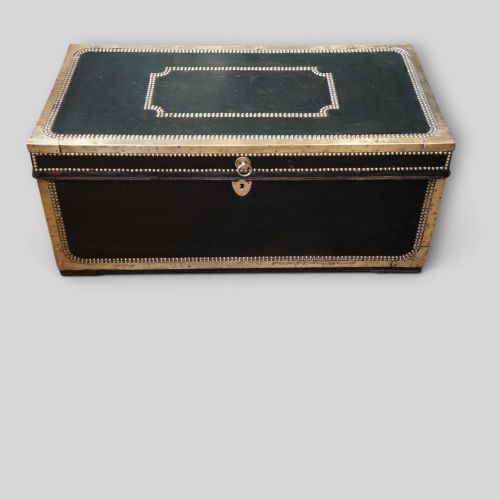
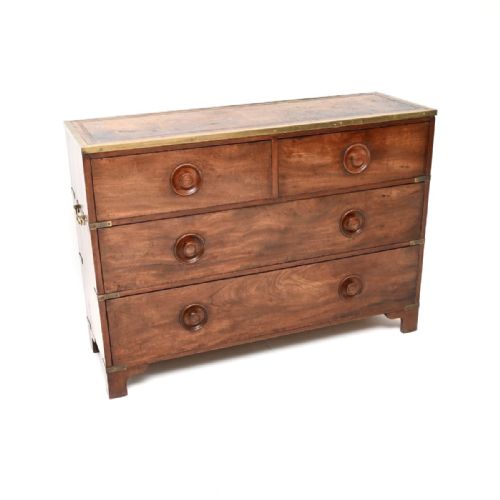
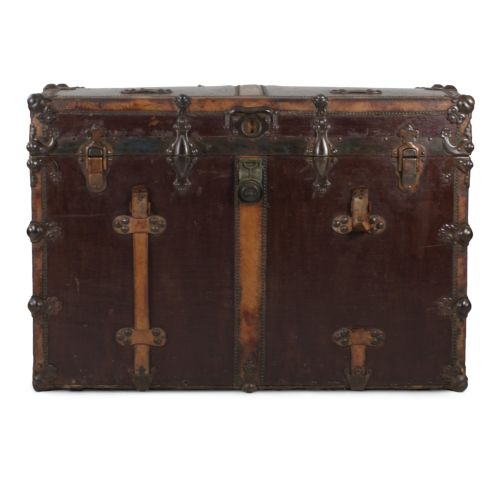
A brass bound leather chest serves as a durable travel container, designed to withstand the rigours of transit across centuries. These pieces encompass trunks, campaign chests, travelling boxes, and caskets intended for officers, merchants, and travellers on the move.
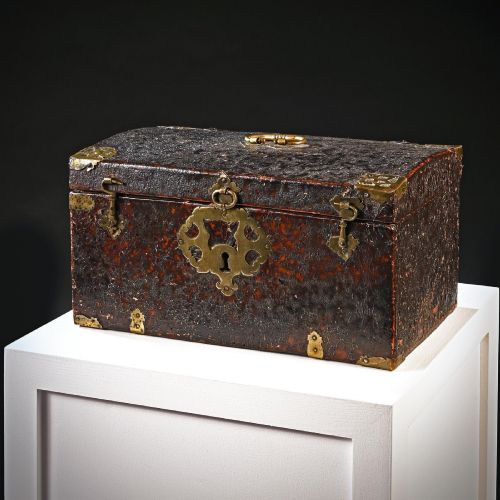
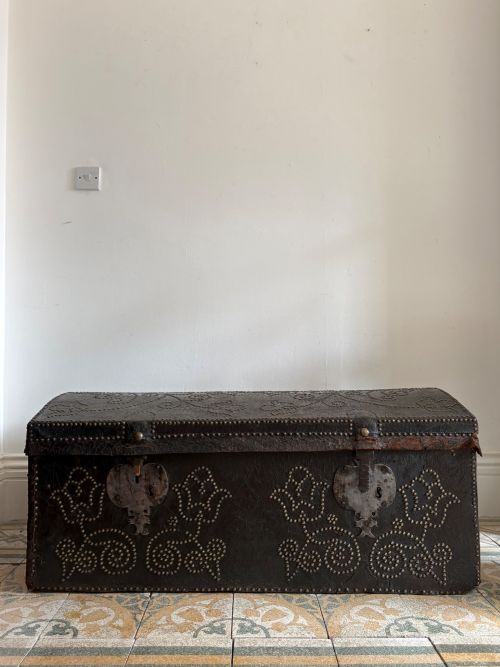
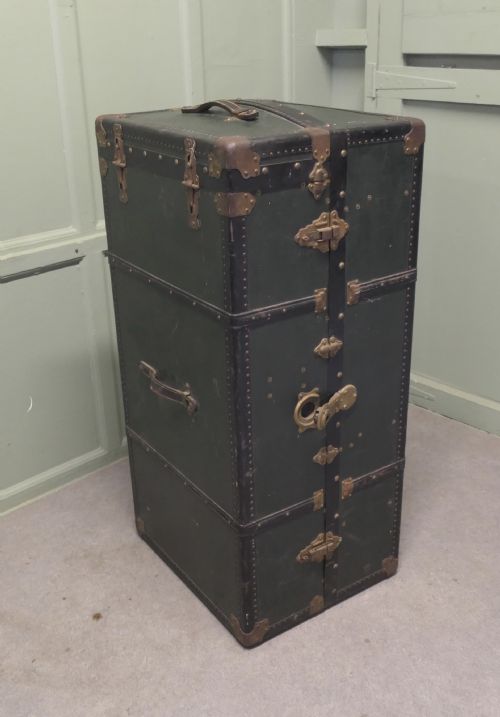
The pieces appearing on this page span several distinct periods, most notably the nineteenth century and the Regency era, alongside earlier seventeenth-century examples. Forms range from dome-top trunks to camphor wood chests and fitted steamer luggage, reflecting shifts in travel habits over time.
Origin and materials vary considerably, incorporating Chinese export pieces, French cases, and English campaign furniture. The core aesthetic relies on robust hides reinforced with metal corners, studs, and protective bands.
How they were made
Makers constructed these trunks using a wooden carcass covered in leather, hide, or canvas, secured with iron or brass tacks and studs. Brass binding and corner brackets protected the edges and joints from the heavy impacts of coaching and shipping.
Internal construction frequently involved camphor wood, mahogany, or teak, chosen for durability and pest resistance in distant climates. Metal handles, locks, and strapping were fastened securely to bear the weight of frequent lifting and transport.
Listings feature camphor wood, mahogany, teak, leather, brass, iron, and canvas across pieces dating from the seventeenth to the twentieth century.
What varies in quality
Quality rests upon the integrity of the original materials and the sophistication of the hardware. Pieces featuring substantial brass mounts, dovetailed joints, and fitted internal compartments command greater appreciation among collectors.
The presence of maker stamps, original linings, and documented provenance elevates an example beyond standard utilitarian luggage. Conversely, later replacements of leather or modern substitutes for brass hardware alter the historical standing of a chest.
Samuel Pratt·Chapple And Sons·Seabrook Of St Pauls·Drew And Sons·W Insall·Louis Vuitton·Aux Etats Unis
The Brass Bound Leather Chest Glossary
- Campaign chest
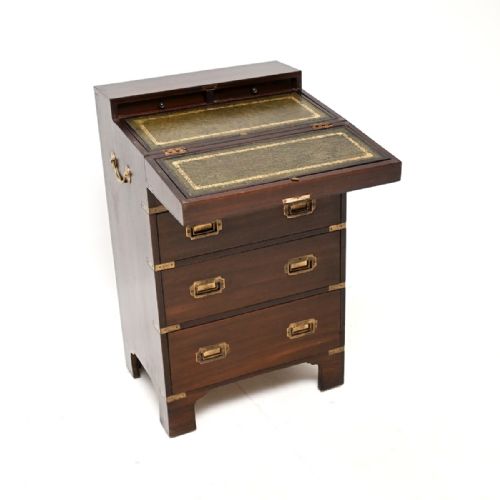
- Portable furniture made in sections for military officers on active service. These pieces usually feature brass corner braces and recessed carrying handles.
- Camphor wood
- An aromatic timber frequently utilised in trunks made for the China trade. It repels insects and protects stored garments from moisture.
- Steamer trunk
- A lower-profile luggage piece designed to fit beneath cabin berths on ocean liners. These items often include internal trays and hanging space.
- Casket
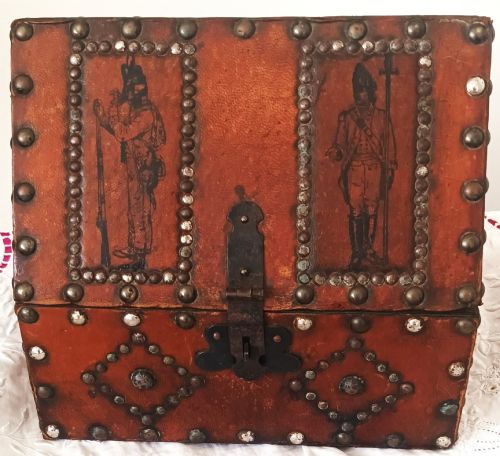
- A smaller decorative box intended for jewellery or valuables. They frequently display fine leather covering and detailed brass studwork.
- Studded
- Decorated with rows of metal tacks or nails that secure the leather to the wooden body. This technique provides both structural reinforcement and decorative pattern.
Brass Bound Leather Chest: Frequently Asked Questions
What is a brass bound leather chest?
A brass bound leather chest is a portable storage container built with a wooden structure, covered in hide, and reinforced with metal corners and strips for travel.
Such pieces were used by officers, diplomats, and merchants to safeguard clothing and equipment during long journeys.
How were campaign chests used?
Campaign chests served as practical furniture and luggage for military officers moving between postings. They were partitioned to pack down efficiently and withstand rough handling on campaign.
Their modular design allowed them to function as desks, drawers, and wardrobes while in transit.
Why use camphor wood inside trunks?
Camphor wood was chosen for trunks destined for tropical climates due to its natural aromatic properties. The timber deterred insects and kept stored textiles fresh.
Its presence often indicates an origin connected to trade routes in Asia.
How to date an antique chest?
Dating relies on observing construction methods, locking mechanisms, timber types, and the style of brass hardware. Earlier seventeenth-century examples feature simple studded frames, while nineteenth-century pieces often incorporate sophisticated campaign brackets.
Maker stamps and labels also help pinpoint the exact period of manufacture.