






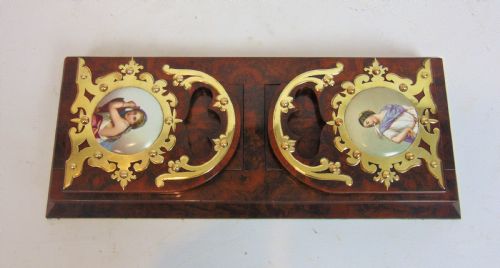


Brass Bookstand
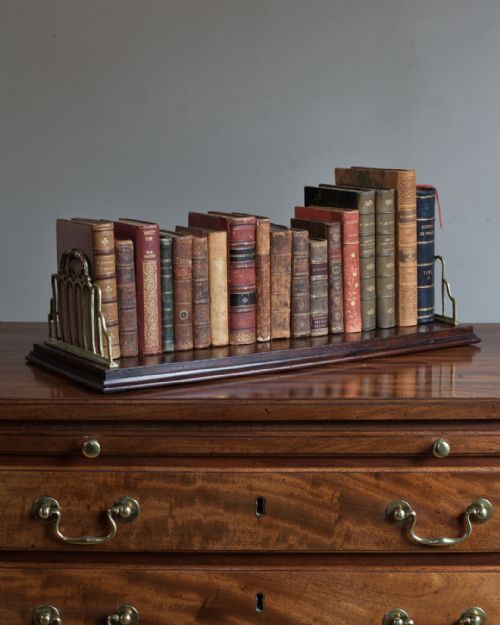
A brass bookstand organises reading material with robust metal mounts, offering both functional support and period character for the desk or library.
Brass Bookstand
The materials paired with brass on this page include mahogany, walnut, oak, coromandel, and rosewood, often enhanced with painted porcelain plaques or ormolu mounts. Pieces range from campaign table top reading stands to revolving bookcases and gothic revival book rests.
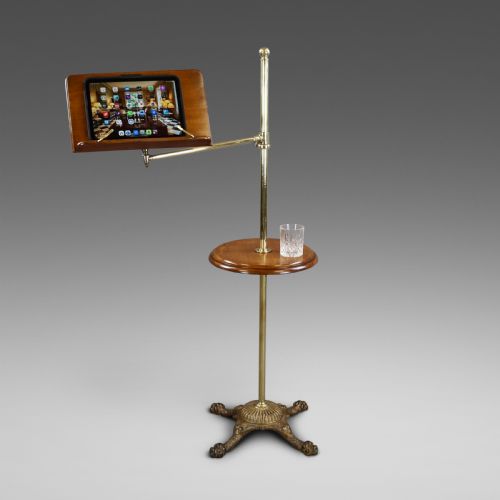
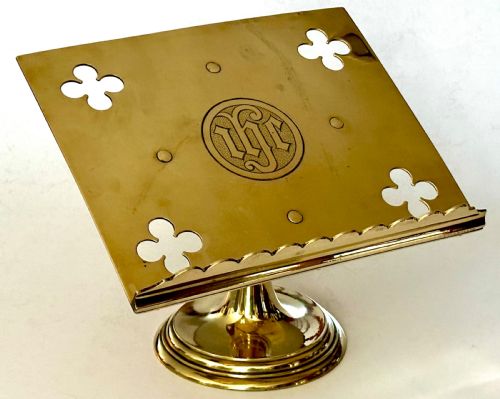
The most common versions met on this page are extending book slides and reading stands featuring brass mounts, alongside revolving bookcases and library book holders. These objects reflect the domestic and study habits of the 19th century, combining functional timber construction with durable metal hardware.
How They Were Made
Construction relies on joining dense cabinet timbers such as mahogany, walnut, rosewood, and oak with precision hardware. Brass components, including extending mechanisms, hinges, and decorative mounts, are secured to the wood to provide structural stability and operational movement.
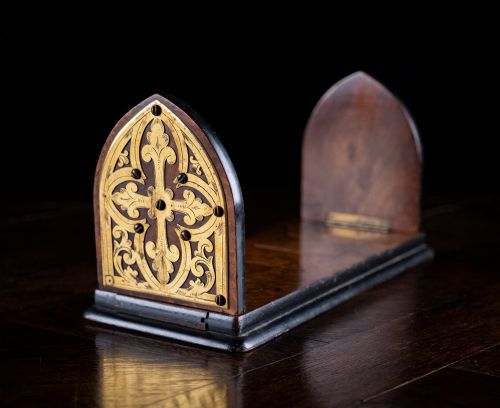
Surface ornamentation incorporates fine porcelain plaques and ormolu mounts, alongside carved architectural details seen in Gothic Revival examples. Materials like coromandel and kingwood are utilised for veneering, displaying distinct grain patterns beneath traditional polished finishes.
Brass Bookstand Retail Price Guide 2026
Typical asking prices for brass bookstand among the pieces listed under this phrase on Sellingantiques today, from the lower quarter to the upper quarter. They describe what is for sale here now, not the wider market.
Victorian readers clearly possessed strong wrists, given the sheer weight of these brass-mounted mahogany reading tables.
What Varies in Quality
Quality is distinguished by the selection of cabinet timbers and the refinement of the metalwork. Finely figured veneers like coromandel and burr walnut, combined with cast or chased brass mounts, mark out superior examples.
The integration of decorative elements such as painted porcelain plaques and ormolu mounts elevates a piece beyond standard utility. Smooth mechanical action in extending book slides and revolving tiers also indicates superior craftsmanship.
The Brass Bookstand Glossary
- Book slide
- An extending desk accessory designed to hold a varying number of volumes upright between two bookends. The expanding mechanism often incorporates brass lattice or mounts.
- Campaign
- Portable furniture designed for travel, typically featuring recessed brass handles and corner brackets for durability. Campaign reading stands fold or disassemble for ease of transport.
- Ormolu
- Gilded bronze or brass applied as decorative mounts to furniture and desk accessories. It provides bright metallic contrast against dark cabinet woods like kingwood and mahogany.
- Gothic Revival
- A 19th-century design style drawing on medieval architectural motifs such as pointed arches and quatrefoils. In bookstands, this style appears through carved tracery and heavy brass hinges.
- Coromandel
- A dense, heavily figured exotic timber from Asia with dark brown and black coloration. It is highly prized for luxury 19th-century desk accessories and book slides.
Brass Bookstand: Frequently Asked Questions
How do I date a Victorian bookstand?
Dating a Victorian bookstand involves examining the cabinet timber, construction methods, and decorative styles used. Pieces from this era frequently employ walnut, oak, or mahogany paired with cast brass mounts.
Stylistic cues such as Gothic Revival tracery or painted porcelain plaques also point toward mid to late 19th-century manufacture. Maker's marks or registration stamps, when present, provide more precise chronological markers.
Where were reading stands placed?
Reading stands were positioned on large library tables, desks, or tabletops to hold heavy reference volumes, Bibles, or folios. Table top reading stands allowed readers to consult texts at a comfortable angle without holding them.
In larger libraries, floor-standing lecterns and revolving bookcases served similar functions for heavier collections. Their portable nature meant they could be moved around the study as needed.
What woods are typical for 19th-century stands?
Nineteenth-century bookstands and reading accessories were constructed from a variety of dense hardwoods. Mahogany, walnut, and oak appear frequently in standard library pieces.
More luxurious examples utilise exotic woods such as rosewood, coromandel, and kingwood. These timbers were selected for their rich grain patterns and durability under daily use.