


Brass Bell on Frame
These brass bell on frame pieces combine resonant metal and sturdy timber stands to summon people across the house with a clear tone.
Brass Bell on Frame
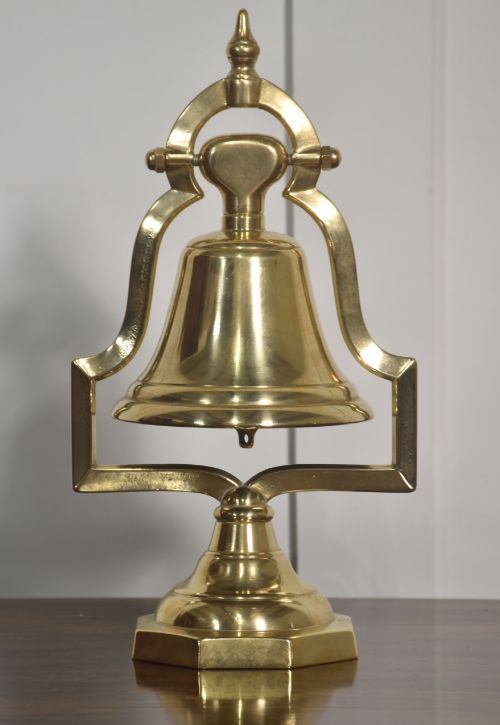
A brass bell on frame serves primarily as a tabletop signal, bringing order to Victorian and Edwardian dining rooms and hallways. These objects range from compact table bells to substantial dinner gongs mounted within supporting frameworks.
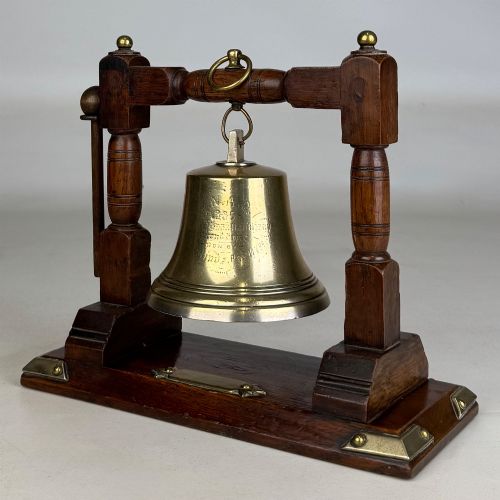
The versions most commonly met on this page pair cast metal bells with wooden stands, often utilising oak for stability and presence. Makers shaped these items for practical domestic use, arranging them so the striker hits the metal cleanly.
Origins stretch across the nineteenth and early twentieth centuries, encompassing Victorian Gothic, Aesthetic Movement, and maritime contexts. Each brass bell on frame reflects the interior habits of its period, whether designed for a steam ship or a grand residence.
How they were made
Foundry workers cast the bells in bronze and brass, achieving distinct resonance through precise metal alloy compositions and wall thicknesses. These metal components require careful finishing to ensure a clean strike and lasting tone.
Cabinet makers constructed the frames from seasoned oak and bamboo, carving or turning the timber to support the swinging bell or suspended gong. Fabric and felt elements sometimes appear at suspension points to cushion the metal and prevent unwanted rattling.
Makers integrated steel strikers and silvered metal details into the assemblies, joining timber and metal with traditional fixings. The resulting structures balance the weight of the bell against the stability of the base.
Elephants at the base of a bronze bell prove that Victorian interior decorators embraced exotic company beside the dining room door.
What varies in quality
Quality rests in the proportional harmony between the frame and the suspended bell, alongside the depth and sustain of the tone produced. A well-cast bronze or brass bell yields a clean resonance that lingers in the room.
The execution of the woodwork dictates the caliber of the piece, distinguishing plain utility from careful cabinet work with carved detailing. Frames constructed from dense oak with secure joints maintain their integrity through centuries of use.
Material refinement separates standard items from exceptional examples, particularly where makers incorporated specialised elements like silvered metal surfaces or intricate figural bases.
The Brass Bell on Frame Glossary
- Dinner Gong
- A suspended metal disc or bell struck with a mallet to announce meals. These domestic items occupy a prominent place in late nineteenth-century halls.
- Double Fusee
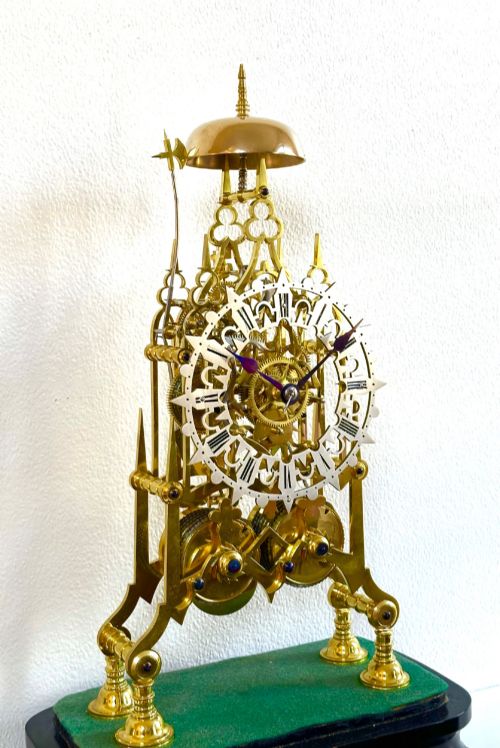
- A clock movement driven by chains and fusee cones to maintain equal power as the mainspring unwinds. This mechanism appears in skeleton clock assemblies sharing domestic spaces with gongs.
- Aesthetic Movement
- A late nineteenth-century design style emphasising visual beauty over narrative meaning. Pieces from this period often display simplified forms and bamboo framing.
- Ship's Bell
- A marine bell used for marking time watches and signaling aboard vessels. These items carry specific maritime provenance tied to named steam ships.
Brass Bell on Frame: Frequently Asked Questions
How do I date a brass bell on frame?
Dating relies on stylistic markers within the woodwork and the material composition of the bell itself. Pieces from the Victorian era often feature heavy oak frames and Gothic details, whereas Edwardian examples lean towards lighter proportions.
Examining the fixing methods and any associated metalwork provides further context. Surviving inscriptions or associated ship names help anchor specific items to precise decades.
Where were dinner gongs placed in the house?
Dinner gongs typically stood in entrance halls or at the foot of the main staircase so the sound carried effectively across all reception rooms. This placement ensured family members and guests heard the summons clearly.
Smaller table bells sat closer to dining tables for summoning servants during courses. The furniture supporting these items was chosen to complement surrounding room decor.
What metals are used in these bells?
Most examples utilise cast brass or bronze for the sounding component, chosen for durability and resonant acoustic properties. Some pieces incorporate silvered metal finishes to alter the visual appearance and tonal quality.
Supporting frameworks occasionally feature steel components for structural tension or hanging loops. Each metal was selected for its specific functional strength and appearance.
How do I care for antique brass and oak?
Maintenance requires dry dusting with a soft cloth to protect the timber grain and prevent dust accumulation in carved recesses. Excessive polishing of the brass should be avoided to preserve the natural patina built up over decades.
Keeping the pieces away from direct heat sources prevents the oak frames from drying out and splitting. Checking the hanging mounts periodically ensures the suspended bell remains secure.