

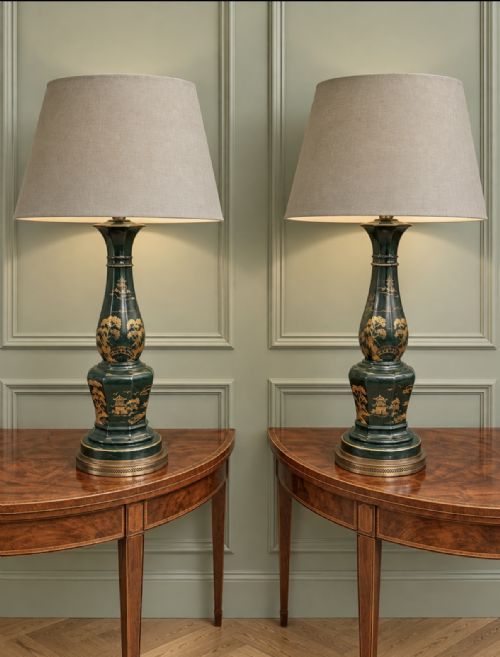


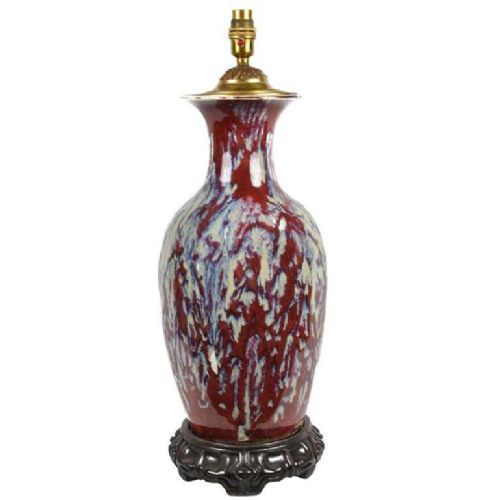


Brass Base Vase Lamp
A brass base vase lamp transforms a storied ceramic vessel into a practical centrepiece.
Brass Base Vase Lamp
A brass base vase lamp bridges centuries of decorative ceramics and domestic lighting through converted vessels. Buyers searching for a brass base vase lamp encounter table lamps built from porcelain, earthenware, and cloisonné bodies elevated on metal mounts.
The most common examples on this page are nineteenth-century Chinese porcelain vases, ranging from blue and white designs to famille rose and celadon glazes. European porcelain makers also contribute Paris porcelain and Delft forms mounted in brass.
These pieces function primarily as table lamps, pairing historic ceramic bodies with fabric or silk shades. They draw together disparate manufacturing traditions by placing Asian and European vases onto supportive metal bases.
Materials and construction
The construction of these pieces relies on combining ceramic vessels with cast or spun brass bases and mounts. Makers secured the ceramic bodies using internal rods or fitted collars, occasionally drilling the base of the vessel to run electrical wiring.
Ceramic bodies span porcelain, earthenware, and cloisonne enamel over metal cores, demonstrating diverse firing and glazing techniques. Hand-painted decoration in underglaze blue, enamel colours, and gilt highlights frequently adorns the ceramic surfaces.
Brass Base Vase Lamp Retail Price Guide 2026
Typical asking prices for brass base vase lamp among the pieces listed under this phrase on Sellingantiques today, from the lower quarter to the upper quarter. They describe what is for sale here now, not the wider market.
Current listings feature porcelain, earthenware, and cloisonne materials mounted on brass across nineteenth-century and Victorian periods.
Assessing quality and execution
Quality in these conversions rests on the harmonious proportion between the ceramic body and the supporting brass mount. Superior pieces integrate the metalwork seamlessly with the vessel without damaging the original glaze or body.
The artistic merit of the underlying vase dictates the overall standard, distinguishing hand-painted porcelain or fine cloisonne from plainer earthenware forms. The crispness of the brass casting and the stability of the mount further separate standard examples from finer specimens.
The Brass Base Vase Lamp Glossary
- Cloisonne
- Enamelling technique where metal wire forms compartments on a vase surface to hold coloured pastes before firing. This method creates intricate patterns filled with vibrant glass enamels.
- Famille Rose
- Chinese porcelain palette dominated by opaque pink enamel introduced during the Qing dynasty. It allowed artists to render soft gradations on floral and figural scenes.
- Celadon
- Pale green translucent glaze applied to high-fired pottery, originating in China. The subtle colour mimics the appearance of jade.
- Delft
- Tin-glazed earthenware produced in the Netherlands, typically finished in blue and white. It reflects distinct seventeenth and eighteenth-century European interpretations of imported styles.
Brass Base Vase Lamp: Frequently Asked Questions
What is a brass base vase lamp?
A brass base vase lamp is a lighting fixture created by mounting an antique ceramic or enamel vase onto a metal stand. These pieces repurpose historic vessels for domestic illumination.
They combine bodies from various global traditions, such as Chinese porcelain or European earthenware, with fitted electrical hardware.
How do I date these lamps?
Dating relies primarily on the style, glaze, and manufacture of the central ceramic vessel rather than the electrical components. Periods represented include the nineteenth century and earlier historical eras.
Changes in porcelain bodies and enamel palettes help establish the age of the underlying vase.
Where were these vases made?
The ceramic bodies originate from diverse regions including China, Japan, France, the Netherlands, and England. Chinese export wares and nineteenth-century European factories are particularly common.
These vessels travelled through global trade routes before being adapted into lamps.
How do I style a vase lamp?
These lamps function effectively as statement pieces on side tables, buffets, or desks. Their height and colourful ceramic glazes draw the eye within a room.
Pairing them with neutral silk or fabric shades allows the patterned vase body to remain the focal point.