


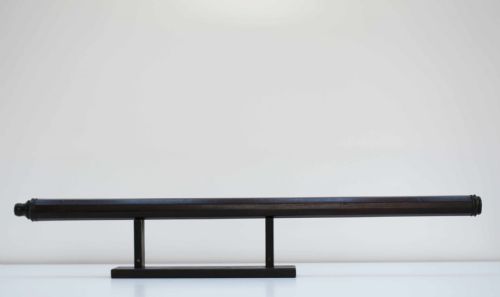


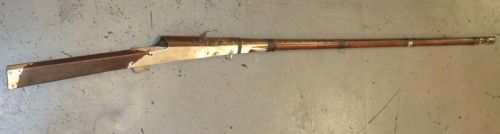


Brass and Wood Barrel
A brass and wood barrel brings distinctive historic craft into a room, combining solid timber staves with metal reinforcement.
Brass and Wood Barrel
A brass and wood barrel encompasses various antique forms where timber and brass meet, primarily appearing on this page as coopered umbrella stands, storage casks, and historic firearm components. Buyers seeking this phrase encounter items spanning the 18th century through the Victorian era, reflecting domestic utility and military design alike.
The domestic examples are represented by English oak coopered barrels utilised as stick stands, featuring brass binding and umbrella loops. Alongside these, firearm barrels from regions such as the Ottoman Empire and India integrate wood and brass through extensive inlay and stock construction.
The selection also includes broader forms sharing timber and barrel-related characteristics, from library armchairs described as barrel back to scientific telescopes and steamer trunks. These diverse objects highlight how timber and brass were combined across varied historical categories.
How they were made
The construction of these pieces relies on traditional cooperage and metalworking techniques, using hardwoods such as oak and mahogany shaped into tight-fitting staves. These wooden bodies are secured by brass bands or hoops, providing structural stability and decorative contrast.
Military arms incorporate iron and steel alongside wood and brass, featuring intricate bone and brass inlay embedded into hardwood stocks. Telescopes and scientific instruments utilise precision machining of brass components paired with wooden optical tubes or protective housings.
Brass and Wood Barrel Retail Price Guide 2026
Typical asking prices for brass and wood barrel among the pieces listed under this phrase on Sellingantiques today, from the lower quarter to the upper quarter. They describe what is for sale here now, not the wider market.
Some barrels double as umbrella stands, proving that even a humble storage cask appreciates a good outfit of brass hoops.
What varies in quality
Quality in these items rests on the precision of the cooperage and the integration of the metal elements. Superior pieces demonstrate tight joints in the timber staves and secure, well-fitted brass bindings that maintain structural integrity.
In firearms and scientific equipment, excellence is evident in the fineness of the bone and brass inlay work and the legible markings of makers such as John Gilbert. The choice of quality hardwoods, including figured oak and dense mahogany, further separates standard domestic items from finer productions.
The Brass and Wood Barrel Glossary
- Coopered barrel
- A cylindrical container constructed from curved wooden staves bound together with metal hoops. This technique is traditionally used for casks, buckets, and stick stands.
- Matchlock
- An early type of firearm ignition mechanism where a slow-burning match is lowered into the priming powder by a lever. These guns often feature extensive brass and bone inlay along the wooden barrel and stock.
- Miquelet
- A type of flintlock firearm mechanism common in the Mediterranean region during the 18th century. The lock plate design uses external mainsprings and distinctive frizzen springs.
- Decagonal
- Having ten plane faces and angles. This geometric form appears on the barrels of specific 18th-century optical instruments.
- Black Forest
- A stylistic attribution referring to carved woodwork originating from the Central European mountain region. Pieces from this tradition often support or complement functional barrels.
Brass and Wood Barrel: Frequently Asked Questions
What is a brass and wood barrel?
A brass and wood barrel is an antique object combining timber staves or stocks with metal reinforcement, spanning domestic stick stands and historic firearms.
These items range from Victorian oak umbrella stands to 18th-century matchlock muskets featuring inlaid brass decoration.
How do I date an antique barrel?
Dating relies on examining the timber species, the manufacturing technique of the brass bindings, and the overall style associated with periods like the Georgian era or the 19th century.
Military arms with brass and wood barrels often display specific lock mechanisms, such as matchlock or flintlock systems, which indicate 18th-century origins.
Where did inlaid firearms originate?
Inlaid firearms featuring brass and wood construction frequently originate from North Indian workshops, such as Bundelkhand, as well as the Ottoman Empire and the Adriatic region.
These pieces typically showcase intricate bone and brass inlay along the wooden barrel stocks.
How do I clean brass and wood?
Maintaining these pieces involves preserving the patina of the original hardwood and the polished surface of the brass components.
Harsh chemical cleaners are avoided to protect antique timber finishes and the integrity of metal inlays.