


Brass and Silver Clock
A brass and silver clock brings together two metals of distinct weight and lustre to mark the passage of hours.
Brass and Silver Clock
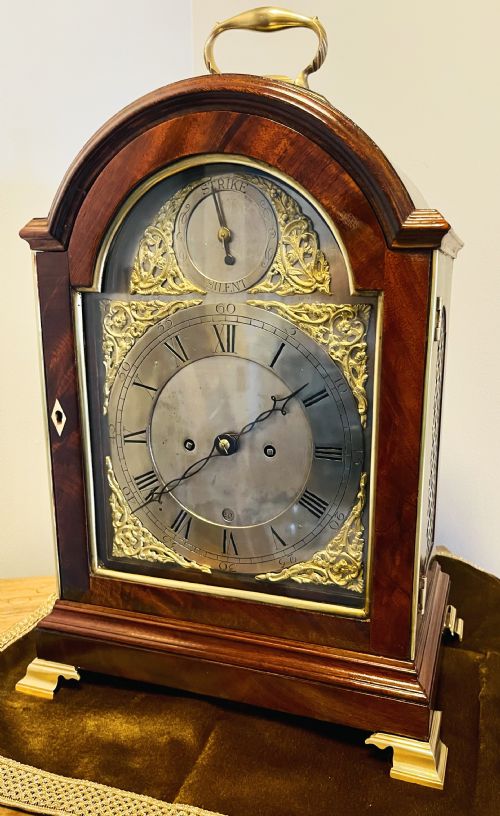
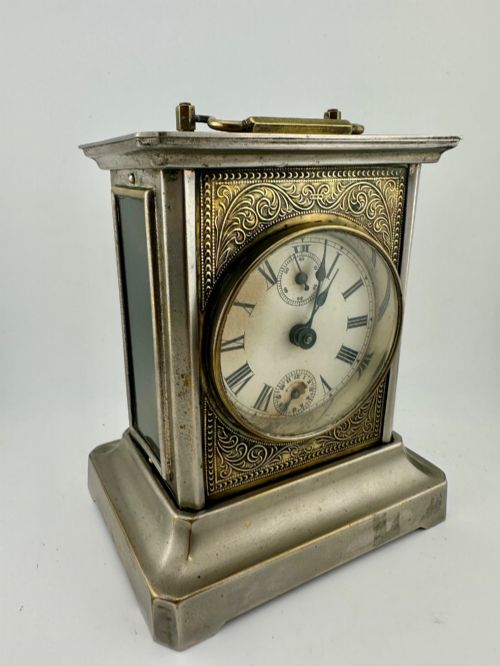
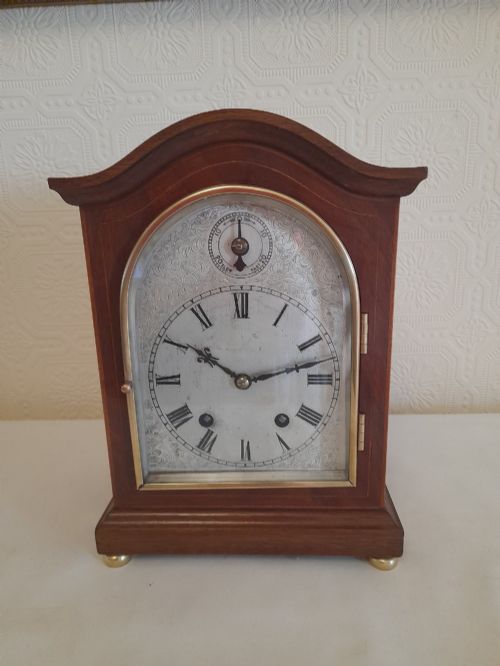
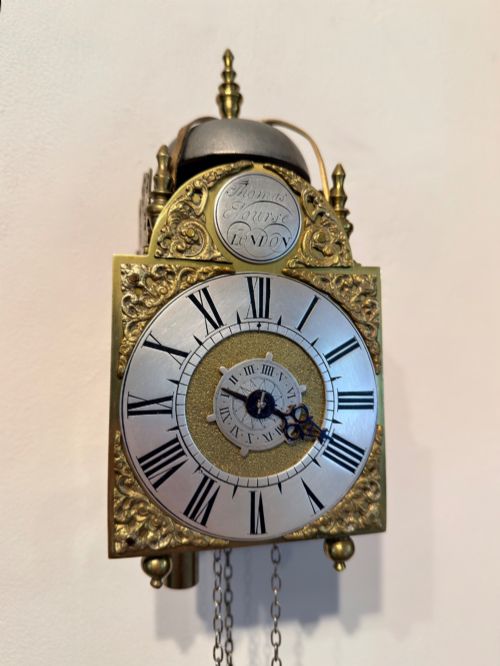
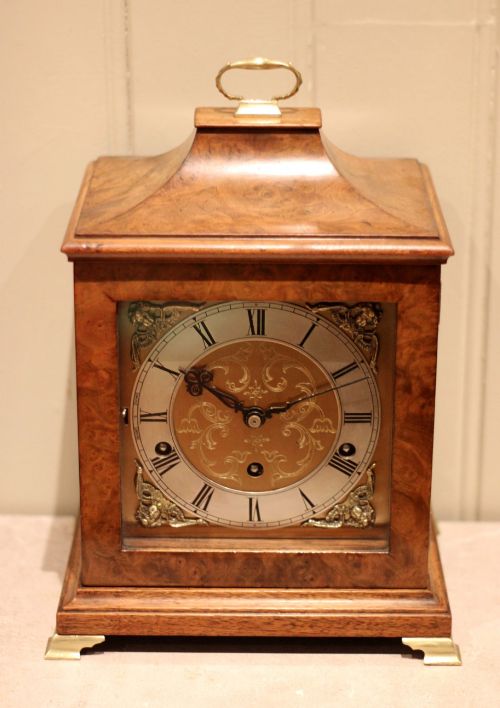
When you search for a brass and silver clock, you encounter timepieces that combine yellow brass frames or cases with silvered metal dials, silver plates, or cast details. These objects span several centuries, reaching from early Georgian bracket clocks and lantern clocks to Victorian skeleton movements and Edwardian carriage designs.
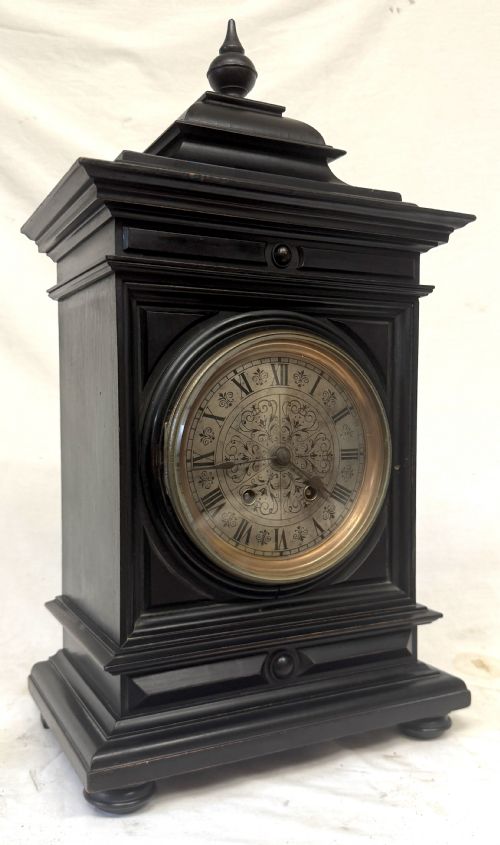
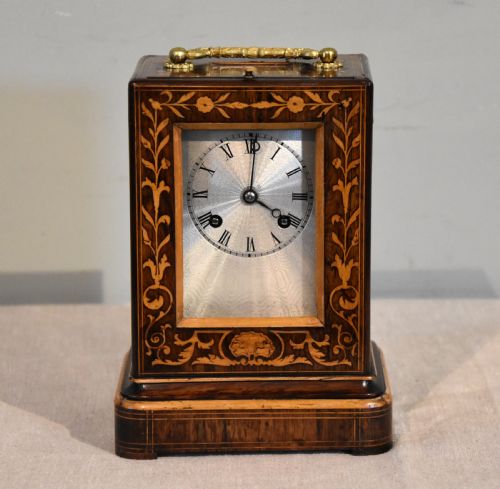
The domestic mantel clock, the portable carriage clock, and the shelf-standing bracket clock form the majority of the examples seen here. Materials range from solid brass and silvered dials to secondary woods such as mahogany, rosewood, and ebonised timber housing the metal works.
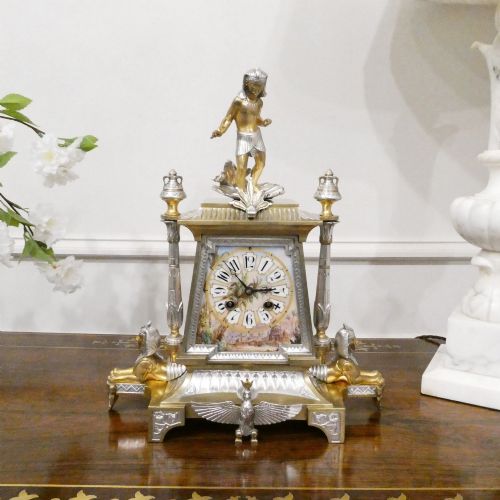
Makers from London, provincial workshops, and continental centres constructed these instruments for desktop, wall, and table placement. Victorian Gothic and French Egyptian Revival styles sit alongside classic Georgian bracket forms on this page.
How they were made
Clockmakers shaped brass for plates, bezels, and skeletal frames using casting, filing, and turning techniques on lathe benches. Steel components such as springs, arbors, and escapements provided the mechanical tension required for eight-day or fusee movements.
Dials were typically formed from brass plates finished with a silvered wash, then engraved with Roman or Arabic numerals and maker details before being filled with black wax. Wooden cases of mahogany, ebony, and rosewood were joined with precise cabinetry joints and polished to house the metal movements.
Brass and Silver Clock Retail Price Guide 2026
Typical asking prices for brass and silver clock among the pieces listed under this phrase on Sellingantiques today, from the lower quarter to the upper quarter. They describe what is for sale here now, not the wider market.
Listings feature 19th Century, Georgian, and Victorian periods alongside materials including brass, silvered metal, mahogany, and rosewood.
What varies in quality
The calibre of the movement dictates the standing of the piece, from standard spring-driven timepieces to intricate twin fusee mechanisms and quarter-striking systems. Heavier brass casting and finer hand-engraving on silvered dials distinguish workshop standards.
The integrity of the case construction, whether solid mahogany, ebony, or gilt brass, separates ordinary production from works by notable makers. Preserved original escapements and signed dial plates elevate the standing of any historical timepiece.
Gillett & Johnston·Mappin & Webb·Richard et Cie·Thwaites of London·Winterhalder & Hofmeier
The Brass and Silver Clock Glossary
- Fusee
- A conical pulley used in spring-driven clocks to maintain equal power as the mainspring unwinds. This mechanism ensures more accurate timekeeping throughout the duration of the winding cycle.
- Silvered dial
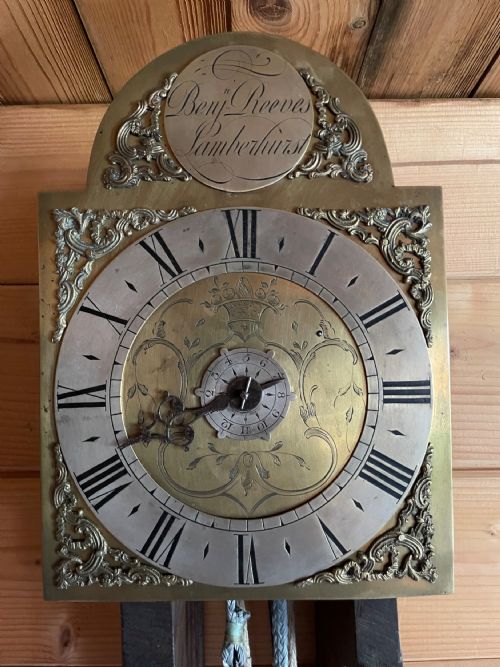
- A brass dial plate treated with a silver solution to create a bright, matte finish that highlights engraved numerals. The technique provides high contrast against dark cabinet woods and polished brass bezels.
- Skeleton clock
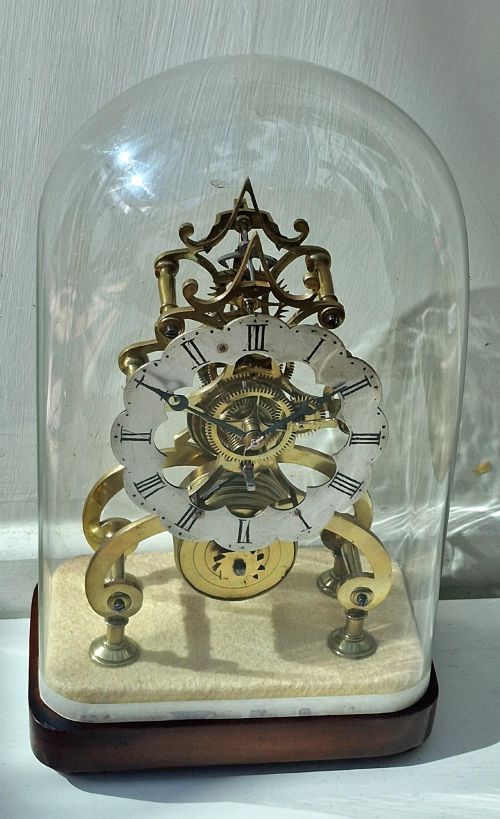
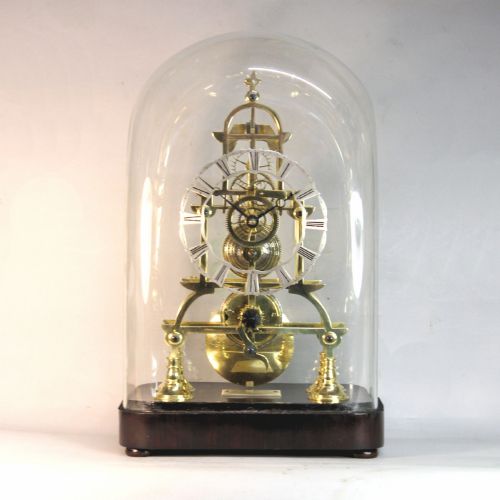
- A timepiece designed with an open brass framework that exposes the gear train and escapement to view. These pieces are often protected beneath a glass dome resting on a wooden base.
- Bracket clock
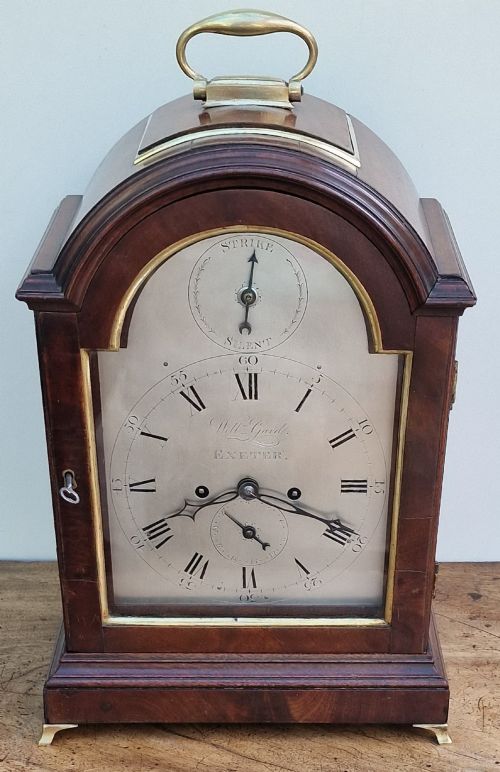
- A portable table clock originally designed to sit upon a matching wall bracket. Over time, the term came to describe any large, high-grade spring-driven clock with a handle for carrying.
- Carriage clock
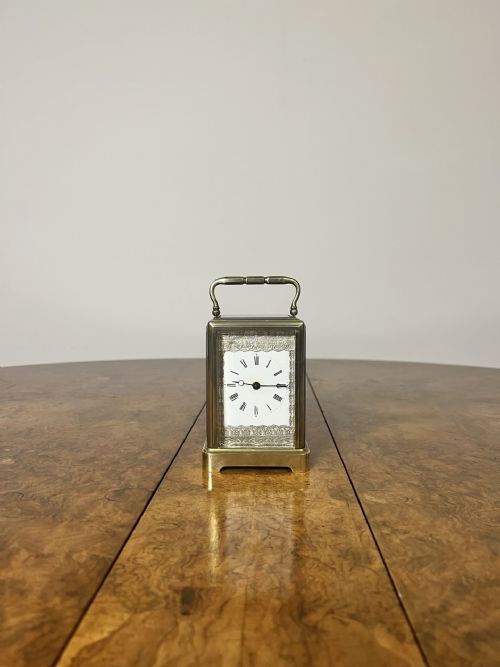
- A small, spring-driven timekeeper equipped with a carrying handle and glass panels, originally intended for travel. Many examples feature silvered or enamel dials housed within heavy brass cases.
Brass and Silver Clock: Frequently Asked Questions
What is a fusee movement?
A fusee is a conical pulley connected to the mainspring by a cord or chain. It equalises the declining force of the spring as it runs down.
This mechanical arrangement helps the clock maintain a steady rate over the course of its run.
How do I wind a brass clock?
Wind the clock using the appropriate key inserted into the winding square on the dial or backplate. Turn gently until resistance is felt, avoiding overwinding.
Most spring-driven models require attention every eight days, while fusee clocks follow a similar weekly routine.
What is a silvered dial?
A silvered dial is a brass plate coated with a silver compound to produce a pale, reflective surface. Numbers and maker signatures are engraved into the metal and darkened for legibility.
Cleaning requires care to avoid wearing away the thin silver layer.
Where were bracket clocks placed?
Bracket clocks sat on wooden wall brackets or directly upon tables, desks, and mantelpieces in principal rooms. Their portable nature allowed owners to move them between chambers.
Carrying handles on the top of the case facilitated this movement.