







Brass and Leather Clock
These brass and leather clock pieces combine heavy metal casework with protective hide cases, offering both mechanical utility and travel readiness.
Brass and Leather Clock
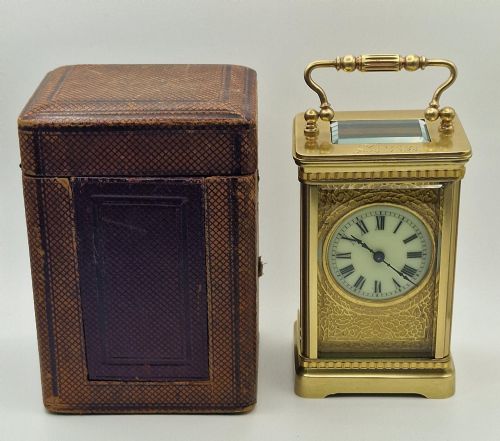
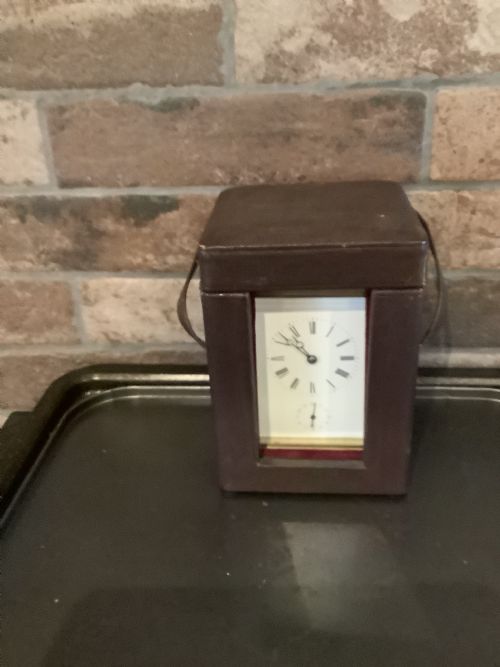
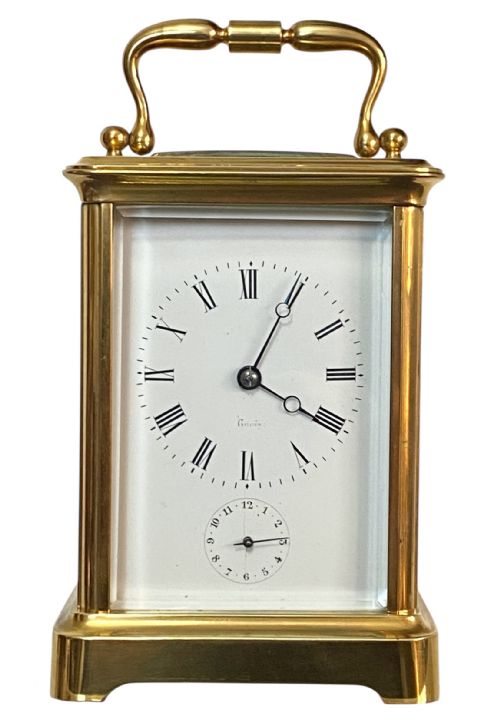
When you search for a brass and leather clock, you encounter a selection dominated by carriage clocks housed in protective outer cases made of leather, often accompanied by travel boxes.
The core objects are portable timepieces dating from the Victorian and Edwardian eras, spanning periods from the mid-nineteenth century up to nineteen ten.
French workshops and London retailers supplied these sturdy mechanical pieces, which combine heavy brass frames with glass panels and dedicated leather carriage cases.
How they were made
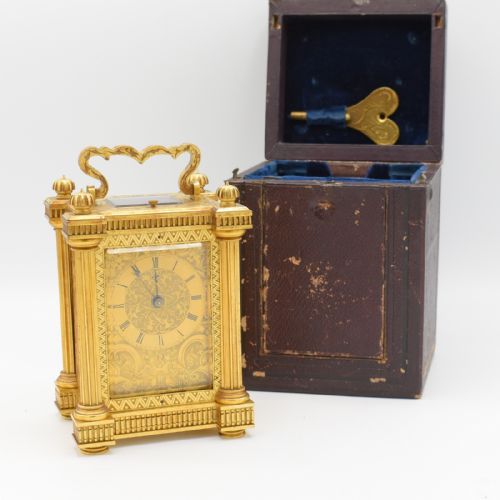
Maker workshops utilised solid brass, gilt brass, and gilt bronze to cast heavy architectural or gorge cases that house mechanical eight-day movements behind glass panels.
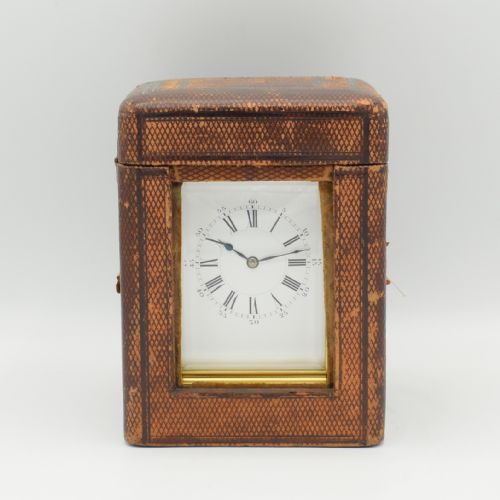
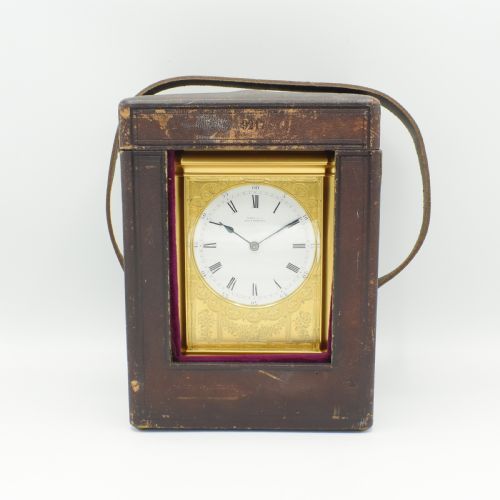
Enamel dials feature alongside engraved brass masks, while protective cases utilise fitted leather over wooden or card carcases, often lined with velvet or silk to cushion the portable clock during transit.
Brass and Leather Clock Retail Price Guide 2026
Typical asking prices for brass and leather clock among the pieces listed under this phrase on Sellingantiques today, from the lower quarter to the upper quarter. They describe what is for sale here now, not the wider market.
Listings span the Victorian and Edwardian periods, recording materials such as gilt brass, glass, enamel, and leather across carriage clock forms.
What varies in quality
Quality reveals itself in the crispness of the hand-engraving across the brass mask and case, the presence of repeating or grand sonnerie complications, and the survival of the original fitted leather travel case.
Higher tier pieces show superior finishing on the movement plates and heavier gauge gilt bronze or brass framing rather than simple pressed sheet metal.
Henri Jacot·Howell And James·Hunt And Roskell·Alfred Hollinge·Dent
The Brass and Leather Clock Glossary
- Carriage clock
- A small, spring-driven portable timekeeper designed for travel during the nineteenth century. These clocks usually feature a swing handle on top and glazed panels.
- Gorge case
- A specific style of rectangular carriage clock case featuring stepped mouldings at the top and base. It represents a standard high-quality housing from the period.
- Grand sonnerie
- A complex striking mechanism that chimes both the hours and the quarters automatically on every quarter hour. It is found on advanced mechanical pieces.
- Repeater
- A mechanism that allows the owner to press a button and make the clock chime the last hour or quarter on demand. This complication was essential before electric lighting.
- Gilt bronze
- An alloy of copper and zinc treated with a gold wash or mercury gilding finish. It provides a rich, warm surface to the brass framework.
Brass and Leather Clock: Frequently Asked Questions
What is a brass and leather clock?
A brass and leather clock typically refers to a portable nineteenth-century carriage clock supplied with its original protective leather travel case or outer box.
These timepieces were built for mobility, featuring robust mechanical movements and sturdy metal frames designed to withstand travel by coach or rail.
How do you wind a carriage clock?
Most of these clocks utilise a specialised metal key inserted into apertures on the backplate or dial to wind the spring barrel for the time and strike trains.
Care must be taken not to overwind the mainspring, and hands should generally only be adjusted in a clockwise direction depending on the specific escapement.
Why do some have leather cases?
The fitted leather cases provided essential protection for portable clocks during nineteenth-century travel, shielding the delicate glass panels and gilt brass from knocks and dust.
Survival of the original leather case significantly enhances the contextual completeness of the timepiece today.
How do I date a carriage clock?
Dating relies on stylistic clues in the brass case design, the shape of the escapement platform, maker signatures, and any retailer marks stamped on the movement.
Victorian pieces often display registration marks or specific aesthetic revivals that narrow down their decade of production.