




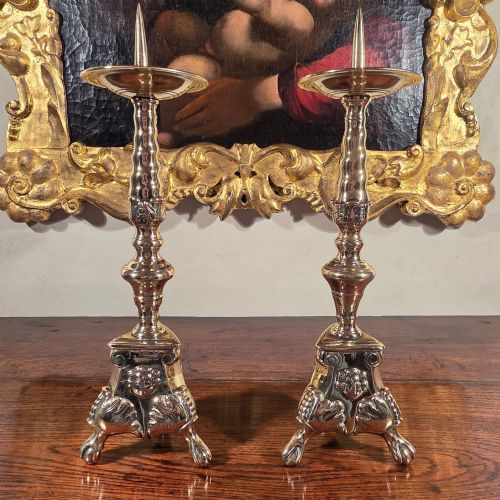

Brass Altar Lights
Brass altar lights bring weight and solemn ecclesiastical presence into a room, spanning Gothic Revival forms down to Edwardian and later interpretations.
Brass Altar Lights
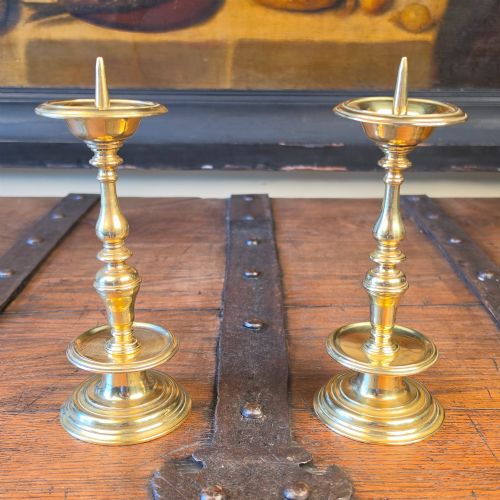
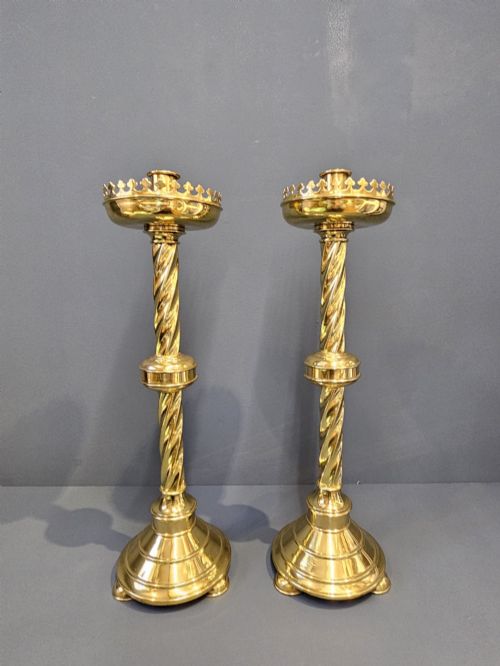
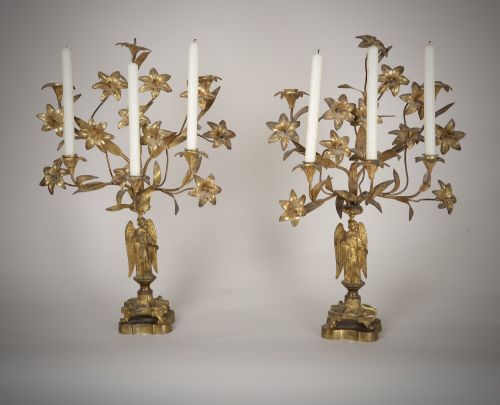
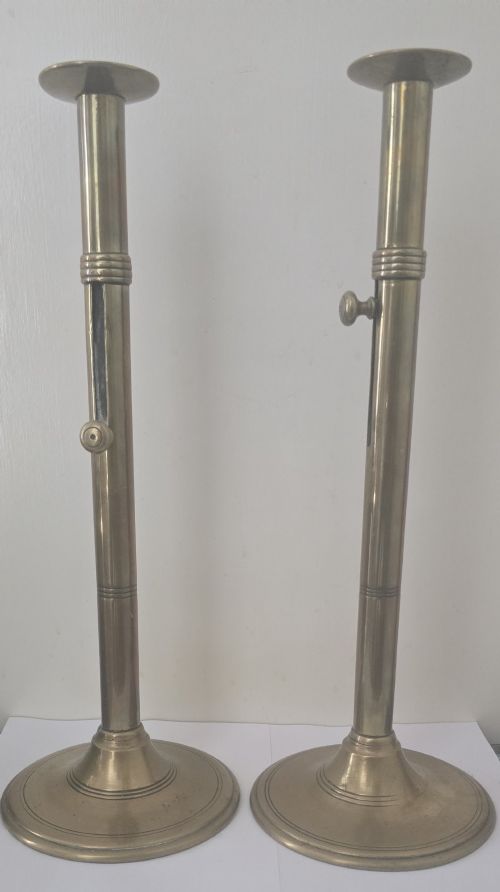
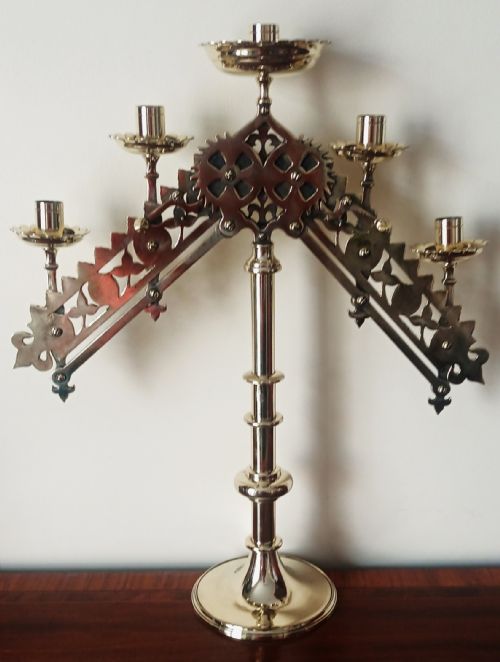
Brass altar lights comprise church candlesticks, pricket stands, and multi-branched candelabra originating primarily from the Victorian and Edwardian eras, alongside pieces echoing seventeenth and eighteenth-century designs. Buyers meet tall ecclesiastical pairs, heavy columnar forms, and converted table lamps designed for liturgical settings.
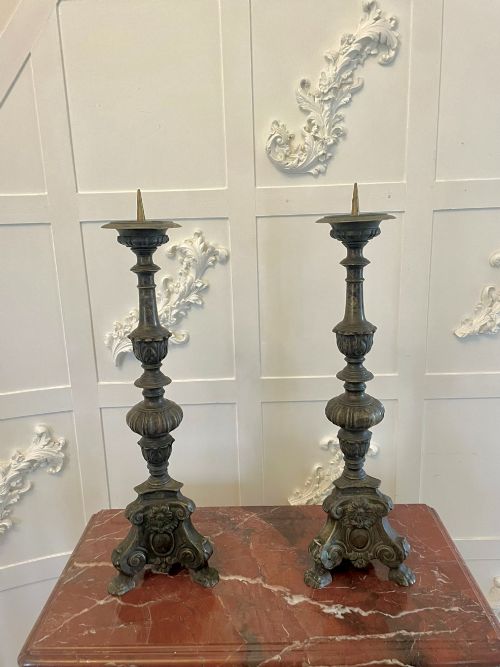
The aesthetic leans heavily on Gothic Revival and French Ecclesiastical styles, characterised by stepped triangular bases, knopped stems, and drip pans intended for heavy wax candles. Many selections reflect nineteenth-century manufacture, though earlier stylistic revivals and early twentieth-century interpretations also appear regularly.
Materials and Construction
Makers utilised cast brass, bronze, and gilt brass, often combining heavy metal casting with wrought iron elements for structural stability in tall church standards. Surface finishes range from polished brass to gilt bronze and ormolu, while select examples incorporate wood or fabric components.
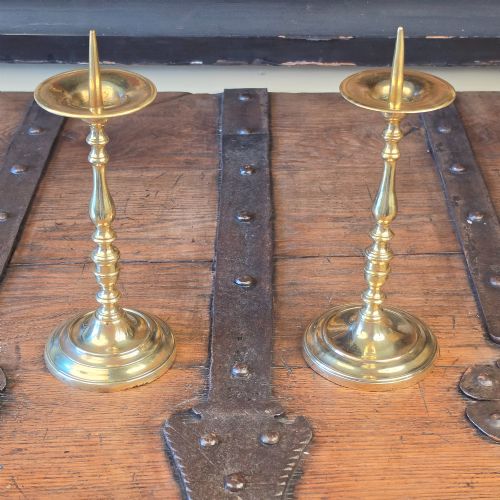
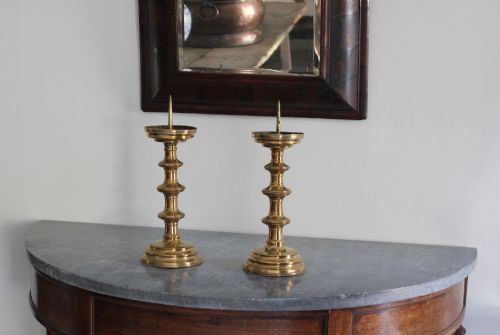
Casting techniques allowed workshops to produce complex shafts, Corinthian capitals, and ornate pricket spikes designed to hold candles directly on a central point rather than within a socket. Articulated joints and multi-tiered bases required precise assembly to support substantial height without tipping.
Brass Altar Lights Retail Price Guide 2026
Typical asking prices for brass altar lights among the pieces listed under this phrase on Sellingantiques today, from the lower quarter to the upper quarter. They describe what is for sale here now, not the wider market.
Listings feature brass, bronze, and wrought iron materials spanning the Victorian period, Edwardian era, and nineteenth-century Gothic Revival styles.
Factors of Distinction
Distinction rests upon the crispness of the casting detail in decorative knops and base mouldings, separating standard production church items from heavily ornamented, bespoke ecclesiastical commissions. Heavier gauge metal and substantial overall height signal superior structural ambition.
Design purity also dictates standing, where authentic period revival forms or documented architectural styles maintain greater visual coherence than generic later adaptations.
The Brass Altar Lights Glossary
- Pricket
- A sharp vertical metal spike upon which a large candle is mounted directly, commonly found on church and altar pieces. This method predates standard socket holders in many liturgical contexts.
- Gothic Revival
- An architectural and decorative style drawing inspiration from medieval buildings, featuring pointed arches and structural verticality. This aesthetic dominates nineteenth-century ecclesiastical metalwork.
- Knop
- A decorative swelling or knob on the stem of a candlestick, providing a secure grip and visual division along the shaft. Makers often shaped these elements through turning or detailed casting.
- Ormolu
- Finely ground high-carat gold applied to a bronze base using a mercury amalgamation process, or later via electroplating. It yields a rich, warm golden surface finish.
- Corinthian Column
- A classical column form topped with ornate acanthus leaves, frequently adopted for tall columnar candlesticks and Masonic light standards.
Brass Altar Lights: Frequently Asked Questions
What is a pricket candlestick?
A pricket candlestick uses an upward-pointing metal spike to impale and secure a candle rather than enclosing the base within a socket. These designs originated primarily for heavy liturgical use in churches.
Such pieces require candles with a pre-drilled base or soft wax that adapts to the central spike. They offer a distinct visual profile compared to standard domestic candle holders.
How are altar lights dated?
Dating relies on stylistic markers such as Gothic Revival motifs, construction methods like sand casting, and material composition including heavy brass and bronze. Comparing base weights and decorative knops against period examples aids identification.
Many pieces reflect nineteenth-century ecclesiastical revivals alongside early twentieth-century production. Documentation or stylistic consistency helps narrow the era of manufacture.
Can these candlesticks be used as lamps?
Many historical church candlesticks are adapted into table lamps or standard lamps by running internal wiring through the central shaft. This conversion allows them to function safely in modern domestic interiors.
Original proportions and patination are typically preserved during this process to maintain the character of the metalwork. Such conversions bridge historical ecclesiastical forms and contemporary lighting needs.
Why are some candlesticks so tall?
Altar lights were built with substantial height to ensure visibility across large ecclesiastical spaces during services and ceremonies. Tall shafts elevated the flame above liturgical furnishings and congregants.
This vertical emphasis defines the proportions of church metalwork, making pairs exceptionally striking as floor-standing or large table accents. Their heavy bases provided the necessary balance for elevated candles.